


 Mixes
Mixes
Mixmag Asia Radio: Rural Festival with Jane Fitz, Mareena, Innerworld & Zundoko Disco
Inside Japan’s cult-favourite gathering of sound & spirit, with exclusive sets from a few figures leading their scenes
Back in July, Japan played host to one of the most forward-thinking festivals in the region: Rural.
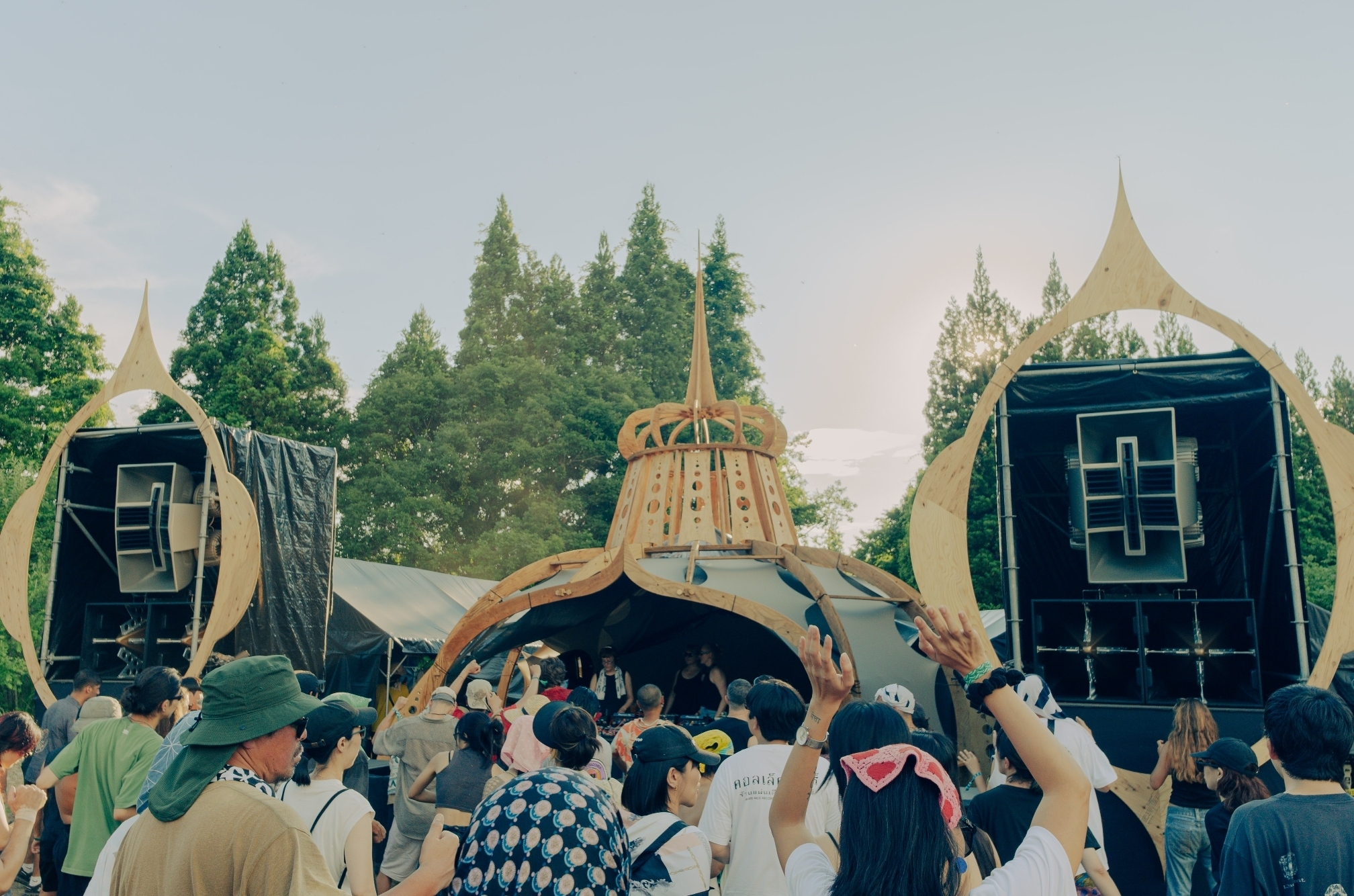
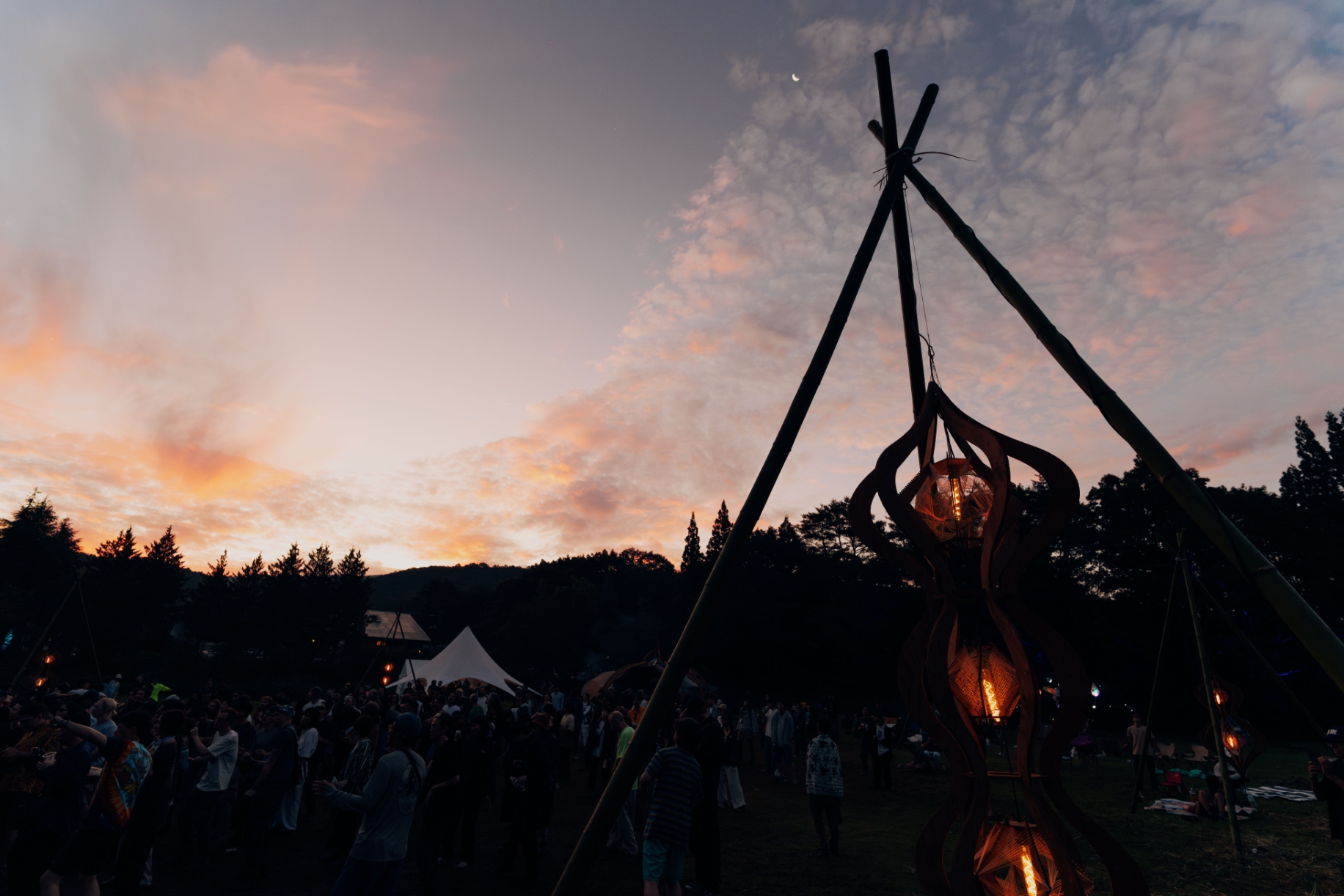
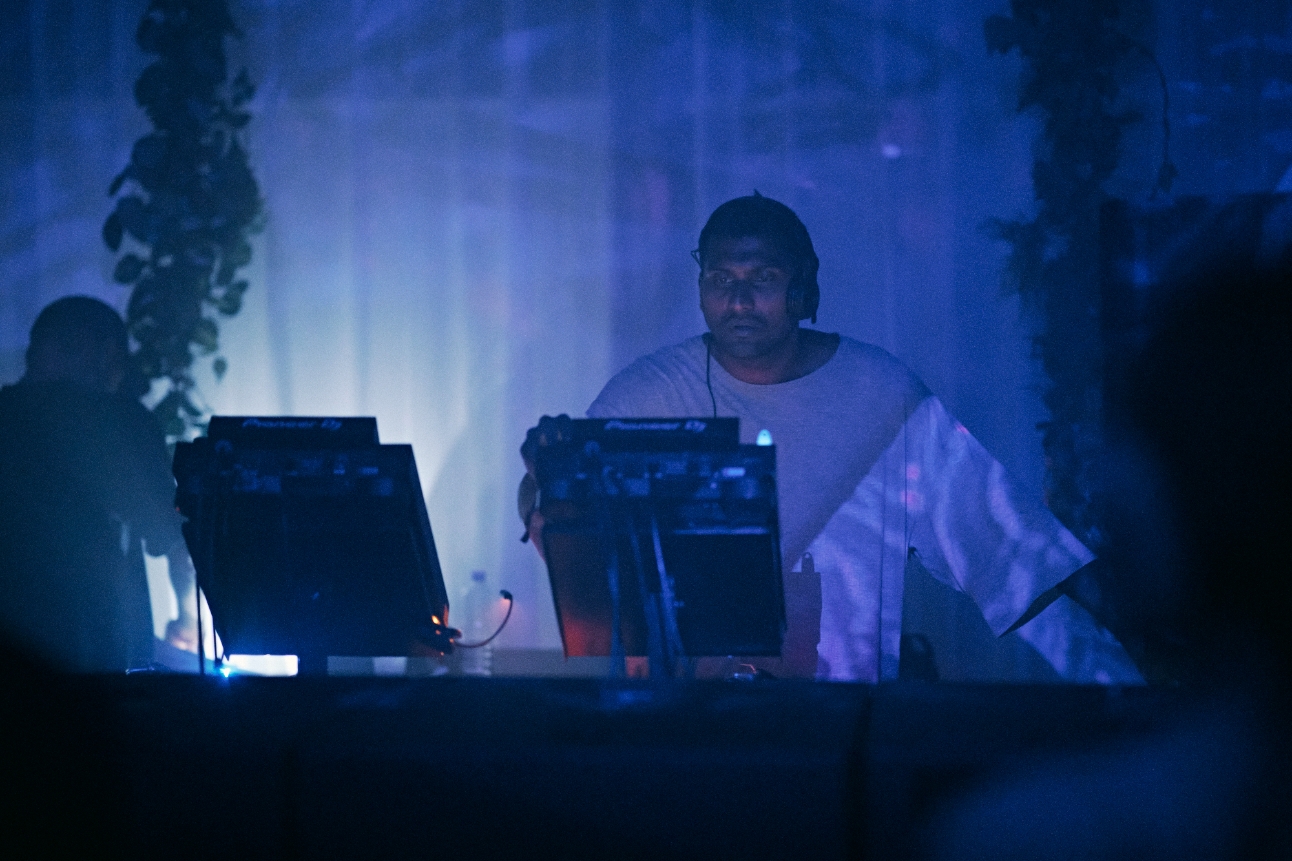
Held at nowhere CAMP in the hot spring region of Numajiri, Fukushima—nestled at the foot of Mount Adatara—the festival blends natural immersion with cutting-edge sound. Imagine this: towering pines, restorative hot springs, and a meticulously curated line-up coming together to form an experience that feels both spiritual and sensory.
Over the years, Rural has built a near-mythic reputation—a cult-like destination for artists and ravers alike, who return annually to this mountain mecca. The 2025 edition was no exception.
Across four days, two distinct stages, and 39 artists—including 13 internationals—the festival reaffirmed its status as a rite of passage for Asia’s underground faithful. It’s little surprise, given that the same crew was behind the revered Catch 428 stage at the previous Wonderfruit festival.
For this edition of Mixmag Asia Radio, we’ve highlighted four sets that perfectly capture the spirit of Rural: Jane Fitz, Mareena, Innerworld, and Zundoko Disco, each of whom brought unmissable performances to the festival all in their own unique sound and style.
Read on as they share their experiences from the festival, thoughts on their local scenes, and the artists shaping Asia’s underground sound today.
Firstly, how was the festival?
Jane Fitz: Like home! Rural is one of the few places I get to go to year on year, and so I’ve been able to watch it evolve. And yet somehow it’s always familiar—impressive sound, attention to detail, a particular individual look, sound, and feel… I love the current venue too. My only regret is this year having to leave early for other commitments. But Rural is really something special in my year and never disappoints.
Mareena: It was my first festival in Japan, and it completely lived up to my imagination. The focus was purely on the music, with one large outdoor stage and a smaller, air-conditioned indoor space. I felt a special, tribal atmosphere right from the start. You could talk to anyone or just share a smile because everyone was connected by the music. The crowd size was perfect, and everything was streamlined to the essentials. The food was great, the staff were very organised, and the mountain views made the whole experience feel unique. I truly have no complaints (except for maybe the heat during the day).
Innerworld: It was honestly one of the best festivals I’ve ever attended—everything from the setting to the people, and especially the curation, was just incredible. It felt deeply spiritual and truly special to me.
Zundoko Disco: It truly felt like a dream to experience such incredible sound surrounded by beautiful nature. We feel deeply honored to have participated in this space as DJs. This year, we also noticed that there were more international audience members than usual, and it felt like Rural is becoming increasingly recognised around the world. For Japanese ravers, natural hot springs are one of the pleasures of a festival, and the onsen near this year’s venue was exceptional—a perfect local experience that refreshed both body and mind. :)
How did you find it compared to other festivals? What makes Rural special/unique?
Jane Fitz: Sound, location, attitude, bookings, venue, organisation, crowd…Rural excels at these in ways other festivals simply can’t. The venue shapes the vibe, the vibe shapes the dance floor, the dance floor embodies the sound… Every element that makes the festival feeds and flows into another and wouldn’t be as unique without this constant influential flow.
Mareena: The tribal feeling really stood out. The line-up was very diverse in terms of background, gender, and sound, and the schedule was curated in a way that felt experimental, placing different musical styles next to each other. The hot springs were also a great extra. And I have to mention, after our closing set on Monday, I walked around and didn't see a single piece of trash. It was clear that Rural is intentional in its focus on community, music, and sustainability.
Innerworld: It felt truly special because the curation wasn’t confined to any particular style or genre. Every set flowed beautifully—a seamless blend of sounds and moods—and each artist brought their own unique energy and depth. The location itself added so much magic, surrounded by pine trees and with the onsens nearby, perfect for recharging between sets. And of course, the sound experience was something else—the Incubus Void system made everything feel alive, and the indoor Danley Lab setup had this warm, intimate, and cosy vibe that tied it all together.
Zundoko Disco: What makes Rural special, we think, is its well-balanced line-up—from emerging talents to legends, from Japan and across the globe. Though diverse in style, there’s a unique sense of coherence that ties everything together. That curatorial sense and the way it proposes experiences to the audience are truly unique. For instance, the decision to have avant-garde live performances like Phew’s in the middle of the party speaks to Rural’s distinct sense of surprise and aesthetics.
Any other standout sets you saw at the festival?
Jane Fitz: 悪魔の沼 / AKUMA NO NUMA’s cosmic, trippy opening on the main stage was a perfect way to announce the first day, and Santaka live featuring cellist Yuki Nakagawa was something else!
Mareena: The only set I could catch in full was Oscar Mulero. His use of the outdoor sound system was a highlight for me; he really delivered the full frequency range of each track. It was a masterclass and left me feeling inspired for our own closing set with Ginger Coven a few hours later.
I also want to shout out Qmico, who played before my ambient set on Sunday morning. I loved how she moved the vibe from deeper techno into electro, downtempo, and ambient—it was very skillful. And it's always a pleasure to hear Occa, who took everyone on a proper psychedelic journey.
Innerworld: Ufff, how could I ever forget those sets! For me, the two absolute highlights of the festival were Takaaki Itoh B2B DJ Yazi and Jane Fitz, though honestly, it was impossible to catch all the amazing sets; these are just two to name a few.
Takaaki and Yazi had complete control over both the sound system and everyone on the floor. The resonance from the Incubus Void felt like it was scraping through my skin, in the best possible way. They pushed the system to its full potential—it was deep, trippy, and beautifully dark. It honestly felt like the sound was pulling me in, almost vampiric—an experience that was both hypnotic and consuming.
Then there was Jane Fitz—it was my first time hearing her live, and she completely transported me. Her sound carried this combination of old and modern Goa trance essence: stripped-down, elegant, and deeply psychedelic. Every track she played was so tripped out; it felt like she opened a portal, guiding us through unknown dimensions. Truly unforgettable.
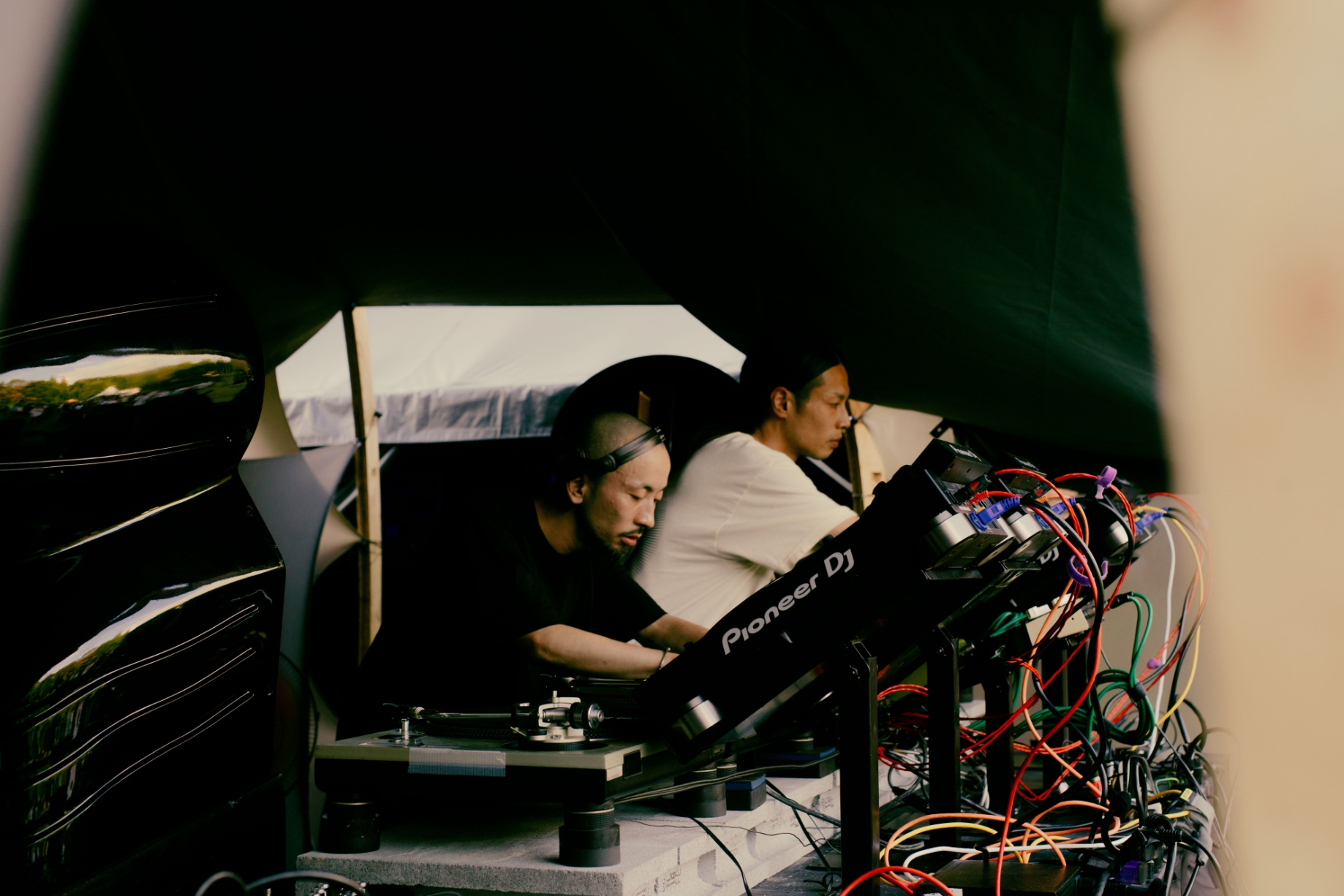
Zundoko Disco: Every act was truly outstanding, but the one that left a particularly strong impression on us was DJ KURI’s set. A familiar presence in Rural and across Japan’s techno landscape, he performed on the indoor stage featuring the rare Danley speaker system—still uncommon in Japan. The synergy between its powerful sound and his vinyl-only set was exceptional, with the warmth of the records and his psychedelic groove shining through beautifully. It was a set that reaffirmed the depth of Japan’s veteran DJs.
What do you think is different between a festival set and a club set?
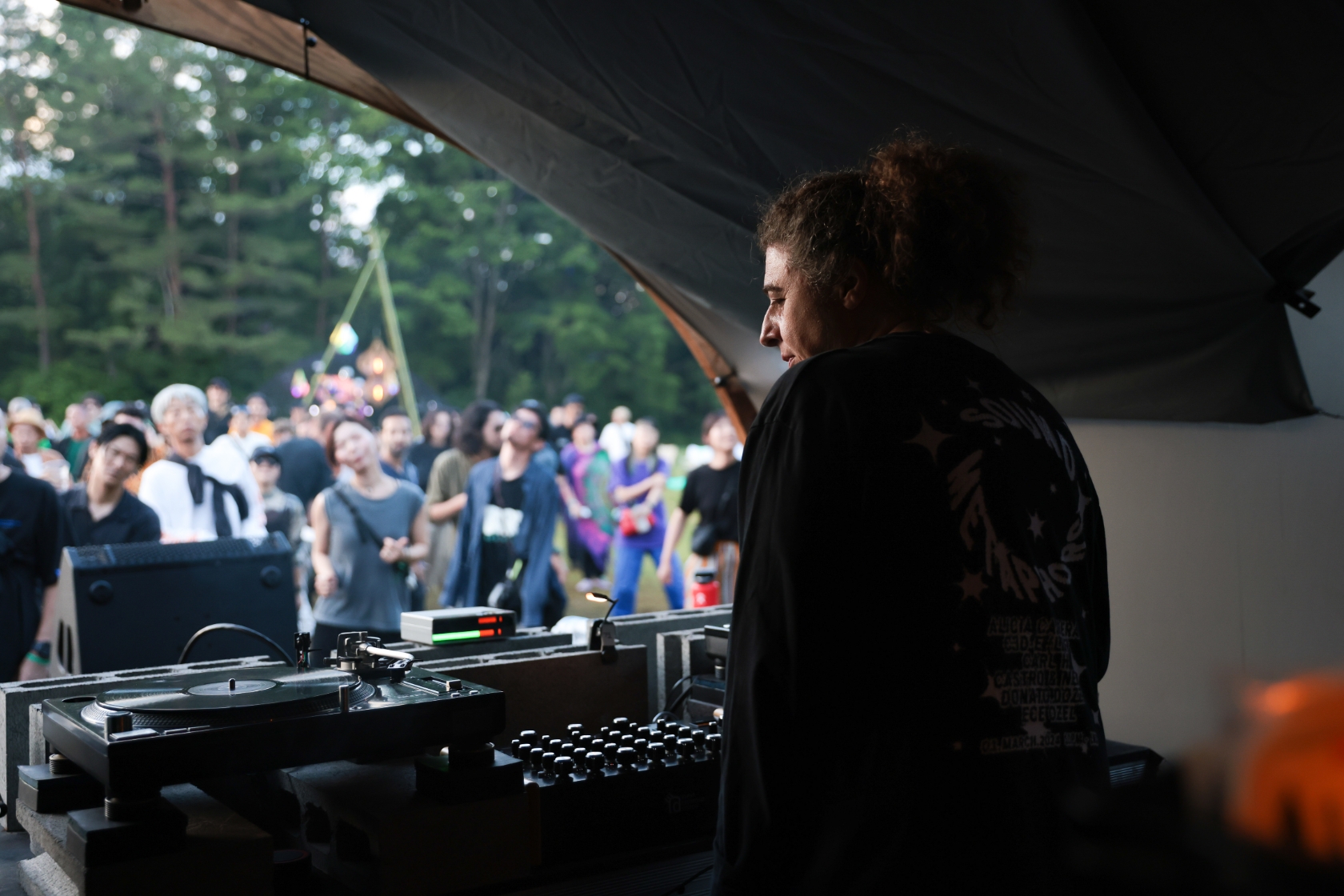
Jane Fitz: Freedom. You are not as confined to a musical flow at a festival, so you really can do what you want. Being outside also means the sound works in a different way.
Mareena: My fundamental approach doesn't change much—it's always about reading the crowd's energy, whether in a dark club or at an open-air festival.
The main differences are both technical and contextual. At a festival, you're playing on a massive sound system in an open field, where the bass behaves differently and can get lost. This means you need tracks with a bigger sonic impact to create those unifying moments for a large crowd. With shorter set times, every track choice has to be very deliberate. Logistically, I always have USB sticks as a backup ready because setting up vinyl decks in an outdoor festival environment can sometimes be unpredictable.
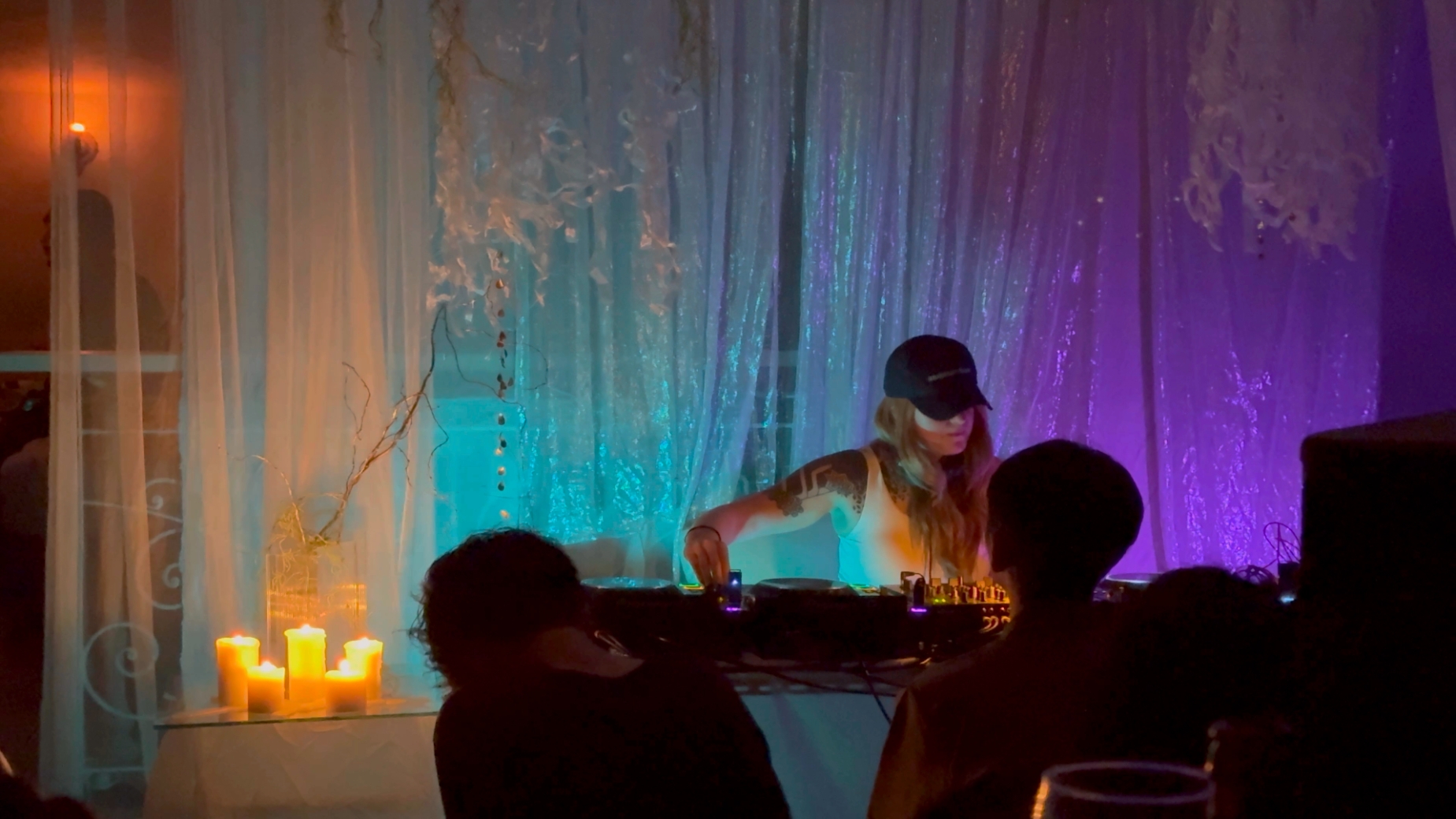
In a club, it's a more intimate dialogue. The sound is tighter and the space is more controlled, which allows me to experiment more and build a deeper, longer narrative. It's less about constant peaks and more about crafting a detailed journey over time.
Innerworld: I think the main difference is that a festival set gives me the freedom to explore the full spectrum of music. In an open-air space, I can choose tracks with a fuller, richer mix that fills the environment. In contrast, for indoor club sets, I have to consider the acoustics and often go for more stripped-down tracks, which I actually love because it allows me to highlight subtleties in the music. Clubs also give me a closer connection with the audience, which makes the whole experience feel even more special and intimate.
Zundoko Disco: Playing at outdoor festivals requires a different approach than in clubs, where acoustics and reflections behave differently. We tend to select more effective and psychedelic sounds suited for open spaces. It may sound basic, but we always play with the intention of shaping the entire sonic environment—not just for those dancing in the middle of the floor, but also for people relaxing at the edges or listening from their tents, so that everyone can naturally sink into the sound.
Tell us a bit about your mix!
Jane Fitz: Rural founder Atsushi realised I have always played in the day at Rural and asked me to play from the middle of the night until after sunrise. So for this, I knew the energy would need to be different. I wanted something weird and dark and, in some ways, more brutal than I’d done before. I think the beginning of the mix, out of this nighttime context, might not make sense listening back on a midweek morning, so this is the last two-thirds of the mix as light begins to show.
Mareena: This final closing set was definitely the highlight of my tour. I had barely slept in three days after gigs in Seoul and Tokyo, but the welcome by everyone at the venue was so warm. Yutaro (Toner) played a beautiful ambient set before me, and it set the tone for one of those sets where you don't overthink—you just play. I leaned into more meditative sounds and worked to maintain that energy throughout. I also used my small Eurorack effects rack to add some extra texture and depth to the ambient layers.
Innerworld: This time, I approached my mix differently. In the past, I’ve over-prepared, making sure the dance floor stays tight, focusing mainly on the music for the body. This time, I wanted to listen to my inner self and see what it truly wanted to express. The goal was to connect mind, body, and soul, creating an ‘audio cinema’ with abstract rhythms infused with psychedelic rave elements. I started with ambient textures, blending drones and tribal rhythms, then gradually moved into fast-paced, hypnotic breakbeat, bass, and trance elements, taking us all on a journey.
Zundoko Disco: On the day of our set, the weather was perfect. Around 4pm, when we started, it was still quite hot, so the floor wasn’t too crowded yet. But about forty minutes later, as the temperature dropped, dancers began to move more freely. At that point, we shifted the energy toward faster, d'n'b-infused rhythms. Since ENA’s experimental live set was scheduled after ours, we kept the latter part low and abstract, maintaining a grounded yet exploratory atmosphere. We also paid particular attention to the Void Incubus System, a sound system that symbolises Rural, to bring out the best from its subwoofers. Mixing in self-edited screw versions of techno and downtempo tracks, we felt we were able to express the old-school vibe that defines our sound.
Where’s your favourite dancefloor in Asia?
Jane Fitz: Other than Rural, obviously 宀 in Hong Kong, as I hold a residency there—small but perfectly formed. Also, Precious Hall in Sapporo, which is a pure, mystical place. I also love the sound and wildness on the dancefloor at The Labyrinth.
Mareena: I've really loved the energy at places like Mitsuki in Tokyo, Faust in Seoul, and Headquarters in Singapore. The listening bars in Tokyo are also fantastic—my last visit to Nightingale in Tokyo still echoes in my head…
Innerworld: This being my first tour and first time playing outside India, my experiences in Asia are still limited, but Rural Festival will always be one of my top favourite festivals. There’s something truly special about the setting and the way it’s curated. I’d also highlight Acadana in Hong Kong, Traffic in Japan, and, of course, BudxLoft in Goa, which holds a special place for me. Each of these spaces has its own energy and approach to sound, from the deep, meditative vibes of festivals to intimate club settings that nurture the underground spirit.
Zundoko Disco: There’s a club in Seoul called vurt., slightly away from the city centre, where we’ve had the opportunity to play a few times. Its perfectly tuned acoustic treatment, minimal lighting, and deeply respectful dance floor create an ideal space for immersion in techno. We strongly resonate with their sincere attitude toward the scene and their commitment to constant experimentation. It’s a place I truly love—one we could visit every week.
Are there any producers, DJs or other labels in Asia that have recently caught your attention?
Jane Fitz: I’m in love with the Qilla crew out of India. Kohra is a fantastic DJ welded in psychedelic sounds, and Monophonik’s live set built around modular sounds completely blew my mind the first time I saw his set. I also have a lot of time for the More Rice crew from Bangkok, who have a really warm take on contemporary club sounds. (I have others, but you told me not to mention close friends..!)
Mareena: Producer would be Toru Ikemoto (Japan) and Arjun Vagale (India)—I have a lot of respect for their productions. Both of their techno is straightforward and incredibly well-made. The sound design is so solid and functional that the tracks don't need to be flashy; they just work perfectly on the dancefloor and steadily build their presence.
Label-wise would be Mule Musiq—they're not a new name, but they never disappoint. After twenty years, every release—whether dub techno, house, techno, or electro—holds my interest. Their aesthetic is always consistent, thoughtful, and completely their own.
As for DJ; Gezibe—she's a resident at Faust in Seoul. Her precise, vinyl-only sets and her track selection have really impressed me.
Innerworld: Recently, I played a show in Bangalore with the crew at Read The Room, run by Kaydi. The gig itself was fantastic, with an incredible F1 EVO system, but what really blew my mind happened afterward. We ended up back at Kaydi’s place, where he had his EVO rigged in the living room; we b2b-ed for 18 hours straight, blending one day into the next. It was my first proper chance to meet him and share the decks at his home, and his skills as a selecta and vinyl DJ, along with that level of dedication, really left a lasting impression on me.
My second favourite is Chhabb, a master of tension and release. I had the pleasure of b2b-ing with him during the second edition of LFO, and it was an unforgettable experience—his sets are dynamic, engaging, and full of surprises.
The third is I7HVN, who is doing some really exciting work with abstract structures and experimental sounds. All three are pushing boundaries in their own ways, and they’ve definitely caught my attention recently.
Zundoko Disco: Phazmidi; a Tokyo-based producer releasing “grey-area” sounds where multiple BPMs—85/113/170—coexist within a single track. His precise sequencing and distinctive dance groove gave us the same kind of shock we felt when we first heard Mika Vainio.
Oslated; A label from South Korea. We first discovered Japan’s Doltz in 2020 through his release on this label. Oslated releases a wide range of functional yet highly distinctive grooves that go beyond conventional techno, and we featured some of their tracks in our recent mix.
What’s your favourite thing about the music scene in the city you live in?
Mareena: In Berlin, we're spoiled with so many events and clubs that have strong concepts and bookings. For me, the record store culture is still something special. There are so many great stores that pull you away from the screen and create a real, human connection to music and people.
Innerworld: As someone born and raised in Goa, what I love most about the music scene here is how it naturally brings together people from all over the world. That mix of cultures and sounds has helped me connect with amazing musicians, exchange ideas, and keep learning. It’s such a unique place—small, but with a deep pulse that always draws in the right kind of energy.
Zundoko Disco: In Tokyo, where we live, world-class artists come to perform almost every week, and the audience brings diverse perspectives from all over the world. It’s an incredible environment for personal and musical growth. For young DJs and producers especially, Tokyo offers countless opportunities to discover new sounds and test their creativity.
Something the world doesn’t know about your local scene?
Mareena: Many internationally touring artists still play at small Berlin spaces like OHM, Giri, or Tommy Four Seven’s new Ingwer space, for very little to no money. It's not about the payment—it's about community. These intimate nights are where we test new music, play what we usually don’t get to play, and stay connected to our roots.
Innerworld: My favourite thing about Goa’s music scene right now is how it’s quietly evolving. Smaller venues are starting to invest in proper sound systems and create spaces where people can really listen; it makes the music feel alive. Post-COVID-19, I’ve noticed a shift in the crowd too; even at smaller gigs, ravers are more present, curious, and open to exploring new sounds. The scene is still small, and we’re recovering from the challenges of the pandemic, but I truly believe it has the potential to grow into something really special. Being a local, it’s inspiring to see this blend of dedication, experimentation, and genuine connection shaping the future of music in Goa.
Zundoko Disco: Our hometowns are in the Tohoku region of Japan. Although the local music scene is relatively small compared to larger cities, it has nurtured a uniquely cross-genre street culture. At the events we used to host, the floor would come alive with people from a wide range of scenes—techno, hip hop, house, live bands, skaters—all sharing the same space. Growing up in such a diverse and fluid community has definitely shaped our individuality and enriched our musical mindset.
What’s the rest of the year looking like for you?
Jane Fitz: A little calmer than summer—one club gig per weekend and without far travel from home: Essaim in Paris, Berghain in Berlin, Fold in London, Tillatec in Amsterdam, and three very different shows over ADE week.
Innerworld: I’m really excited about what’s ahead. My focus right now is on curating and shaping something truly meaningful in Goa, building a space for genuine listeners, and collaborating with like-minded collectives from around the world to exchange culture through sound.
A few years ago, I started an initiative called LFO, born out of a bit of frustration. I wanted to play and share the music I truly love, but there weren’t many spaces that supported that. At one point, the project suffered; I went through losses because I was doing everything independently, without sponsors—I didn’t want to dilute the message. It was tough, and I took a long break to reset and reflect.
Now, I’m bringing LFO back with a monthly residency at BudxLoft, curating both Indian and international artists. I’m excited to rebuild it from a place of passion and intention—to create meaningful dance floors, keep pushing new sounds, and continue my journey of making and sharing music around the world.
Zundoko Disco: Later this year, we’ll be playing at several techno parties, mainly in Tokyo. One we are especially looking forward to is the event on November 20 at Mitsuki in Shibuya, where we’ll be performing alongside Zara from Australia—whose tracks we are big fans of—and teppei, one of the most exciting next-generation DJs in Tokyo right now.
Listen to Jane Fitz, Mareena, Innerworld & Zundoko Disco's sets from Rural on Mixmag Asia’s SoundCloud.
Images via Takashi Hamada, Toshimura, Yumiya Saiki & Kaito
Henry Cooper is a Writer at Mixmag Asia. Follow him on Instagram.
Cut through the noise—sign up for our weekly Scene Report or follow us on Instagram to get the latest from Asia and the Asian diaspora!
