


 Features
“A doorway to something new”: MUTEK.JP is where sound, image & technology refuse to stay in their lanes
Once, they were separate rooms; now electronic music, visual art and tech share a single, fluid space and MUTEK.JP has moved into a museum to meet them there. We spoke with those involved in this year’s event about what that freedom makes possible.
In late November, a Tokyo art museum will spend four days filled with sound and light.
MUTEK.JP, now in its 11th year, is leaving behind the patchwork of venues it has used before and settling, for the first time, inside a museum: MoN Takanawa: The Museum of Narratives, in the new Takanawa Gateway City.
It’s a quiet but significant shift. Organisers call this year “A New Cycle”, marking the start of the festival’s second decade.
What does that look like in practice? Performances, a digital art exhibition, talks and workshops all happen under one roof, with the evening programme running in two rooms at once.
In Box1000, the larger hall, audiences can stand on the ground floor or take a seat above. In the smaller Box300, the Play programme leans toward the experimental. You can follow one thread through the night or drift between the two.
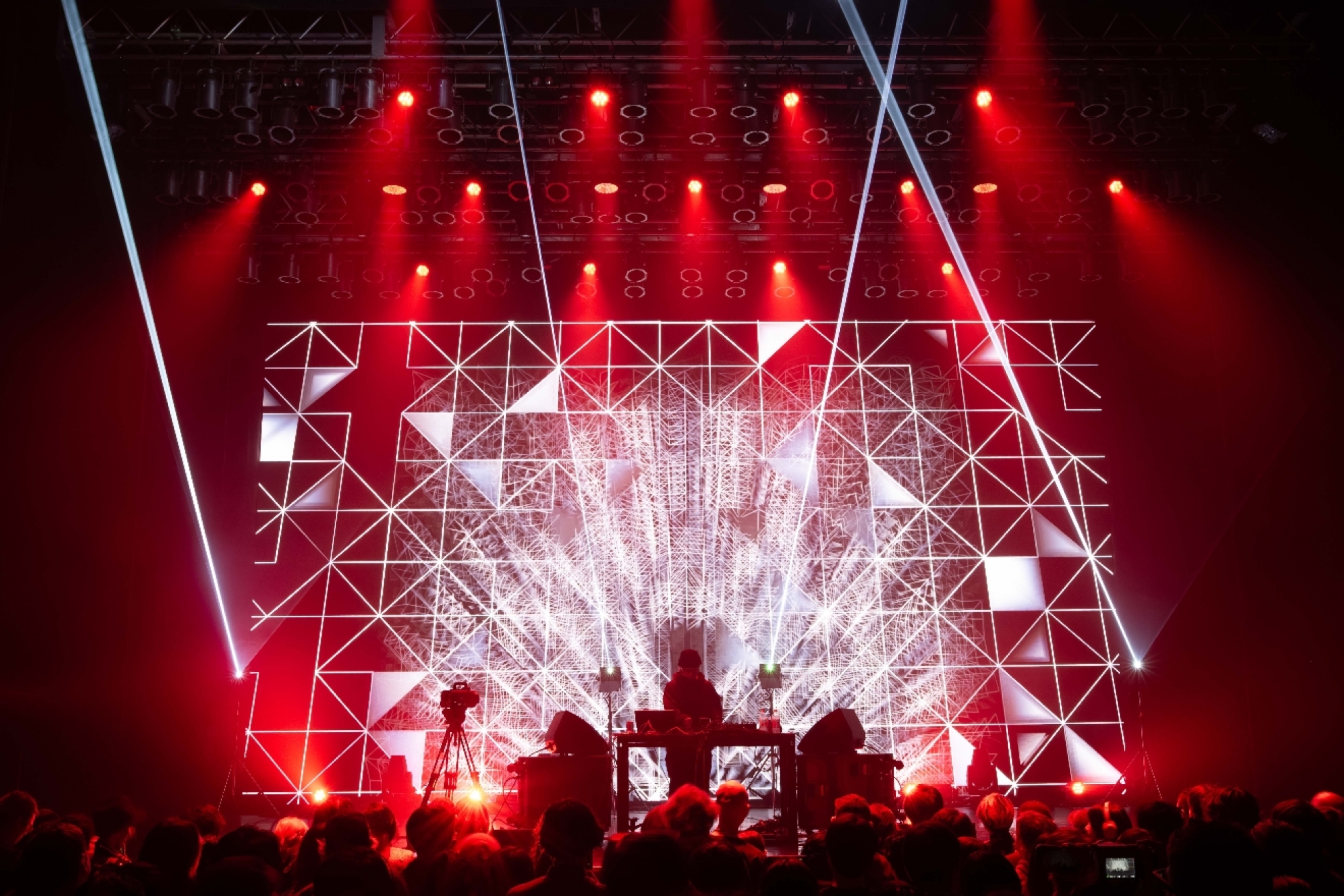
The programme reads like a map of where audiovisual art is now, and each night has its own shape.
Friday opens with big, structured visuals. Max Cooper’s 3D show is built around the link between physical structure and emotion, while in Box300 a duo improvise music against real-time visuals and another act hands every audience member a pair of 3D glasses.
Saturday slows down. A piano is stripped of its casing so you can hear the mechanism, and a two-screen diptych shifts between abstraction and concreteness. Play turns to generative maps of an “imaginary geography,” electroacoustic stillness, and modular synths developed through research at IRCAM.
Read this next: A glimpse into the intersection of music, art, fashion & AI with 0010x0010
By day, the Pro Conference, the ETERNAL Art Space exhibition and a Digi Lab programme with an IRCAM Forum workshop give the festival a second rhythm. The whole event is also an official partner program of ARTE TOKYO.
Behind an event like this are people whose stories are worth hearing, and we spoke with four of them.
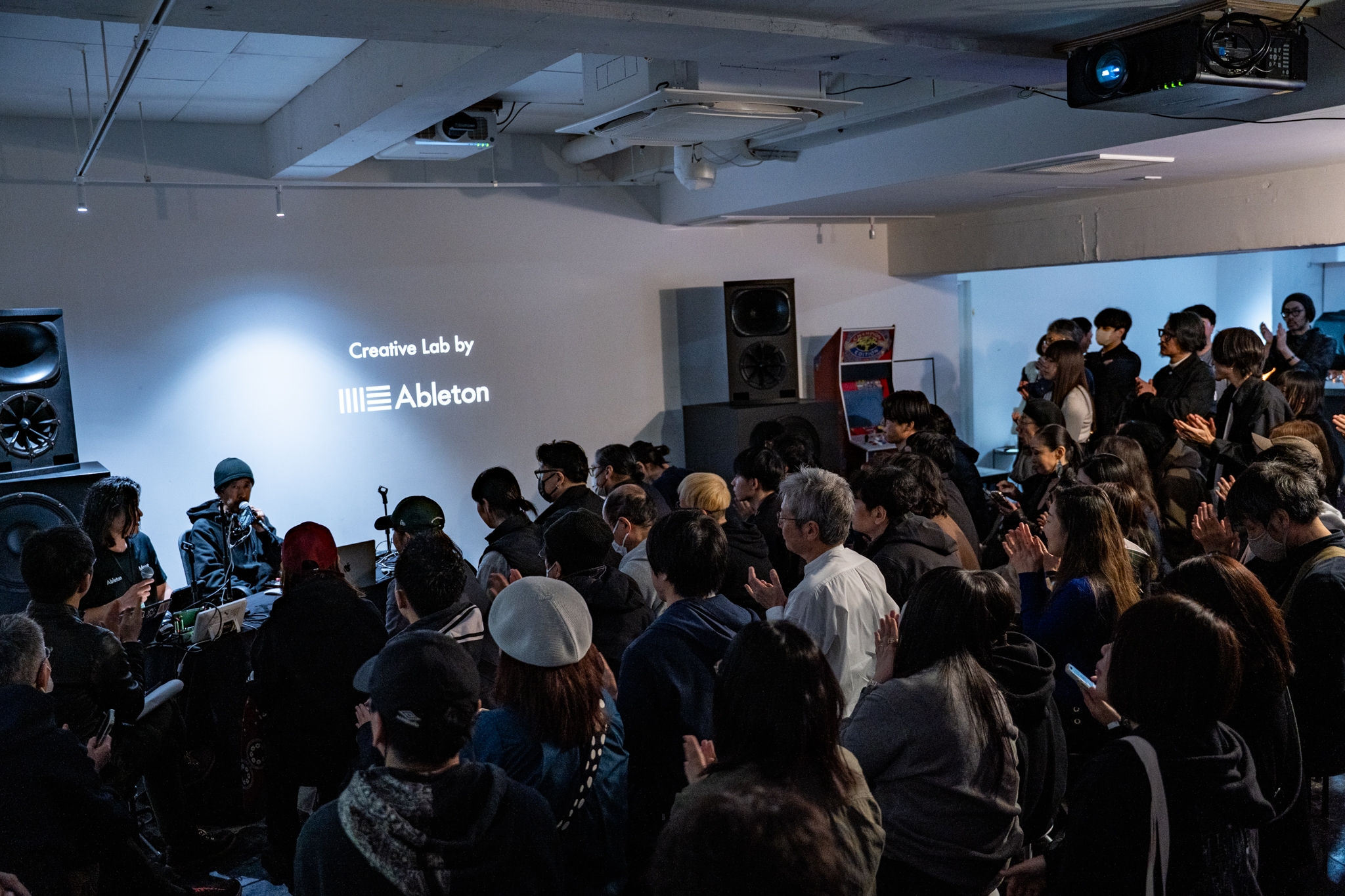
Our conversations begin where MUTEK itself began.
Alain Mongeau founded the festival in Montréal in 2000, when digital art wasn’t yet recognised by funding bodies, and the first edition wasn’t even meant to be audiovisual.
From there we turn to the artists. Richie Hawtin talks about bringing Plastikman back to Japan after sixteen years, and how fermentation and the Japanese idea of utsuroi shaped the new piece.
Read this next: A glimpse into the intersection of music, art, fashion & AI with 0010x0010
Then tamanaramen speaks with us; sisters who live between Tokyo and London, two cities they say run on different clocks. They also remember discovering MUTEK as teenagers and realising their world was bigger than they’d thought.
And to round it out, Shuichiro Iwanami, MUTEK.JP’s General Director, brings the story to Tokyo and explains how he decides what belongs on this stage and why a museum felt like the right next step.
Each of them is thinking about where this art form is heading; read on to hear what they have to say.
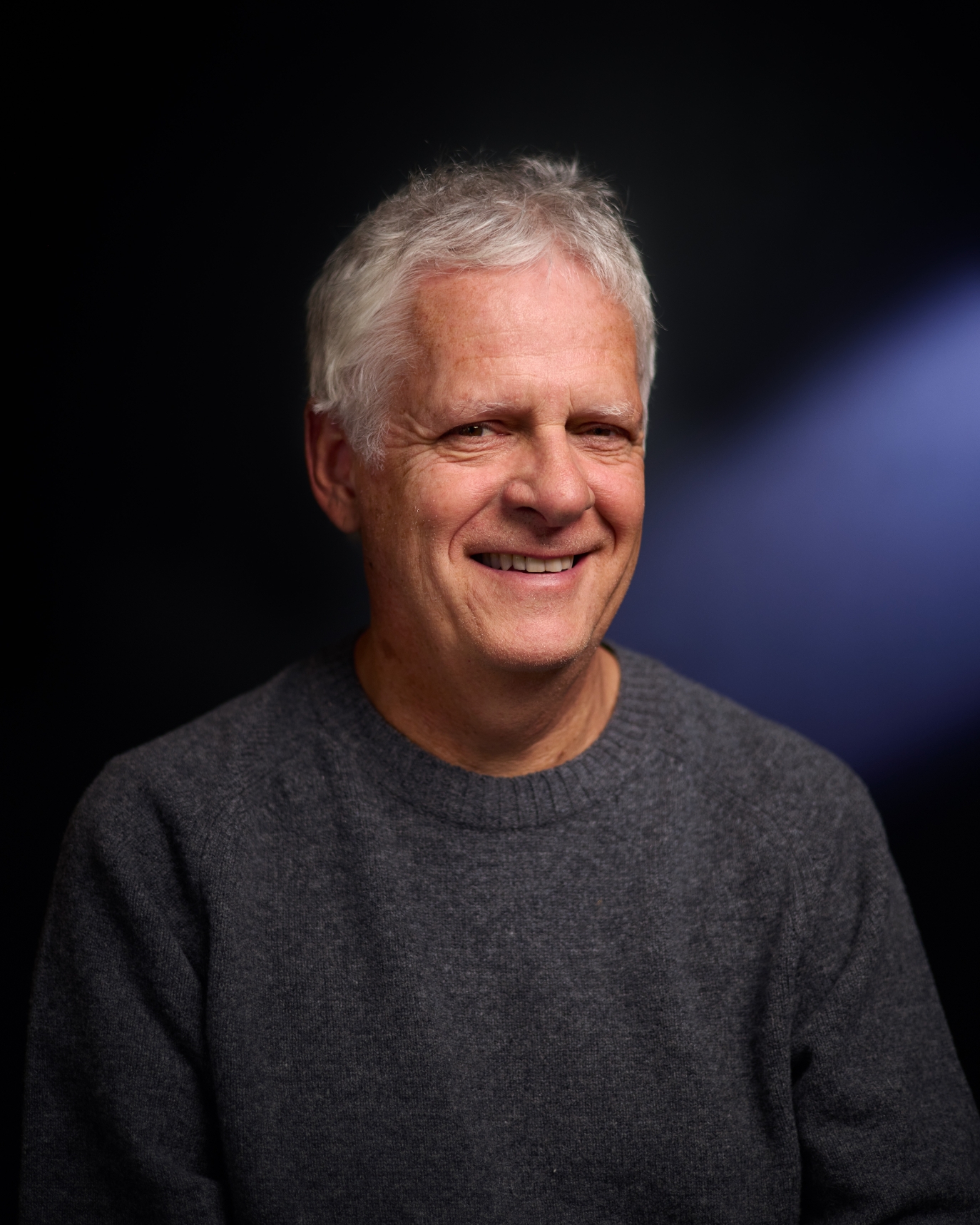
Alain Mongeau - MUTEK Founder
MUTEK launched in Montréal in 2000, when "audiovisual" was barely a festival category. What did you see in electronic music and digital art that the club and festival worlds weren't yet making room for?
Back in 2000, there was simply no festival dedicated to digital culture, to the intersection between creation and digital technologies. So MUTEK was a kind of response to that.
And to be frank, the initial focus of MUTEK was not audiovisual at all. The festival's original subtitle was: "Music, Sound and New Technologies". The visual side of things I was handling through my work as the new media programmer at the Festival du nouveau cinéma in Montréal, where I worked from 1997 to 2001. When I left the FNC, MUTEK refocused and began to embrace the whole spectrum, from music and sound to the visual.
We then stopped seeing MUTEK as simply "music plus technology". What guided us more was the idea behind the name itself, MUTation and TEKnology: a festival that tracks the mutations in the use of technology in artistic practice.
You also have to remember that back then, digital art wasn't a recognised artistic practice, at least not by funding institutions like the arts councils in Canada. So it was important to create a space that would help legitimise this new form of art. MUTEK contributed to that. The Montréal Arts Council, for instance, was the first body to create a digital arts section, in 2009.
Read this next: Eastern Visions: Meet the extraordinary artists merging visual & cultural identities for labels & crews in Asia
MUTEK Montréal's 27th edition ended with record attendance. After more than two decades, why do you think interest in audiovisual and immersive work continues to grow rather than fade?
This year's growth surprised our whole team. We didn't program a very different edition from previous years, so it's hard to point to a single cause. Festival attendance rose by 42%, and about half of our audience came from outside the Montréal region.
At this point I only have hypotheses. First, innovation is part of the festival's DNA, so it keeps renewing its relevance. And more and more of our audience grew up with everything digital, so there's a natural fit. MUTEK follows a culture that never stops changing, and it finds an audience that understands more readily what it's all about.
It's also been suggested that in a world where so much of our experience is individual and on a screen, being in a room with other people, with sound and image working together, is more and more gaining value. And that's without even factoring AI into the equation. MUTEK is all about artists performing live on stage and presenting their own creations, so the real human factor may be something people will cherish more and more.
And finally, maybe we're simply getting better at communicating what the festival is about. We've been lucky to be joined by a new generation of colleagues who understand, perhaps better than before, how to get our message across on social media and how to shape our content accordingly.
In any case, it's exciting to feel that there's an audience. It's exciting for the artists. And for us at MUTEK, it's an invitation to keep pushing boundaries.
What first inspired you to bring MUTEK to Japan and how did you first come into contact with the audiovisual world from Asia?
We didn't actually bring MUTEK to Japan. A group of individuals from Japan, gathered around Shuichiro Iwanami, wanted to bring it over. As I remember it, they were looking for a project where art and technology would intersect, and they found MUTEK. They first contacted our MUTEK.MX antenna in Mexico, and were redirected to the headquarters in Montréal.
But before that happened, I had been told many, many times that because of what MUTEK is about, there would be a natural fit with Japan. When I first visited the country in 2005 for the Aichi World Expo, I met a lot of people from the electronic music scene who showed genuine interest in MUTEK, which confirmed that compatibility.
Then the first MUTEK.JP, in Tokyo in 2016, made it clear beyond any doubt. The festival has taken root in Japan and has evolved nicely ever since. I think it has become an important platform for Japanese artists, and a good way for Japan to interact with the rest of the world through the MUTEK network.
Read this next: All about the optics: reflections and recollections from visionary mavericks in Jakarta
Much of the world is still building the infrastructure for media art and club-visual traditions. What can emerging scenes learn from more established ones, and what should they avoid simply replicating?
What I would pass on is patience, and the importance of community. MUTEK took years to become what it is, and it did so because artists, partners and audiences believed in it and stayed with it. I'd also say that infrastructure is more than venues: it's the support for artists, the networks that circulate their work, and the places where artists and industry can meet.
It's also important not to simply copy what works somewhere else and replicate it untouched. The MUTEK editions in other cities work because each one grew out of its own scene, its own artists and its own places, not because they reproduced Montréal. A format imported without trying to establish and nurture local roots tends to feel fake and empty.
And the learning goes both ways. It's been wonderful to witness how the MUTEK offshoots in different cities have taken root and evolved, and we've learned a lot from them. For me, the best exchange is not exporting a recipe but connecting scenes so they can inspire each other.
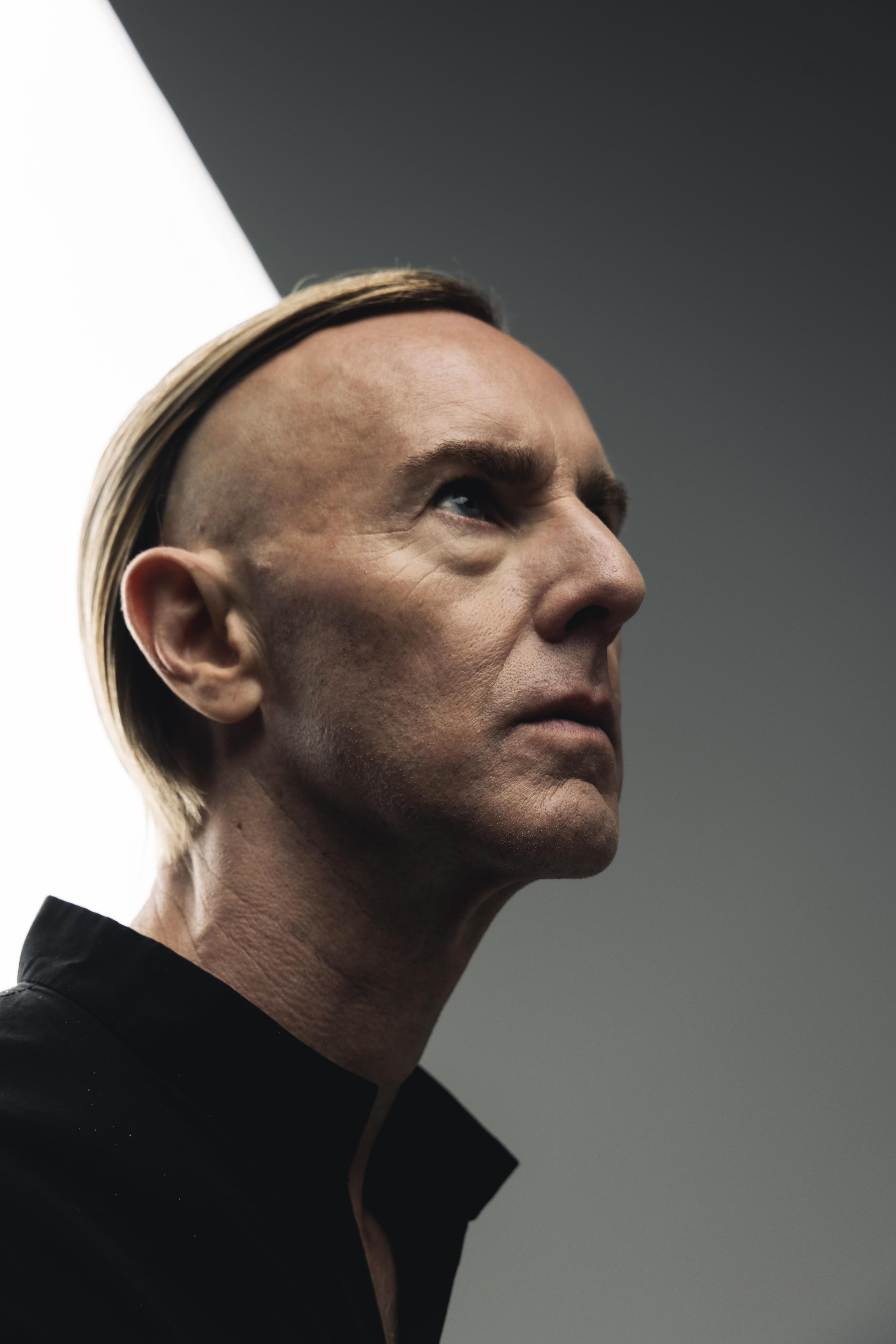
Richie Hawtin
This is the first PLASTIKMAN-branded show in Japan in 16 years, and it’s not a conventional live set. What made this the moment to bring the name back to Tokyo, and what does the name mean to you now?
Using the word branded sounds like the Plastikman name is only a marketing tool—and even though the logo is ‘catchy and cute’, it’s only used when there’s a deeper exploration of sound and my own ambitions as an electronic music producer.
There are moments when I feel like locking myself away in the studio and embarking on sonic explorations which ebb and flow like the tides. There’s no real reason why one moment feels like a Plastikman moment or not, but I’ve learned to trust that instinct when it arises and follow it to its conclusion.
The talk of an event at the new MoN museum has been on-going for about two years and it just happened to connect to a time when Plastikman was bubbling up from my subconscious and felt like the perfect medium to explore a new sonic landscape.
The idea of fermentation—or ‘fermenting an idea’ is very close to the way I work in the studio, allowing ideas and machines to interact with each other and “brewing” into something else—so this love and interest in both electronic music and the culture of Japanese sake very easily found a dialogue which I found very interesting and inspiring.
Read this next: Richie Hawtin relives nights out in Tokyo for new 'Prada Extends' video
For many, club culture and AV art still sit in separate worlds. How do you bring a club audience into a seated, immersive, almost meditative format?
I feel that I’ve been sitting between those two cultures since day one. Looking back, was the original Plastikman album ‘Sheet One’ a dance album or an hour-long meditative trip to listen to while lying on your bedroom floor? Perhaps both, but it was definitely recorded as something to listen to in one long stretch and be immersed inside.
I think that’s also where Plastikman differs from Richie Hawtin; the more forward straight to the dance floor “branding” that you’ll find on dance-floors around the world, so once again, sinking into the Plastikman persona is surely about exploring different territories.
The last Plastikman live shows (‘The Cage’ show around the 2010s and then the EX events at Sonar and the Guggenheim in New York) both explored the bridge between these two worlds; also both in collaboration with Ali Demirel for the visual side of things.
Polyphonic Fermentation will again occupy both sides; however, since we are in a seated museum, we will emphasise a more meditative experience than those last two concert-like shows which were both held in more party/festival type settings.
Your relationship with Japan goes back a long way, through clubs, festivals and now sake. What’s your earliest memory of the Japanese scene, and how has it changed?
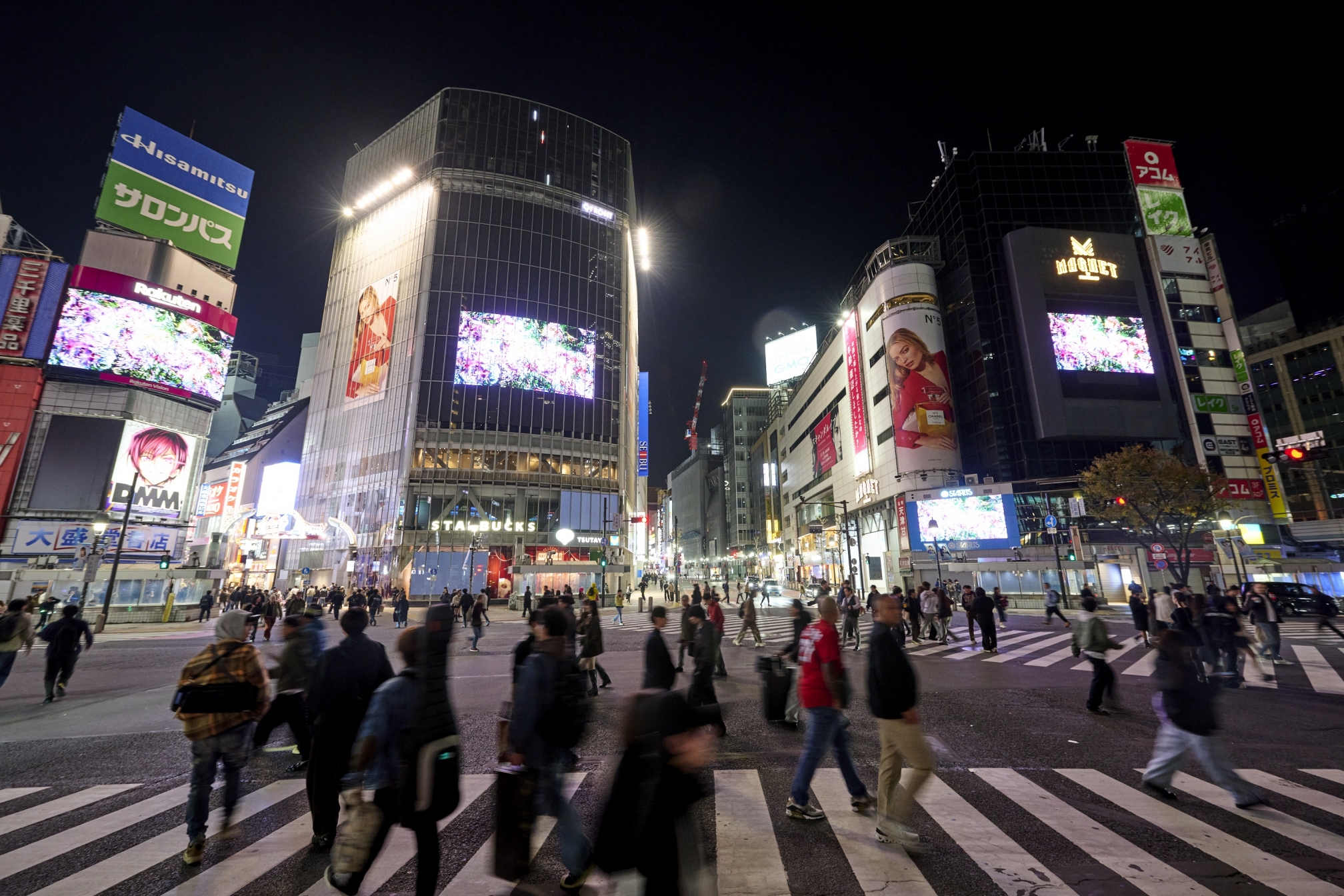
My earliest memories of are places like the Shinjuku Liquid Room and Tokyo’s Maniac Love; both quite different but filled with a raw energy of the early 1990s. I always assumed that the Japanese people would love electronic music due to their technology filled lives, and as I visited more and more, I realised that there was a very unique balance between the past and future in Japan; one that still seems to resonate in a different way than other countries so it’s a continued joy to come back to Japan and debut such a special new performance.
In fact, the opportunity to present a show in Japan has helped guide the type of performance and music that we’ve been creating as we’ve allowed the Japanese concept of utsuroi to help guide the overall timing and arc of the show. Ali and I always wanted to explore a slower evolution and development of our symbiotic audiovisual concepts, and this is part of what excites us within the entire concept of Polyphonic Fermentation.
Read this next: WATCH: Daisuke Kazaoka performs dub remix album live in one-take video
In your opinion, what’s the next frontier for electronic music and audiovisual performance, and how do Japan and Asia in general fit into that conversation? And how do you see others learning from MUTEK.JP’s approach to electronic music, audiovisual art, and digital creativity?
I believe that Japan has been at the forefront of electronic music visual performances.
Take Ryoji Ikeda and Daito Manabe as two key individuals who have delved into the medium to a nearly subconscious level. Take the modern TeamLab experiences that started in Japan; surely this shows that the environment of living in technologically forward Japan with its deep cultural aesthetics and beliefs has been instrumental to a very special perspective within the discipline of audiovisual creativity.
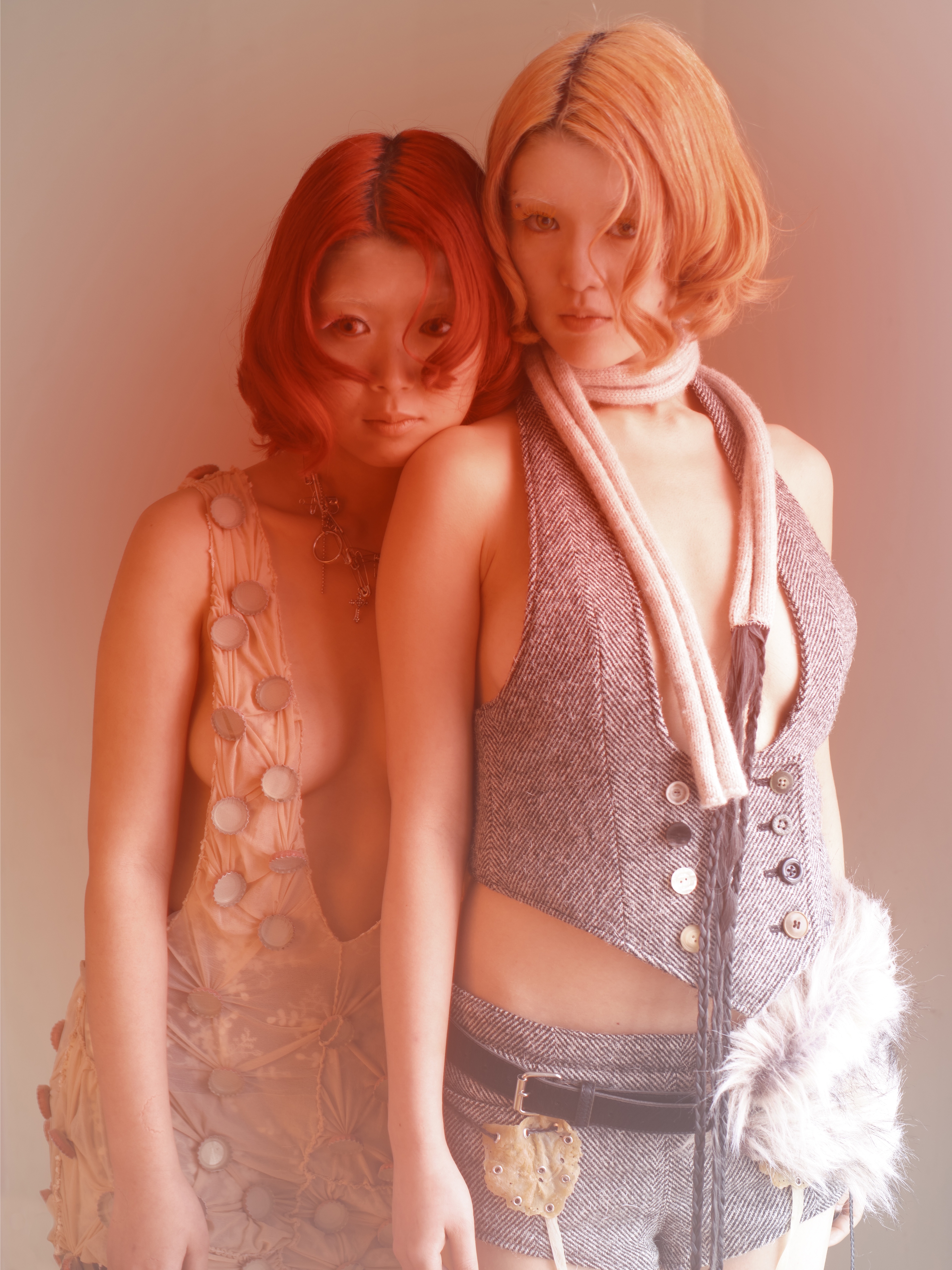
TAMANARAMEN
Working as sisters across two cities (Tokyo and London): how do you divide the sound, the visuals and the creative decisions? How does the geographical distance impact your work?
When we move between these two cities, it feels as though time flows differently in each of them.
Tokyo has its own sense of time. For us, it's a busy, social, outward-facing kind of time. Things are constantly happening, one after another, appearing and disappearing. It feels like we're living in a fleeting world, where everything is as ephemeral as bubbles.
London has its own rhythm too, but compared to Tokyo, time seems to move more slowly. It's a place where we have more space to look inward and reflect on ourselves.
Of course, we continue creating in both cities, but what we see and discover through music and visual expression is different in each place.
In Tokyo, we tend to turn ideas into something tangible in the little moments between everything else. It's almost like constantly making sketches in a notebook. Then, when we're in London, we open that sketchbook and start adding colours and textures, thinking about how the stories might unfold.
In London, there's a stronger sense that our everyday lives and our creative practice are intertwined. Creating becomes a way of living. Maybe it's because we're in an environment where there aren't many distractions or pleasures that feel more compelling than making something.
Read this next: Techno & Zen: Cloudy Ku on HER 他, Akira and seeking unknowingness
Your performance for this year's event is built on banbutsu ruten, the idea that everything is in constant flux. Why did that concept feel like the right frame for 2026; is there a deeper message you're trying to convey? And how does the choice of music/sound tie into all this?
Moving to London was the first time we truly felt that our lives had changed in a significant way. Our values began to shift, and without even realising it, almost everything around us was changing too: the people we met, our relationships, our lifestyles, and the way we saw the world.
At first, we sometimes felt confused by these changes, and even by the emotions that came with watching ourselves transform. But gradually, the versions of ourselves that had once felt unfamiliar simply became who we were in the present.
These personal experiences of transformation have had a profound influence on the theme of this performance. And while we were going through these changes ourselves, the world around us was also constantly transforming.
Not so long ago, AI was something mainly used by people who were curious about new technology. Now, it has become such an ordinary part of everyday life that even our parents use it daily. That's the world we're living in, in 2026. As AI continues to develop, it feels as though human life and our values are changing at an overwhelming speed. Even in music, we're increasingly hearing about artists creating entire works using AI alone.
To be honest, there's something frightening about these changes. Part of us doesn't want to accept them at all. But at the same time, we're curious about what might happen if we embrace AI as part of our own creative practice. Perhaps it could lead us towards forms of expression and ways of thinking that we've never encountered before.
Just as living in London gradually transformed us without us even noticing, perhaps the changes that feel so unfamiliar and unsettling today will one day simply become our new normal.
We want to keep evolving, holding both the fear of change and the curiosity of discovering who we might become. After all, everything is in a constant state of flux.
How do you hope MUTEK.JP shapes the way audiences across Asia think about audiovisual work in the next few years?
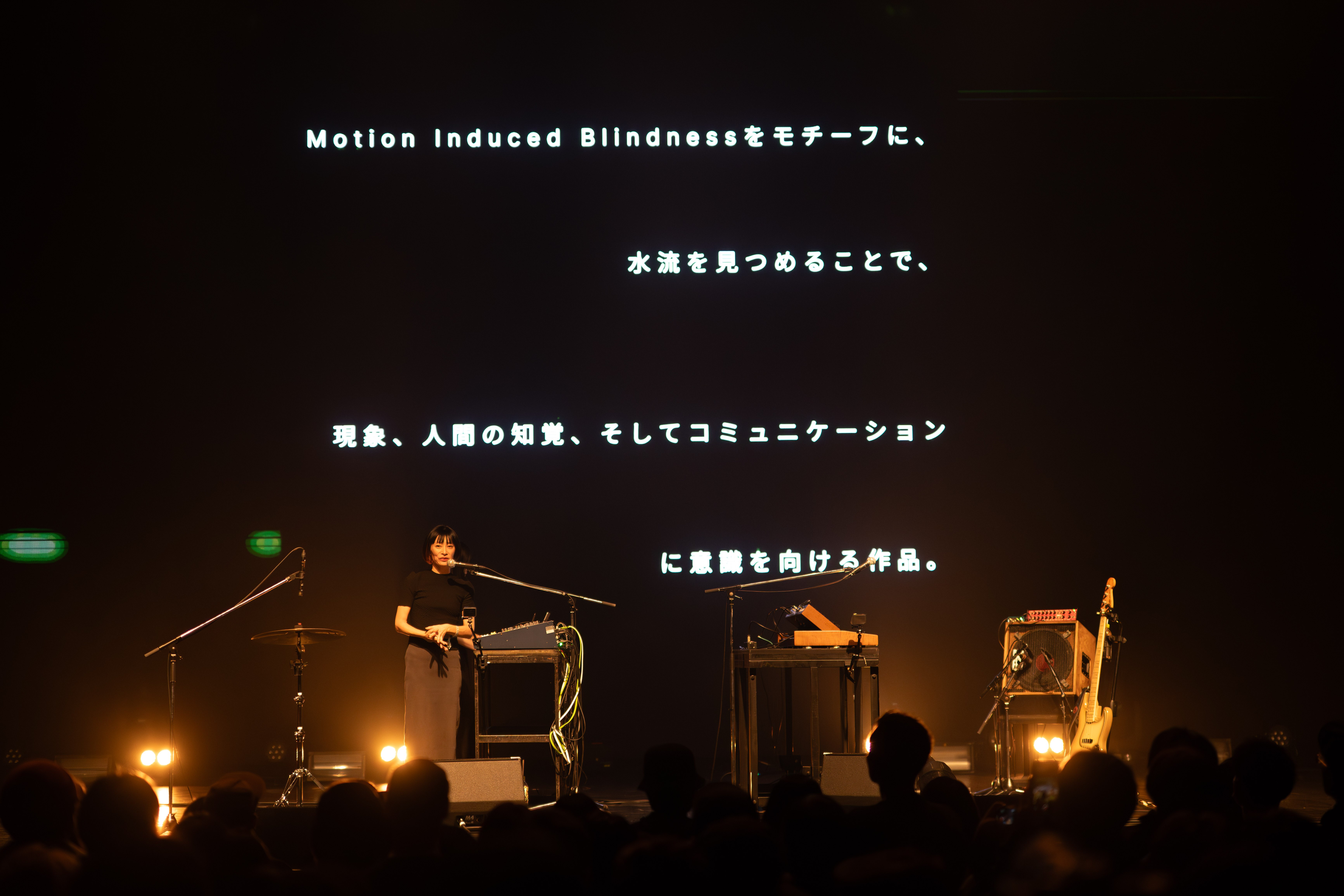
We feel that audiovisual performance is still relatively unfamiliar to many people in Japan. It's the kind of art form that often makes people ask: "What exactly is that?".
For us, audiovisual performance exists somewhere between a live music performance and an installation, where sound and visuals come together as one expression.
But we don't think it needs to be something difficult or intellectual. At its heart, it's something you can experience intuitively, something that can be beautiful, exciting, surprising, and simply fun. We hope more people will discover it and feel free to enjoy it in their own way.
We think MUTEK.JP is an incredibly valuable place to encounter these kinds of unfamiliar forms of expression. We still vividly remember discovering MUTEK when we were teenagers and being completely amazed, thinking: "We had no idea performances like this even existed in the world!"
Encountering something we'd never seen before made us feel as though our world had suddenly expanded. Just as that experience opened up a whole new world for us, we hope MUTEK.JP can become a doorway to something new for someone else.
Beyond the boundaries of music, visuals, and art, there are so many forms of beauty and sensation that we have yet to discover. We hope these kinds of experiences will become more accessible and familiar to audiences across Asia in the years to come. And perhaps, for someone out there, these three days will be the beginning of seeing the world a little differently.
Read this next: Photographer Greg Girard's new book is a textured voyage through vintage Tokyo
Which Asian visual artists, VJs or collectives should our readers be watching right now, and why?
Wang Jingxin. We first discovered Wang Jingxin through her visual work for the artist 33EMYBW.
We think she has an incredible sense of aesthetics, especially in the way she balances distinctly Asian influences, exotic elements, and a futuristic sensibility. There's something truly remarkable about how her work can feel both bold and delicate at the same time.
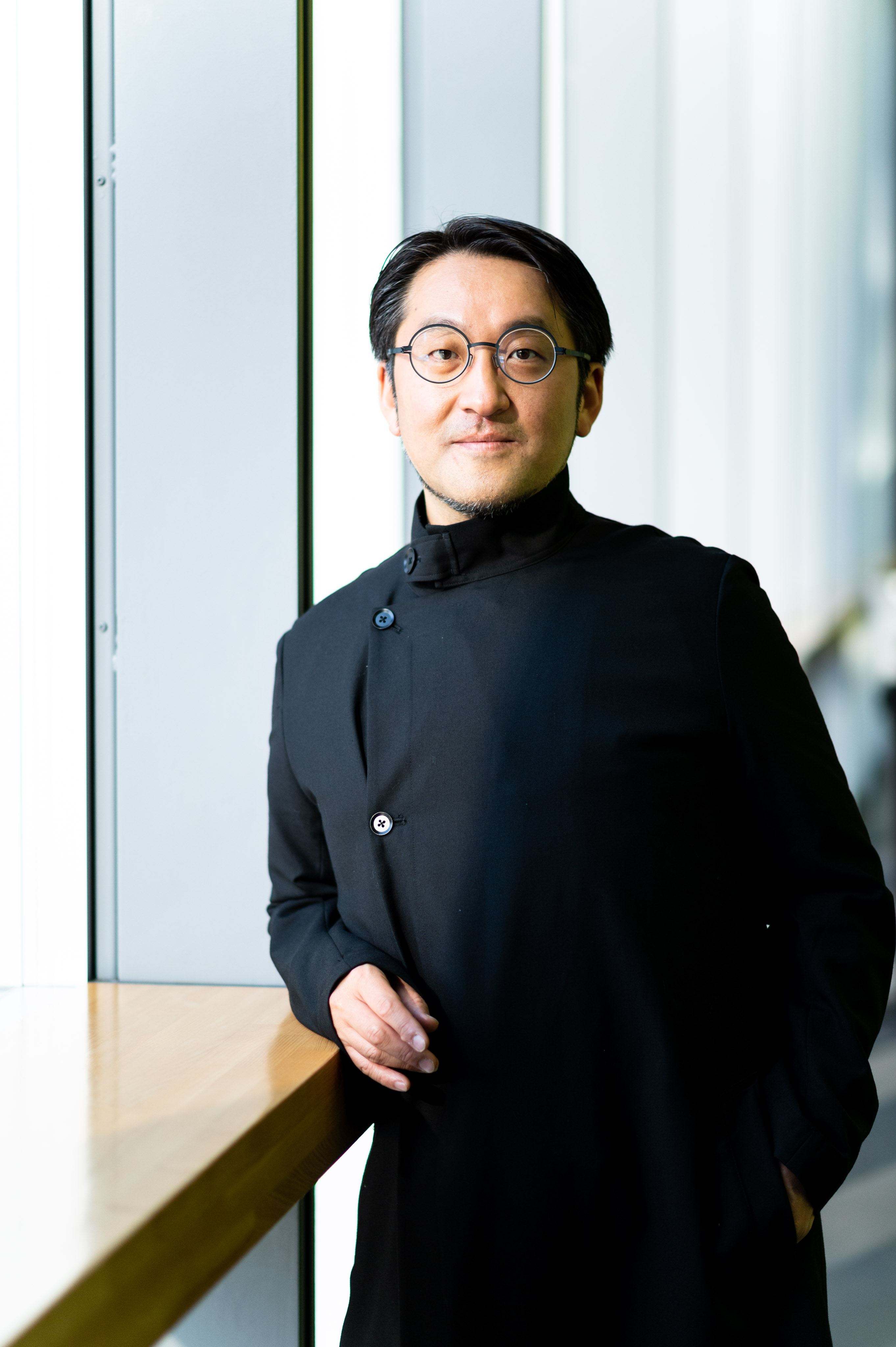
Shuichiro Iwanami - MUTEK.JP General Director
MUTEK.JP started because you wanted a platform for work that doesn’t fit the usual club or festival format. When a submission lands on your desk, what tells you in the first minute that it belongs at MUTEK.JP and not somewhere else?
At MUTEK.JP, we place great importance on the spirit of exploration. We’re interested in the range of possibilities of digital creativity and in supporting the development of new forms of expression. We’re always looking for things we’ve never seen or heard before: works and performances that challenge our expectations and open up entirely new experiences.
One of our defining principles is our commitment to 100% LIVE performances. We value artists who create and manipulate sound and visuals in real time, bringing a unique sense of spontaneity and creative energy to each performance.
When selecting artists, we focus less on reputation or commercial success and more on the quality and originality of their work, their willingness to experiment, and their potential to push creative boundaries. Technical excellence matters, but what interests us even more is whether a work can offer audiences something genuinely unexpected: a different perspective, or a sense of discovery.
MUTEK.JP brings together music, visual arts, digital art, and technology in many ways. The works that explore and challenge established categories and resist easy classification are often precisely the ones that belong at MUTEK.
Read this next: CTRL+Print Vol. 2 / Vaporwave, Acidgrafix & Cybersigilism
This year you’re in an art museum for the first time, at MoN Takanawa. What does a museum let you do that previous venues could not, and what other features or approaches are different this year from previous editions?
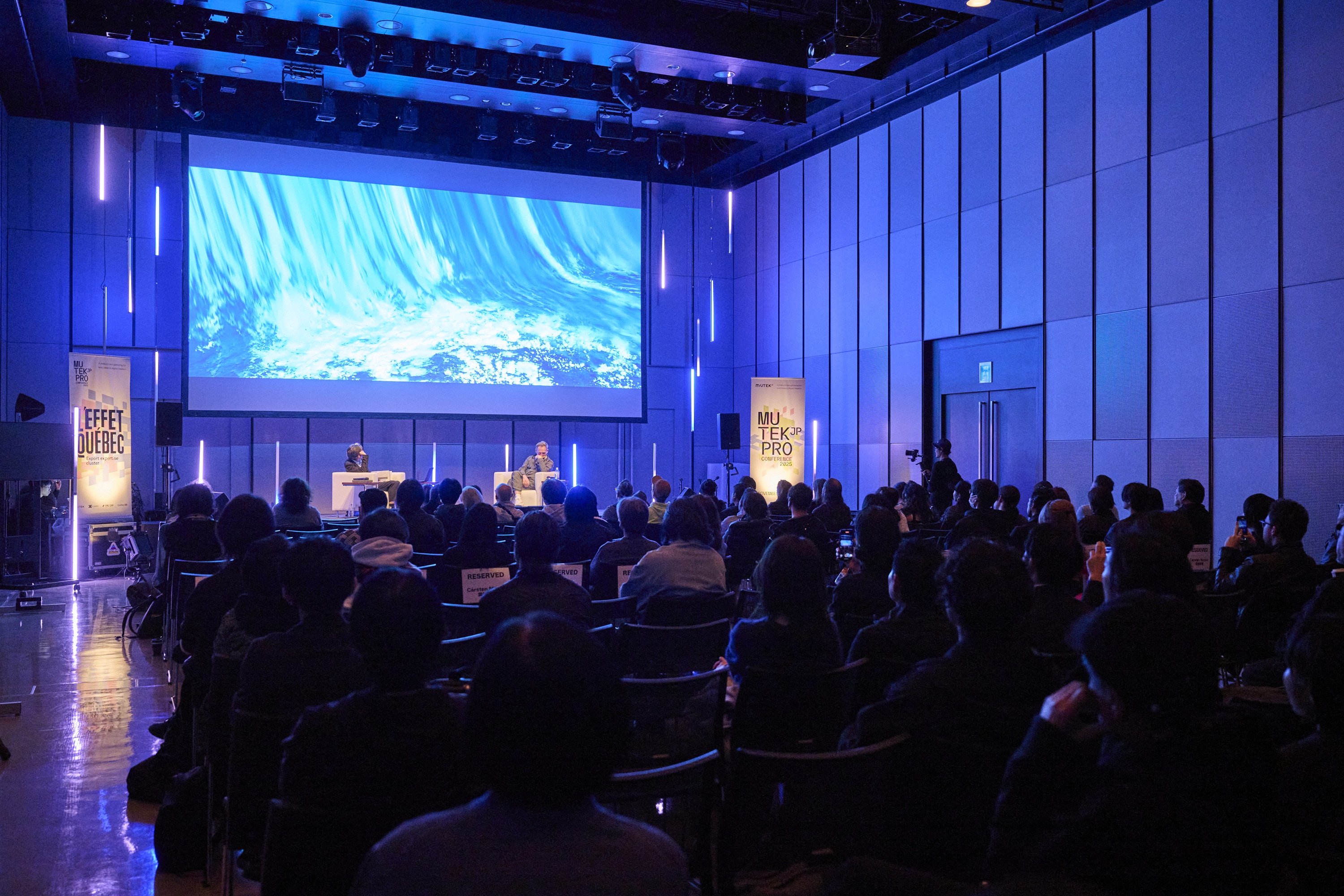
As MUTEK.JP enters its 11th edition, we’re embracing a new chapter inspired by this year’s theme, “A New Cycle”. Choosing MoN Takanawa: The Museum of Narratives felt like a natural step. Developed by the East Japan Railway Culture Foundation, this new cultural institution shares a vision of connecting culture with the next 100 years, as well as a commitment to experimentation that strongly resonates with MUTEK.JP’s own philosophy and direction.
In previous editions, our program was spread across different venues throughout Tokyo. This year, for the first time, we can bring a wide range of activities together within a single cultural institution: live performances that highlight MUTEK’s audiovisual DNA, digital art exhibitions, conferences, workshops, and networking events.
For us, this is about much more than moving to a new venue. It’s an opportunity to rethink the overall festival experience, giving audiences more ways to discover different artistic expressions, meet artists and creators, and make unexpected connections, all within one place.
Another important development this year is the expanded digital art exhibition program, alongside live performances taking place simultaneously in two spaces. With different artists performing in parallel, audiences have greater freedom to explore the festival, move between spaces, and shape their own experience according to their interests.
I believe this new environment will allow MUTEK.JP to feel even more like a festival in the fullest sense of the word: a place where artistic exploration, discovery, and connection can happen naturally.
On the MUTEK.JP site, it states that Japan and Tokyo specifically helped invent the modern synthesizer and drum machine, yet electronic music festivals were never a strong part of the culture. Has that changed in your opinion? Where is Japan's audience now compared with 2016? And what about the rest of Asia?
Since we launched MUTEK.JP in 2016, I’ve definitely seen the electronic music and digital creative communities grow, particularly in Tokyo. One of our main motivations for establishing MUTEK.JP was to help create an environment where artists, creators, and audiences could connect, exchange ideas, and grow together.
Japan has a remarkable history of innovation in electronic music, from synthesizers to drum machines. Yet I believe there is still significant room for electronic music and digital art festival culture to develop further. While the scene has grown over the past decade, there is still an opportunity to reach wider audiences and introduce more people to the possibilities of these art forms.
One of the most interesting changes is the way the boundaries between electronic music, visual arts, digital art, and technology have become increasingly fluid. More artists are working across disciplines, and audiences are becoming more interested in experiencing these different forms of expression together. Compared with 2016, I feel there is a greater openness to this kind of interdisciplinary experience, although there is still much potential for growth.
Recent technological developments, particularly in real-time visual technologies and artificial intelligence, are also opening up new creative possibilities. Tools and techniques that once required highly specialised knowledge or resources are becoming more accessible, allowing more people to experiment and develop their own artistic practices. I believe this will encourage further innovation and help new creative talent emerge.
Looking beyond Japan, the development of electronic music and digital art scenes across Asia has also been steady. Each scene has its own cultural context and creative identity, and I think there is enormous potential for greater exchange and collaboration across the region.
This year, our program on November 22 places a special focus on Asia, bringing together performances that reflect the region’s distinctive creative energy and artistic diversity. We hope audiences will discover exciting new expressions and perspectives through this program.
Looking ahead, we want to continue using Tokyo as a hub for connecting artists, cultural institutions, and creative communities across Asia. Our goal is not only to introduce international talent to Japan, but also to support the visibility and continued development of the wider Asian creative scene.
Read this next: Inside Halina Rice’s spatial audio experience at Wonderfruit with Polygon LIVE
Your mission is to find and nurture new talent, not only book established names. What does a MUTEK.JP development relationship look like in practice, and how do you shape four days into a story, not just a list of names?
Discovering and nurturing new talent has always been one of our core missions. While we’re proud to present internationally established artists, we’re equally committed to creating opportunities for emerging creators to learn, experiment, develop their practice, and share their work with wider audiences.
One example is our long-standing partnership with TouchDesigner, the real-time visual programming software. Every year, we organise beginner and intermediate workshops that attract around 50 participants. Beyond technical skills, these workshops create opportunities for people to meet, exchange ideas, and become part of a growing creative community.
We see this as an important part of nurturing talent: not simply providing a stage, but helping build the conditions for new ideas, collaborations, and artistic practices to emerge. Through MUTEK’s international network, we also hope to help artists connect with opportunities beyond Japan.
When it comes to curation, we think about the audience journey. The goal is not simply to assemble a strong line-up, but to create a coherent experience in which each performance, exhibition, or activity offers a different perspective and opens the door to new discoveries.
This year, for example, Box1000 will host immersive live performances by internationally established artists such as Max Cooper, Hania Rani, and Richie Hawtin, while Box300 will focus on experimental and innovative audiovisual performances. Alongside these shows, digital art exhibitions, panels, and workshops will give audiences different ways to engage with the festival, whether they come as music fans, artists, or simply curious visitors.
Our collaborations with international embassies and cultural institutions also help bring diverse artistic perspectives to Japan and make MUTEK.JP a platform for cultural exchange… I love the idea that someone might come to see an artist they already know and unexpectedly discover something completely new!
We’re particularly inspired this year by this idea of “A New Cycle”, which reflects that spirit. With a new venue and new ways of bringing artists and audiences together, I hope these four days will become a journey of exploration and inspiration, and perhaps the starting point for someone’s own creative journey.
MUTEK.JP takes place on November 20-23 at MoN Takanawa: The Museum of Narratives; tickets available here.
Amira Waworuntu is Mixmag Asia’s Managing Editor, follow her on Instagram.
Never miss a beat. Subscribe to our Scene Report newsletter or follow us on Instagram.
