


 Features
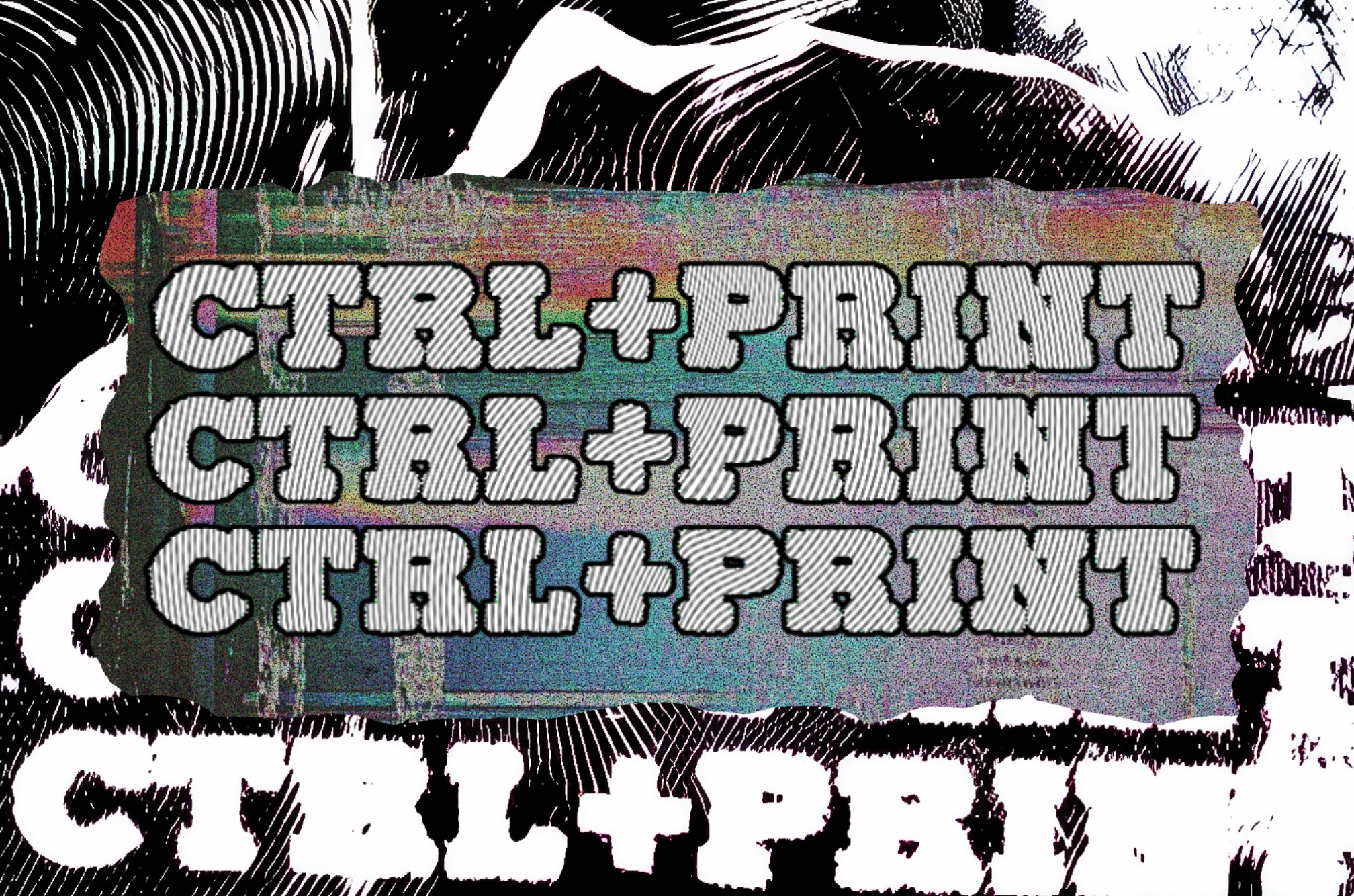
CTRL+Print Vol. 2 / Vaporwave, Acidgrafix & Cybersigilism
From club walls to phone screens, here’s your guided tour through the visuals & creatives designing the aesthetic of dance music culture in Asia & beyond
Welcome to CTRL+Print, a Mixmag Asia series exploring the fertile, often chaotic intersection of graphic design and electronic music culture.
This time, we are diving deep into the archives to trace three seismic visual movements—Vaporwave, Acidgrafix, and Cybersigilism—back to their electronic music roots. Along the way, we’ll highlight some of the queer pioneers who birthed them and the Asian artists redefining their futures.
What if we told you that before these iconic design movements were ever seen, they were heard?
1 Vaporwave: The Haunted Echoes of Lost Futures
At one point in digital history, it was impossible to scroll through the internet without encountering a specific pastel aesthetic: classical Roman busts, Windows 95 logos, and neon-drenched pixel art. This is the visual world of Vaporwave.

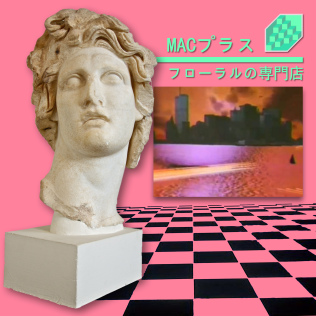
Characterised sonically by its downtempo sounds, chopped vocals and reverb-heavy soft jazz, R&B, and hip hop samples, Vaporwave was pioneered by experimental producers like Oneohtrix Point Never and Ramona Langley—the American trans woman behind the seminal 2011 album ‘Floral Shoppe’.
Vaporwave’s pastel collages evoke the eerie feeling of walking through a completely deserted, sunlit shopping mall. It began as a cynical, satirical critique of late-stage consumer capitalism in the '80s and '90s, capturing the nostalgia for "lost futures" that never materialised.
Early on, the genre’s heavy reliance on retro-Japanese typography and corporate imagery was critiqued by many as cultural appropriation and techno-orientalism—a Western fantasy of a hyper-technological future projected onto East Asia. However, as the movement gained traction, it found its way into the hands of Japanese artists who effectively recontextualised the imagery.
The Asian Pioneer: Hiroshi Nagai
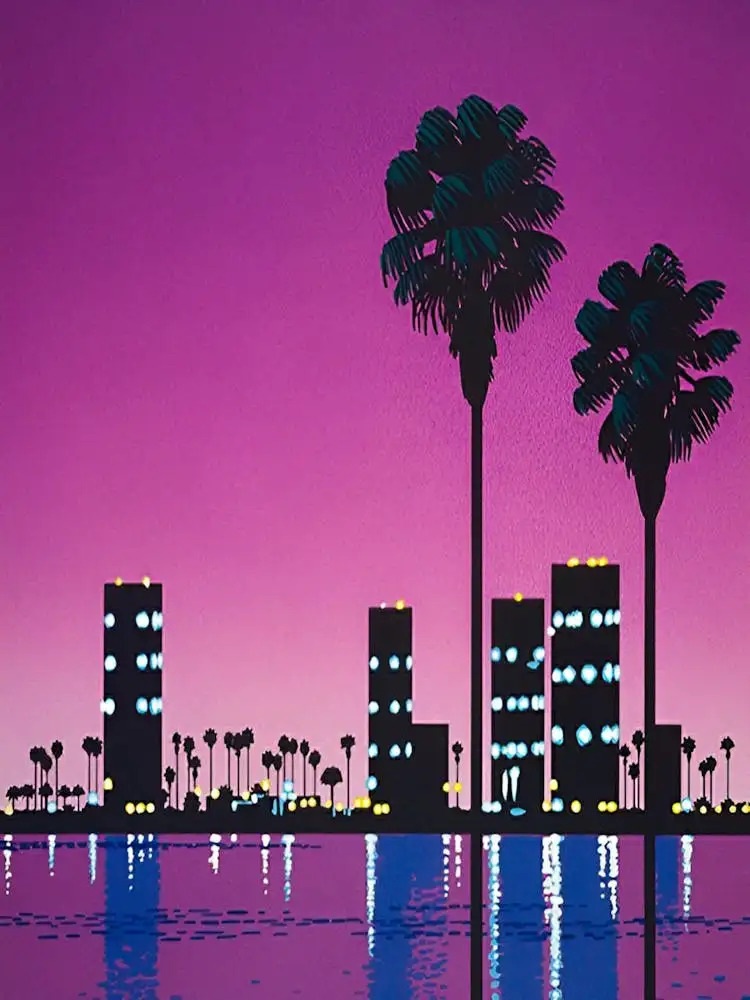
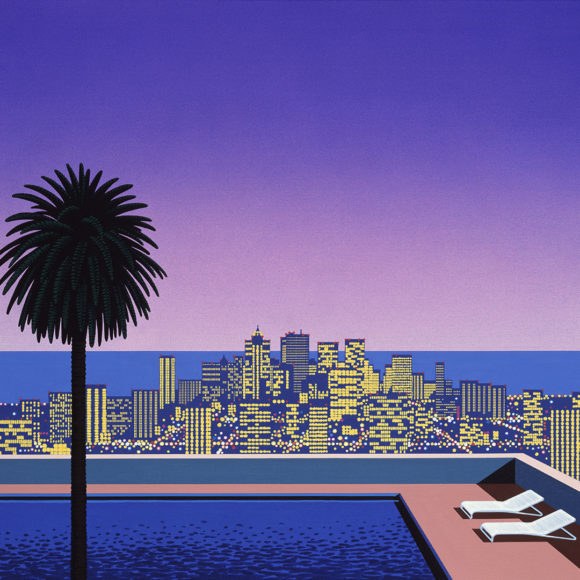
Illustrator Hiroshi Nagai became one of the most visible figures within this aesthetic reclamation. His iconic, sunlit coastal scenes, pristine swimming pools, and retro leisure-class imagery—originally commissioned for 1980s city pop albums by artists like Eiichi Otaki and Yu Hayami—became the blueprint for Vaporwave’s visual identity, bridging the gap between digital nostalgia and genuine cultural heritage.
2 Acidgrafix: The Dystopian Pulse of the Rave
In the mid-2010s, online design communities witnessed the aggressive revival of Acidgrafix (or Acid Design). To understand its visual hostility, you have to go back to the late-80s acid house scene of Chicago, which triggered the massive 90s rave explosions across the UK and Europe.
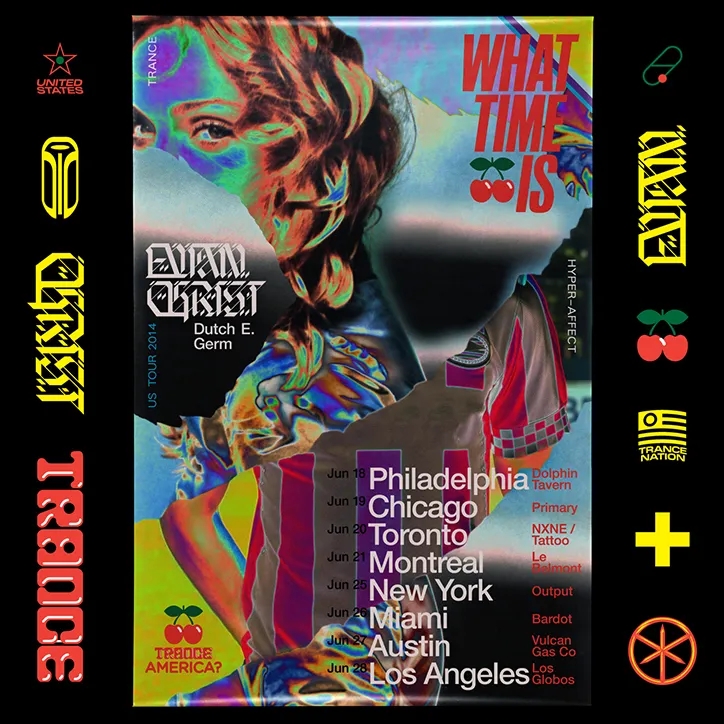
Acidgrafix rejects the clean minimalism of the corporate world. Instead, it weaponises psychedelic and Optical Art patterns (warped stripes, liquid metallics, checkerboards), early technological symbols and global grids, and 90s rave iconography, like the distorted rave smiley face.
The overall mood is fiercely anti-utopian. It uses visual dissonance, liquid chrome typography, and jarring legibility to express raw, subjective emotion and a hyper-individualised counter-cultural identity.
The raw, combative visual language of contemporary Acidgrafix draws a direct lineage from the radical queer activism of the '80s and '90s. Revolutionary collectives like Gran Fury—the artistic arm of ACT UP—forged the blueprint for using hostile typography and jarring imagery to disrupt and challenge oppressive institutional structures.
The Asian Pioneers: Jonathan Castro & GUCCIMAZE
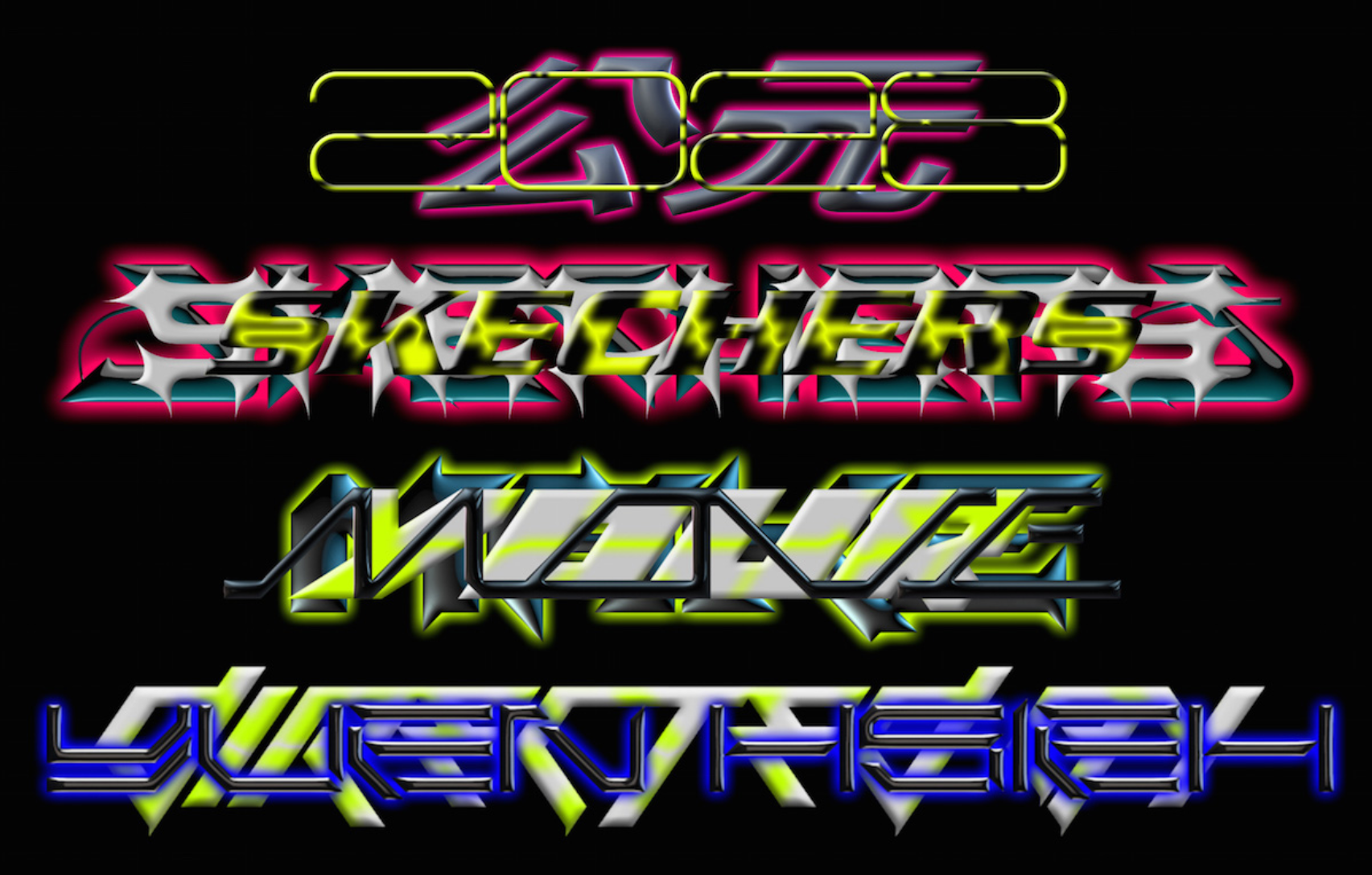

The modern resurgence of Acidgrafix owes a massive debt to two global design powerhouses of Asian origin:
- Jonathan Castro: A Peruvian-born designer of Filipino origin whose "superstar" status in the design world has seen his chaotic, boundary-pushing work featured by global brands like Skechers China and the pan-Asian music collective 88rising.
- GUCCIMAZE: A Tokyo-based graphic designer credited as a primary catalyst for the Acidgrafix boom. Known for his sharp, chrome-rendered typography, his distinct style has graced everything from Tokyo's underground Rave Racers crew to major international names in hip hop, rap, and pop.
3 Cybersigilism: The Hieroglyphics of the Digital Age
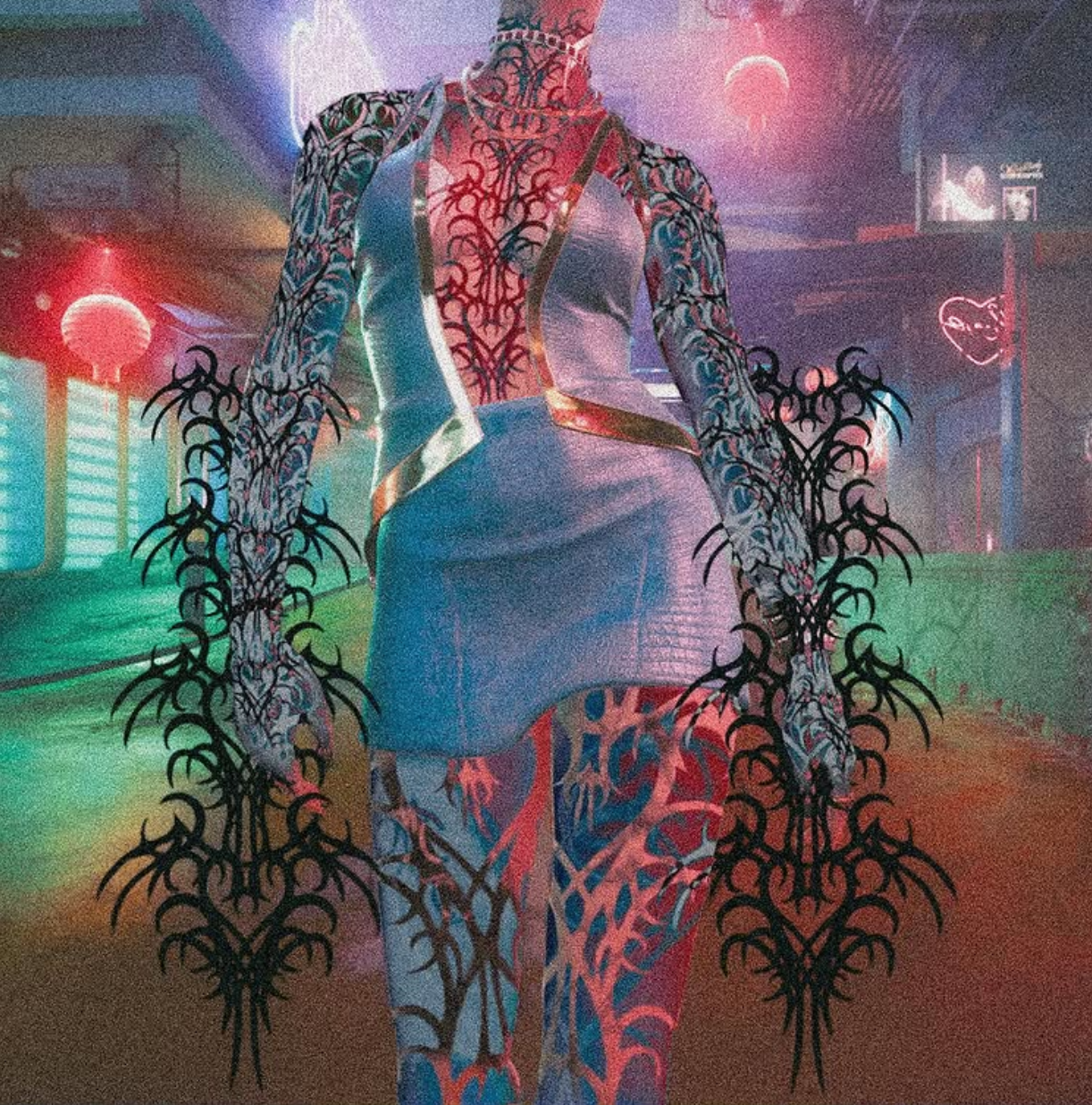
Our final movement is a subcultural phenomenon that has recently pierced the mainstream: Cybersigilism.
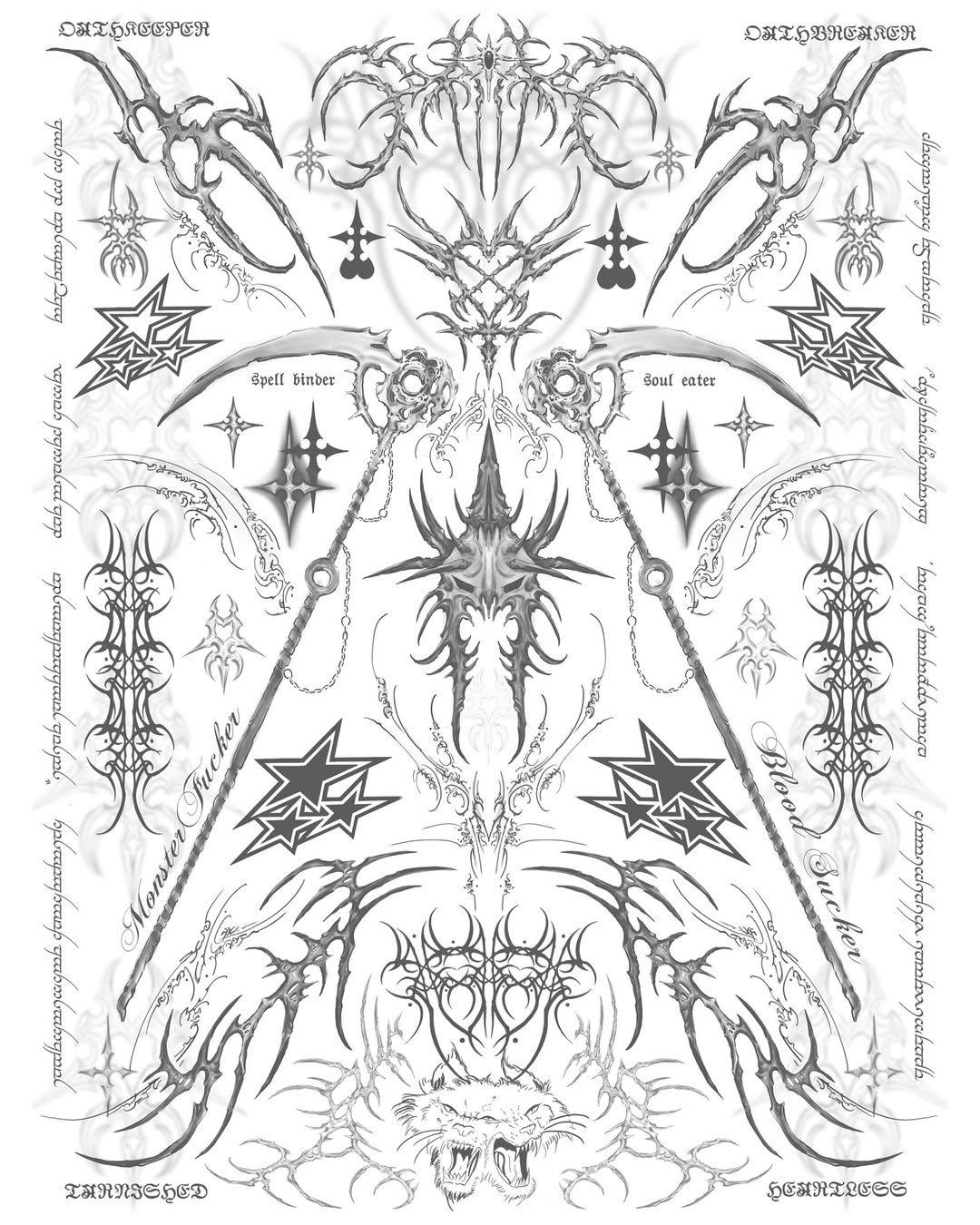
Originating in the late 2010s within Berlin’s notoriously hedonistic underground techno circuits, Cybersigilism began not on posters, but on skin. It is characterised by intricate, needle-fine linework that looks like a fusion of biomechanical horror and internet-age mysticism. The movement is associated with art-focused rave communities and music stemming from pioneering witch house act Salem.
The aesthetic draws heavy influence from the "biomechanical" art of H.R. Giger (the mastermind behind Alien), where organic anatomy seamlessly fuses with cold, mechanical structures. Sonically, it is deeply tied to the haunting, distorted frequencies of pioneering witch house acts like Salem, as well as the modern Drain subgenre.
The very term "Cybersigilism" is traced back to @aingelblood, a queer American tattoo artist who helped codify the look. What started as a niche visual signifier within the queer, art-focused techno communities of Berlin has since exploded, transitioning into mainstream high fashion and fast fashion alike. It remains the defining iconography of our post-post-internet era.
The Asian Pioneer: @debauchry (Samara)
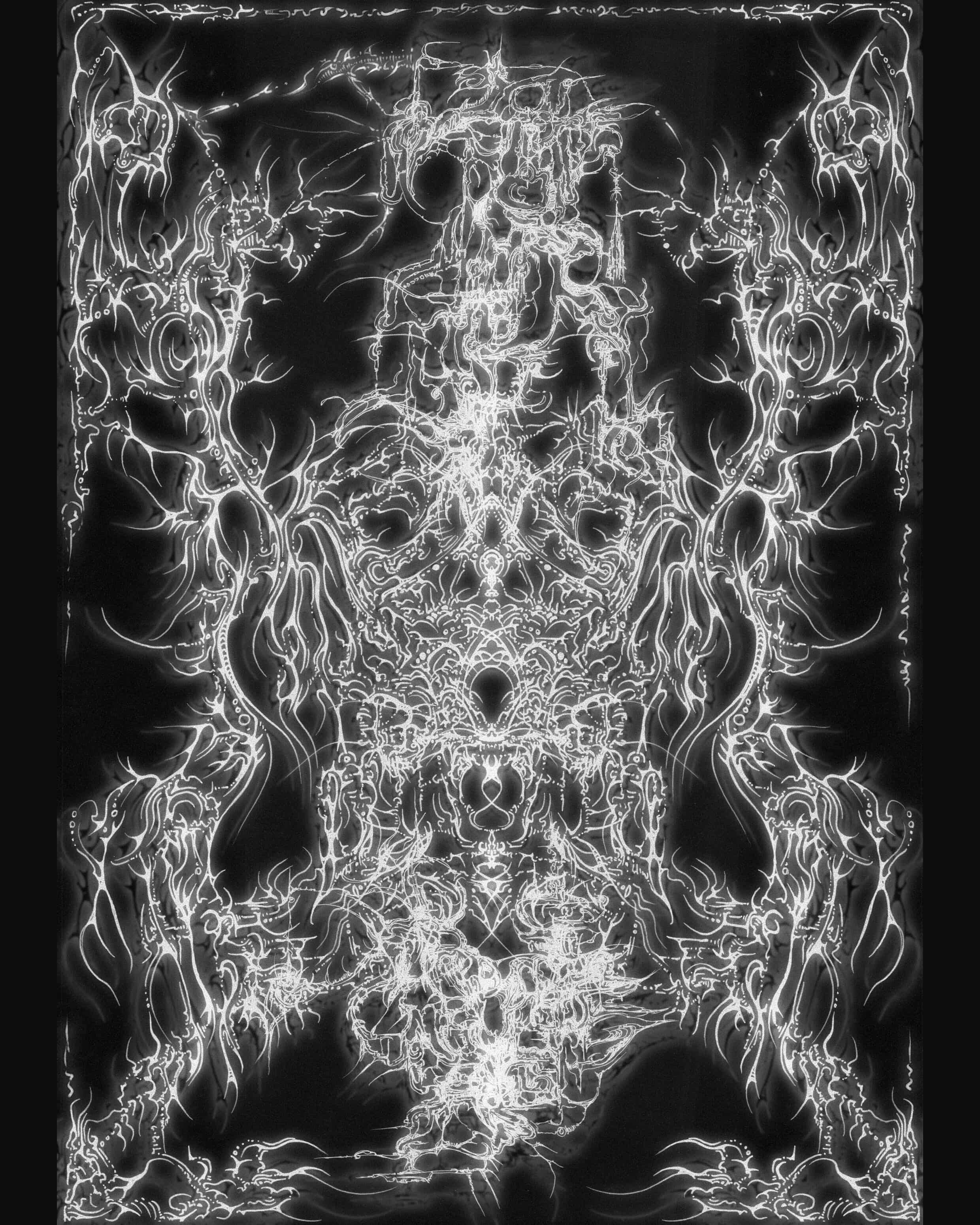
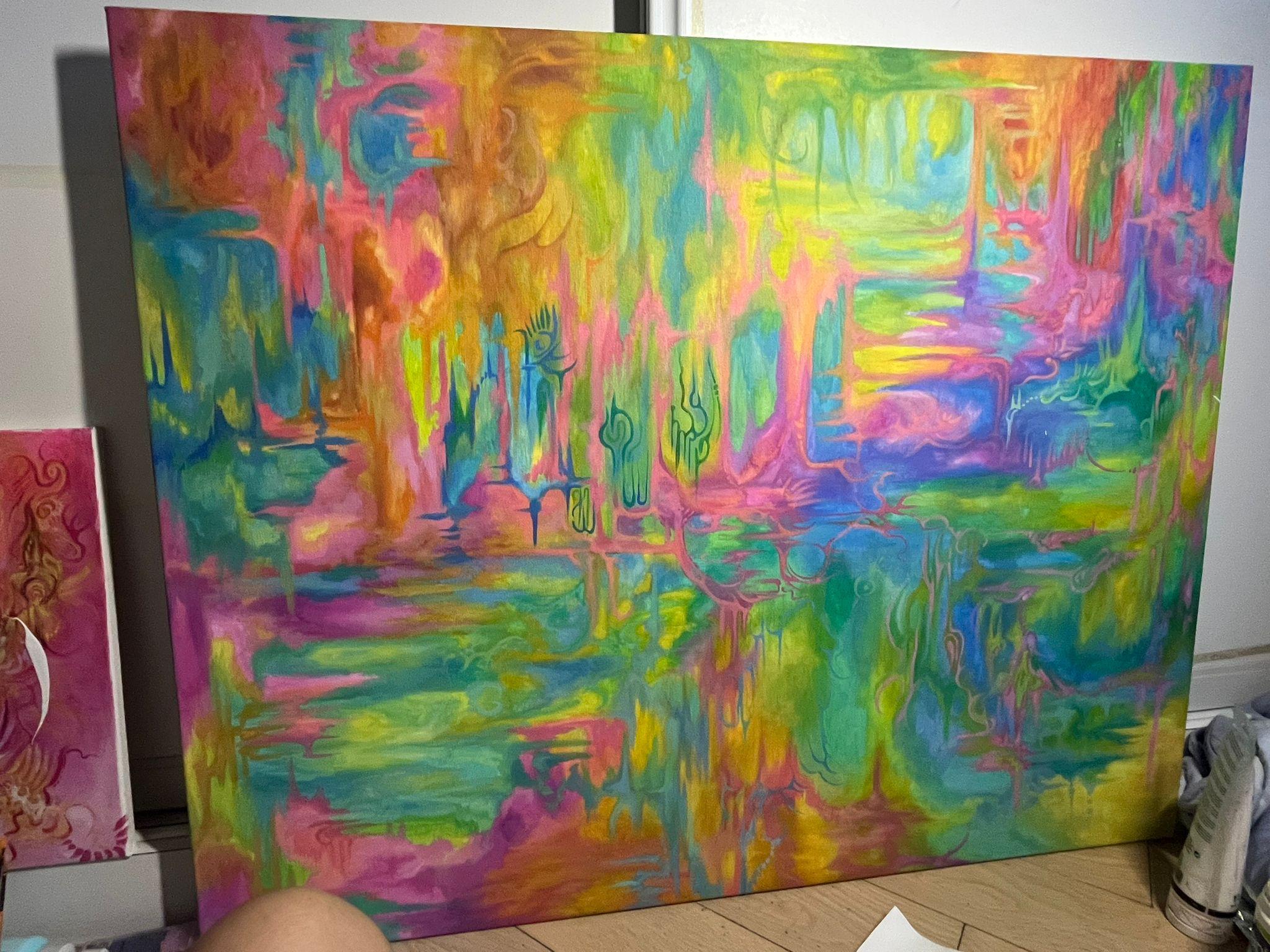
Look no further than Hong Kong-based tattoo artist and painter Samara, known online as @debauchry, whose work serves as a brilliant love letter to the movement.
Samara doesn’t just design flyer art for underground electronic music collectives; she brings the subculture to life by performing live painting sets directly on the dancefloor at raves.
Blending exceptional technical skills with a deep understanding of the subculture, her personal symbolic language explores profound themes of transformation, death, and rebirth.
The Endless Loop
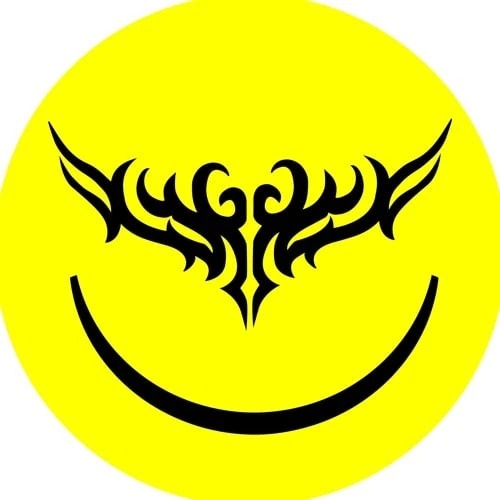
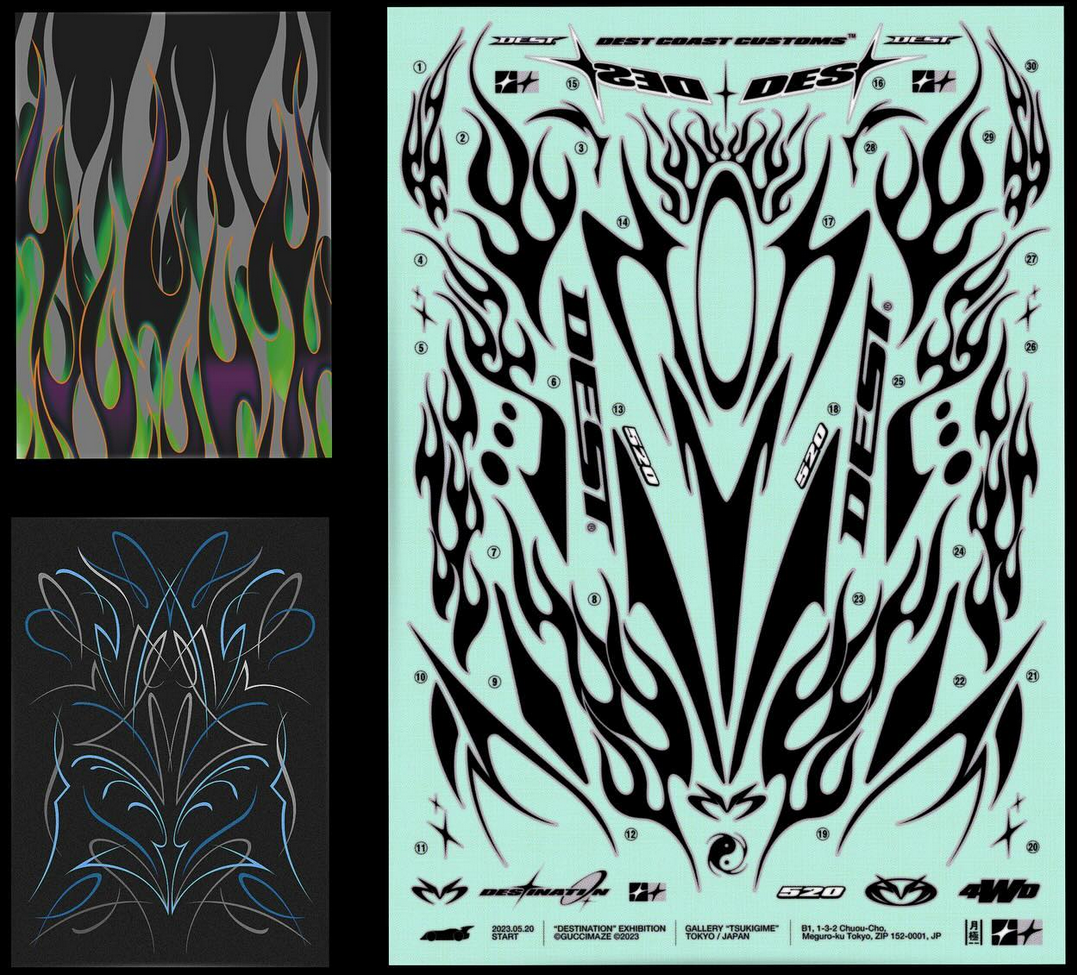
From the nostalgic, anti-capitalist malls of Vaporwave, to the aggressive, distorted rave signals of Acidgrafix, and finally to the dark, biomechanical spirituality of Cybersigilism—the evolution of electronic music imagery is a continuous, intermingling loop.
Today’s designers routinely pull symbols from each era, proving that as long as the music keeps evolving in the dark, the visuals will continue to redefine the light.
Want to be featured on CTRL+Print? Send some eye candy to [email protected].
Farhana is Mixmag Asia’s Visual Designer, follow her on Instagram here.
Never miss a beat. Subscribe to our Scene Report newsletter or follow us on Instagram.
