


 Interviews
DJ co.kr on the long game of “making unfamiliar music feel familiar”
A decade of patience, a Skepta moment & a new EP on Peggy Gou’s Gudu Records; the Seoul-based artist opens up about making the unknown feel like home, ahead of his debut for Mixmag Asia x Patrón Tequila’s The Pursuit Chapter II
Long before Seoul’s clubs learned to hold grime, UK garage and Baltimore club in the same breath, there was a kid with headphones, an online stream and a Skepta record on repeat.
Years later, Skepta stood on the Big Smoke Festival stage and rapped over one of the same kid’s own tracks, a moment he “could never have imagined”.
That full-circle story says a lot about the man behind it. Pronounced “koh-ker”, Seoul-based DJ and producer co.kr has spent the better part of a decade building a bridge between UK-flavoured club sounds and Korea’s fast-moving scene, most recently with ‘After School’; his four-track house EP for Peggy Gou’s Gudu Records. It’s a run that makes him a natural fit for Patrón Tequila x Mixmag Asia’s The Pursuit, the series celebrating top-quality music, Indonesia’s club culture and an exceptional agave spirit.
Through his party Ghetto-Ray, he set out to bring those sounds home, but never by force. He slipped the unfamiliar between tracks the crowd already loved, letting new rhythms settle in until they felt like they’d always belonged.
That same instinct shapes how he plays. As he shares with Mixmag Asia in the interview below, keeping a crowd with him has less to do with raw intensity or climbing BPMs than with blending rhythms and genres, so the dancefloor is always curious about what comes next. It’s a patient, considered approach that mirrors the spirit of Patrón, whose pours build from Patrón Silver to El Alto, a high-altitude expression of 100% Blue Weber Agave from Atotonilco El Alto, Jalisco.
Now, Jakarta gets its turn. On November 19, co.kr headlines the second chapter of The Pursuit at Velvet The Social Club, alongside Hogi and Kenny Gabriel.
It’s his Jakarta debut couldn’t be more fitting to celebrate his fresh EP that blends Baltimore club drum grooves, UK garage and reggae into something distinctly his own.
So, ahead of the event, get acquainted with the headliner of #ThePursuitJKT Chapter II as he talks about Seoul's club sound, the patience behind a good set, and his delightfully simple philosophy of the dancefloor: a DJ set is a pizza.

You grew up during a time when Cakeshop and Henz Club were bringing British artists to Seoul. How did it shape your understanding of club music?
At the time, my main sources for discovering new music were Boiler Room and radio shows by DJs like Diplo and Benji B on BBC Radio. Through those programmes, I was first introduced to grime, Skepta’s music and various sounds from the UK underground scene.
One particularly memorable experience was attending the Phantoms Of Riddim parties at Cakeshop and Henz Club in Seoul. I still vividly remember the impact of hearing dubplates played by DJs like Andow, Quandol and Soulscape through the club’s soundsystem.
It was the first time I experienced music I had previously discovered through the internet and radio, in a real club environment. It went beyond simply listening to music; I could physically feel the culture and energy behind it.
Those experiences had a huge influence on shaping my musical taste and direction as a DJ today. I’m still genuinely grateful to everyone who introduced me to new music and culture during that time and gave me the opportunity to experience it firsthand.
In your opinion, how can a crowd know or identify a co.kr set?
My DJ sets naturally incorporate my own signature sound; tracks I’ve produced myself, and exclusive dubplates that can only be heard in my sets. So I think people who have followed my music for a while would be able to recognise them quite easily.
I also place a lot of importance on distinctive drum grooves, heavy basslines and energetic rhythms, even when moving between different genres.
Ultimately, I think the defining characteristic of my sets is that, regardless of the genre I’m playing, you can always feel that particular groove and energy that belongs to DJ co.kr.
Read this next: The Pursuit of Greatness: How Pam Anantr, Diskoria & Dita channel sound into craft
How do you approach finding the right balance when producing a track? Were there any new techniques or ideas you experimented with on your latest EP on Gudu Records, ‘After School’?
Perhaps because I started DJing before getting into production, I’m naturally drawn to the groove of the drums whenever I’m digging for music. As a result, drums and rhythm have also become the most important elements in my own production process.
I usually start by establishing the sound and groove of the drums or percussion, then build a bassline that complements that rhythm.
My new EP, ‘After School’, moves away from the UK bass, breaks and UK funky sounds I’ve mainly explored in the past, consisting entirely of house tracks. However, rather than simply making music that fits within the house genre, I wanted to incorporate my own musical tastes and approach to rhythm, which I’ve developed over the years.
The starting point was the opening track, ‘EECC’. While working on it, I realised that combining the distinctive drum grooves and rhythms of Baltimore club (Bmore) with house could create something really interesting. That idea eventually led me to fully explore the concept of a house EP.
I also think ‘Murda Dancing’ naturally incorporates elements of reggae and UK garage; two genres I’ve loved for a long time.
Ultimately, the house sound I envision as DJ co.kr’s own isn’t about following conventional house formulas. It’s about expressing the rhythms and energy of different musical influences, including Baltimore club, UK garage and reggae.
I think ‘After School’ captures this musical direction and my own interpretation of house.
Ultimately, making unfamiliar music feel familiar to people doesn’t happen overnight.
Some things simply cannot be rushed. What part of your music career has needed the most time?
Whether as an artist, DJ or promoter, I think the most time-consuming part has been introducing audiences to new music and helping them understand and appreciate what makes it special.
For a long time, I’ve been working to introduce UK sounds and different forms of global club music to Seoul. The party I’ve been running, Ghetto-Ray, has been part of that effort.
Around ten years ago, only a handful of DJs were playing grime and even fewer venues supported it. Opportunities to discover UK music and different global club sounds were also much more limited than they are today.
However, I didn’t think I could convince audiences simply by playing the music I liked without considering what they wanted to hear. So I chose to gradually introduce the sounds I wanted to share between tracks that audiences were already familiar with.
For example, I would incorporate around 40% of that kind of music into an entire set, allowing audiences to gradually become familiar with new rhythms and sounds. I believe making music enjoyable for the audience is just as important a part of being a DJ as staying true to the music you personally love.
The sounds were working, and the number of DJs playing similar music in Seoul increased. As different DJs delivered in their own ways, I think audiences also became more open to embracing a wider range of genres.
This change wasn’t the result of my efforts alone. It was made possible by the many DJs and promoters who shared a similar vision, as well as the audiences who were willing to open their ears to new music.
I think this is the role I’ve played in Seoul over the past ten years. Even now, I see introducing people to new music and culture that I love, and connecting different genres and sounds, as one of my responsibilities as a DJ.
Ultimately, making unfamiliar music feel familiar to people doesn’t happen overnight. It takes time to keep playing it, enjoying it together and building shared experiences around it.
For me, the most time-consuming part has been building that trust with audiences over time, but it’s time well spent.
I always explain my approach to DJing by comparing a set to a pizza.
What does peak energy mean to you?
Personally, I think it’s very important to capture the audience’s attention from the very beginning of a DJ set. Especially when playing a 60-minute headliner set, I try to draw people in with intense energy from the start and maintain a tight flow throughout. I believe that if you capture the audience’s attention right away, they’ll be willing to follow your musical journey without losing focus for the entire 60 minutes.
As for how I maintain that energy, I always explain my approach to DJing by comparing a set to a pizza. Imagine a 60-minute DJ set as one whole pizza. That pizza is made up of different flavoured slices.
Let’s say I plan to fill the first 15 minutes with intense UK bass sounds. I would call that a “pepperoni pizza”. But once I start playing, the audience might only respond to that sound for five minutes.
That day’s “pepperoni pizza” is a five-minute slice rather than a 15-minute one. There’s no reason to insist on sticking to the original 15-minute plan. It’s up to me as the DJ to decide what flavours to fill the remaining 55 minutes with. It could be house, UK garage, breaks, Baltimore club or something from a completely different genre.
What’s important is not playing the music I’ve prepared in a predetermined order, and maintaining energy isn’t simply about continuously playing intense music or increasing the BPM. It’s about combining different rhythms and genres in the right way, keeping the audience engaged and making them look forward to what comes next.
Even if it’s the same 60 minutes, the flavours and combinations will be different every time. That’s what I find exciting about being a DJ, and it’s also what I consider one of the most important aspects of performing live.
Read this next: In pictures: Patrón Tequila & Mixmag Asia create intimate moments in Jakarta's nightscene
Many artists working with genres originating in other countries feel pressure to prove their authenticity. Is there such a thing as being too “faithful” to a particular genre?
I think it’s important to understand and respect where a genre comes from and the cultural background behind it when working with that music.
Genres I particularly love, such as grime, UK garage and Baltimore club, aren’t simply sounds. They’re forms of music that were born and developed within the cultures and communities of their respective regions. That said, I don’t think you necessarily have to follow the established styles or rules of a genre exactly as they are. In fact, I enjoy drawing inspiration from different genres and interpreting and combining them in my own way.
For example, in one of my earlier tracks, ‘Soundbwoy’, I combined the distinctive drum grooves of Baltimore club with vocals from a UK MC and rave sounds. I think bringing together musical elements that originated in different regions and genres and making them work naturally within a single track is part of my musical identity.
‘After School’ also started from a similar approach; by incorporating Baltimore club drum grooves into house, I discovered new possibilities and used them as a foundation to develop my own house sound. If I had focused solely on staying faithful to traditional house as we know it , I wouldn’t be creating what I am today.
For me, authenticity isn’t about how accurately you follow the rules of a particular genre. It’s about how honestly you express your own music while maintaining an understanding and respect for the music that inspires you.
I don’t make UK music because I want to be British, nor do I want to simply recreate American club music as it is. I genuinely love these sounds and want to express the energy and inspiration I’ve found in them in my own way. Respecting the roots of music without becoming confined by its boundaries. That’s the attitude I consider most important when producing music and DJing.
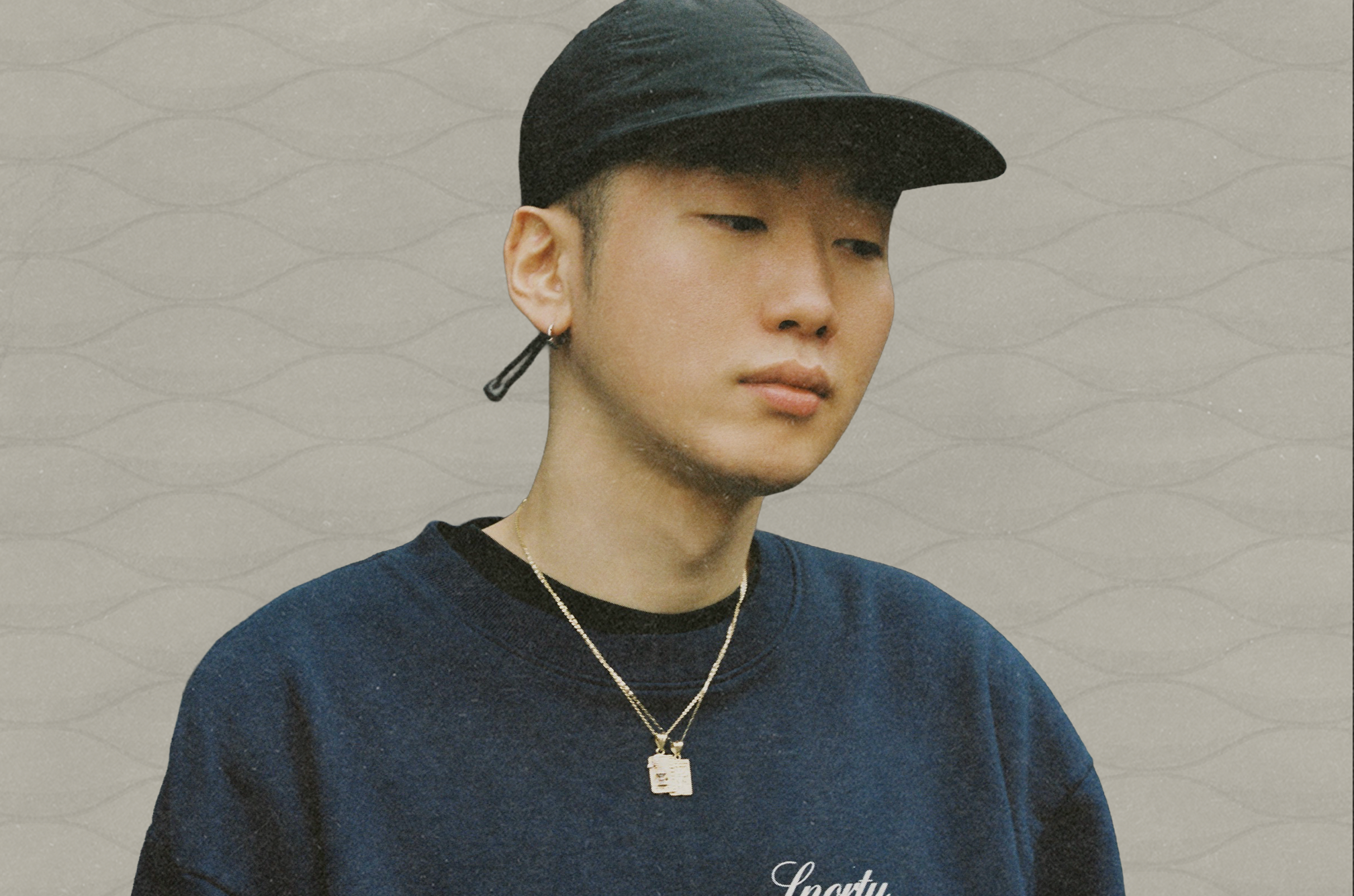
To you, what is the club sound of Seoul?
I think the club scene in Seoul, which I’m part of, is still developing its own identity. Because of that, it’s a little difficult to clearly define what Seoul’s club sound actually is.
However, if I had to point out one characteristic that makes Seoul unique, I would say it’s the speed at which the city changes and embraces new music and culture.
New musical trends arrive in Seoul very quickly, and the tastes of both DJs and audiences evolve just as fast. Sometimes, that rapid change can make it difficult to establish a distinct musical identity. On the other hand, I find it exciting because it creates opportunities for different genres and cultures to meet and develop new possibilities.
It’s still difficult to give a definitive answer about what constitutes Seoul’s signature club sound. But perhaps its flexibility and constant willingness to change characterise Seoul’s scene today.
I hope that, as these changes continue to accumulate, Seoul will grow to be even more distinct in the future.
What do you bring from Seoul to your sets around the world? And, can we expect something new for your debut in Jakarta?
I think one of the biggest things I’ve learned from being a DJ in Seoul is how to naturally connect different genres and build the flow of a set according to the audience’s reactions. These experiences have become an important foundation for how I approach my sets, wherever I perform around the world.
Every city has its own musical tastes and energy, so I always try to consider the atmosphere of the city and the event while still bringing out DJ co.kr’s distinctive groove and energy.
I understand that this Jakarta performance will have a slightly different atmosphere from a typical club show. So I’m considering playing a set centred around funky and uplifting house music to celebrate ‘After School’.
Most importantly, this will be my first time performing in Jakarta, so I’m really looking forward to it. I’m curious to experience the energy of the Jakarta audience, and I hope to share some great music and create real memories with the local scene.
This event is called The Pursuit. Where are you in your own pursuit as an artist, and have your goals changed since you first started?
After ten years in the game, I’m finally starting to see people overseas recognising my music.
I would listen to the music of DJs I admired and draw inspiration from watching them perform. And now, those same DJs I once looked up to are playing my records, and I’m getting the opportunity to release tracks on labels I’ve dreamed of working with for a long time.
This year has been particularly meaningful for me as an artist, especially with releases on labels I’ve always loved, including Gudu Records, More Time Records and ATW Records. I feel that these opportunities have allowed me to make big leaps in my career.
However, I don’t think I’ve reached the goals I ultimately want to achieve yet. Rather, I’m standing at a new starting point in my journey as an artist as the past efforts finally bear fruit.
When I first started DJing, my goal was simply to share the music I loved with people and enjoy it together. Now, I’ve developed a much bigger ambition: to introduce my own productions and signature sound to audiences around the world.
Read this next: Mixmag Asia’s 2026 Essential Listening
And finally; what does a moment that's earned mean in the journey of a DJ?
Recently, I’ve felt a great sense of fulfillment when DJs I have always admired and listened to, such as Fred again.., Peggy Gou, Ahadadream and KETTAMA, play my productions in their actual performances. It’s a surreal feeling.
One of the most unforgettable moments for me was when Skepta, one of my all time favourites, actually rapped over my track ‘ILL E SAM SA’ at Big Smoke Festival!Skepta is an artist whose music I listened to countless times on my headphones when I was first starting out. Hearing him rap live over my beats is something the version of myself from ten years ago never expected. These moments feel earned; it made my efforts in music feel truly worthwhile.
Rewarding moments aren’t limited to big stages or being supported by well-known artists. For me, a small space with just ten people, gives me the same fulfilment through real connection and energy from the music.
Ten years ago, I started DJing to share energy through music. Today, nothing has changed.
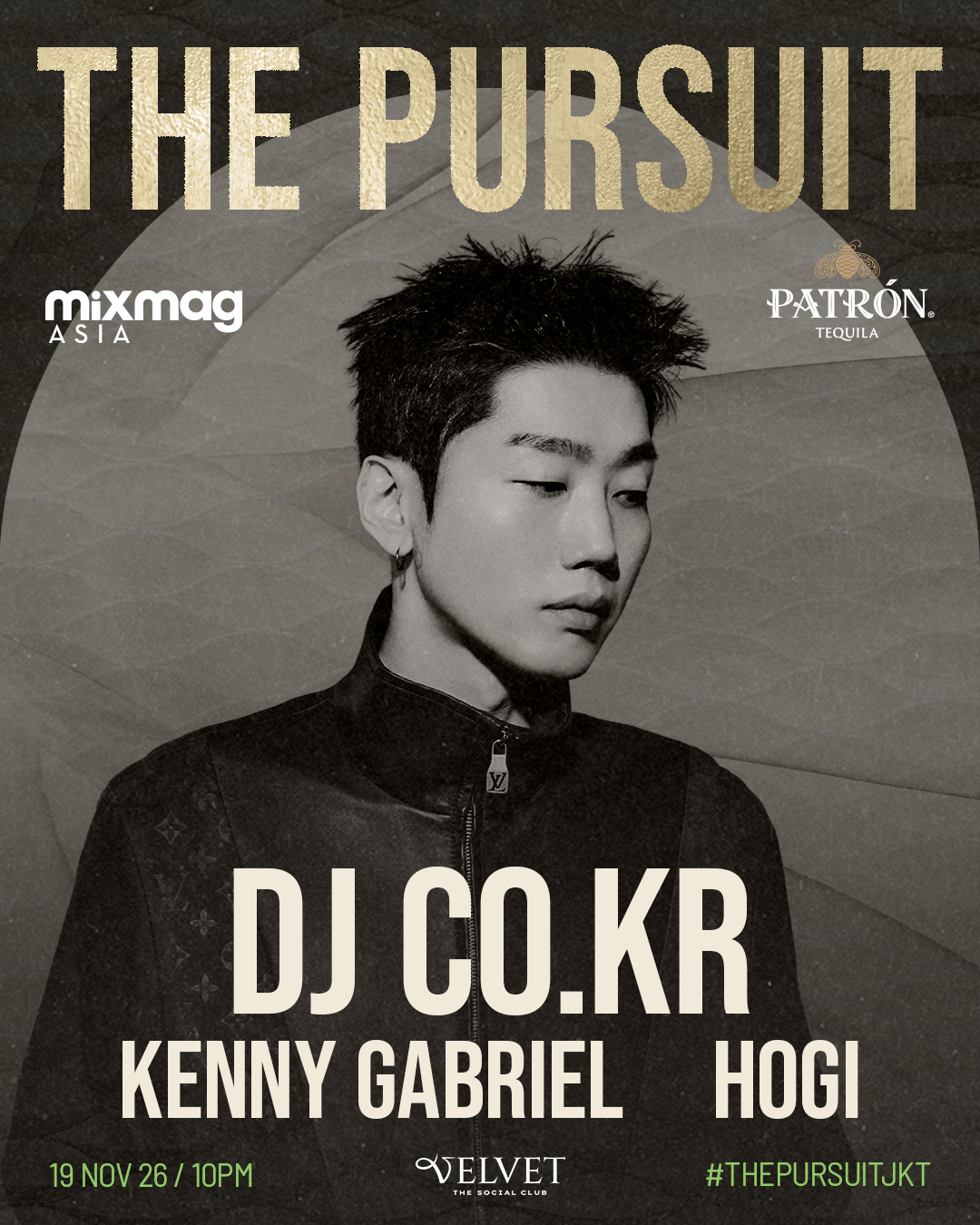
The second chapter of #ThePursuitJKT takes place on November 19 at Velvet The Social Club with DJ co.kr, Hogi and Kenny Gabriel. Space is limited for this event at one of Jakarta’s “most talked about” clubs, secure your spot via this link here.
The perfect way to enjoy Patrón is responsibly.
Never miss a beat. Subscribe to our Scene Report newsletter or follow us on Instagram.
