


Diplo’s video with viral Indonesian keyboardist spotlights local koplo sound
Footage from Bali shows the GRAMMY-winning producer exploring the dangdut sub-genre built on regional rhythms & electronic keys
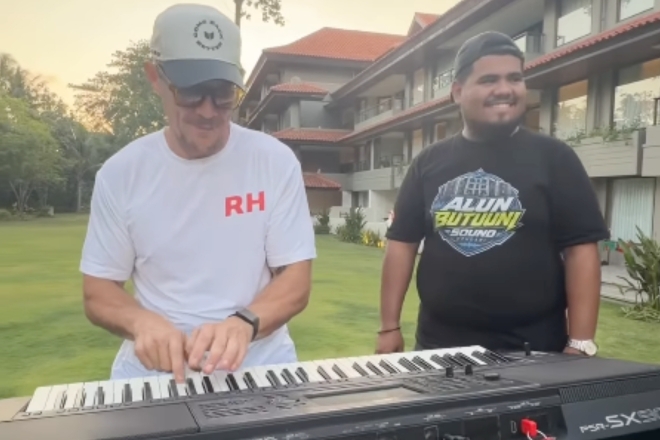
On October 8, Diplo shared a video from a running event afterparty at in Bali, where he performed alongside viral Indonesian keyboardist Habib Gunjat.
The party followed a 5K sunset run organised by Runhood Running Club, which brought together 10 Bali run clubs to raise funds for communities in East Nusa Tenggara. Gunjat’s group, Alun Butuuni Sound, was booked to provide the event’s sound.
In the footage, the GRAMMY-winning producer watches Gunjat play before trying his hand at the keyboard. Together, they combine Diplo’s presets with koplo rhythms and music associated with the Lulo dance of Southeast Sulawesi.
Also known as DJ Habib Gemoy and DJ Bumblebee, Gunjat is the lead keyboardist of Alun Butuuni Sound, a soundsystem rental and entertainment business based in Kendari, Southeast Sulawesi.
He’s known for his organ tunggal or “one-man band” format, which centres on a keyboardist playing alongside programmed sounds and samples. Videos of his performances have previously gone viral online.
Read this next: Diplo shares his love for Punjabi music at Coachella 2023
An essay for the Goethe-Institut’s Nusasonic project traces koplo’s roots to classic dangdut, which evolved from Irama Melayu, a style shaped by Arabic, Indian, Chinese and Portuguese music.
Also known as dangdut koplo, the genre emerged in the early 2000s in smaller East Java cities, where musicians introduced syncopation and percussion breaks drawn from Sundanese and East Javanese kendang patterns.
Koplo has since absorbed influences from pop, metal, house, hip hop and K-pop, with its sound varying from town to town and village to village.
The essay, by musician and producer Yennu Ariendra, also argues that koplo may be Southeast Asia’s most popular dance music, despite being dismissed by many Indonesians and circulating largely through pirated CDs and VCDs.
Read this next: Soi48’s photobook documents the raw & hyperlocal realities of nightlife in Asia
At the performance level, organ tunggal is one way the music reaches local audiences. The format typically centres on a solo keyboardist using a Yamaha PSR and sample packs of traditional instruments, often accompanied by a soundsystem at weddings, parties and community gatherings.
A similar setup underpins Indonesia’s newer jedag-jedug subculture, which The Conversation traces back to the same organ tunggal tradition. Built around mobile keyboard rigs and homemade speakers, the format has long provided music for gatherings beyond conventional club spaces.
Both accounts point to a shared foundation: keyboards as the main instrument, local soundsystems and audiences in towns and villages rather than clubs.
The key difference lies in how the music travels: koplo spread through pirated discs, while jedag-jedug clips now circulate between regions on TikTok.
Amira Waworuntu is Mixmag Asia’s Managing Editor, follow her on Instagram.
Never miss a beat. Subscribe to our Scene Report newsletter or follow us on Instagram.
