


 Features
How India ferried the new Gorillaz record ‘The Mountain’ across
Aditi Dharmadhikari traces the creative currents that shaped the release through the subcontinent’s musicians, studios, and spiritual traditions
The listening party quietens down a few moments before the needle drops. Idoru bar, which has slowly become one of the rooms where things happen in Mumbai, is bathed in dim yellow light with a blue glow bleeding from the bar.
On a night like this, the venue in Bandra runs on the particular electricity of a room full of people who care about music gathered around something none of them have heard end-to-end yet. The album has been under embargo for weeks.
The first notes of the title track arrive: Ajay Prasanna's bansuri (a traditional Indian bamboo instrument), accompanied by the sitar from Anoushka Shankar.
‘The Mountain’ sounds like grief that has learned to dance; track by track, the record moves us gently through every register of mourning. Albarn and his collaborators have always known that a great production doesn't announce itself; it creates conditions. The textures keep shifting (lush, then skeletal, then lush again) but the emotional logic holds throughout.
“The good thing about this listening session was that people actually came and dedicated themselves to listen to the record for an hour end-to-end. You can’t fast forward it, and people actually shut up and listened,” Anil Kably, the owner of Idoru, tells Mixmag Asia on what it means to be hosting this vinyl listening session in a week when everyone is listening to the new album. The sound system, he noted, was as important as the intention to listen.
“We’re playing the records on a professional turntable, the Pioneer PLX-1000, and we’re listening to it on speakers which are custom-made and horn-driven, with the horn being Iwata, custom-made in Jakarta. The bass cabinet is based on an old Lansing design, and the bass driver is a Lansing driver.”
By the time ‘The Sad God’ closes the record, there are a few more beats of silence before the applause swells up at Idoru bar.
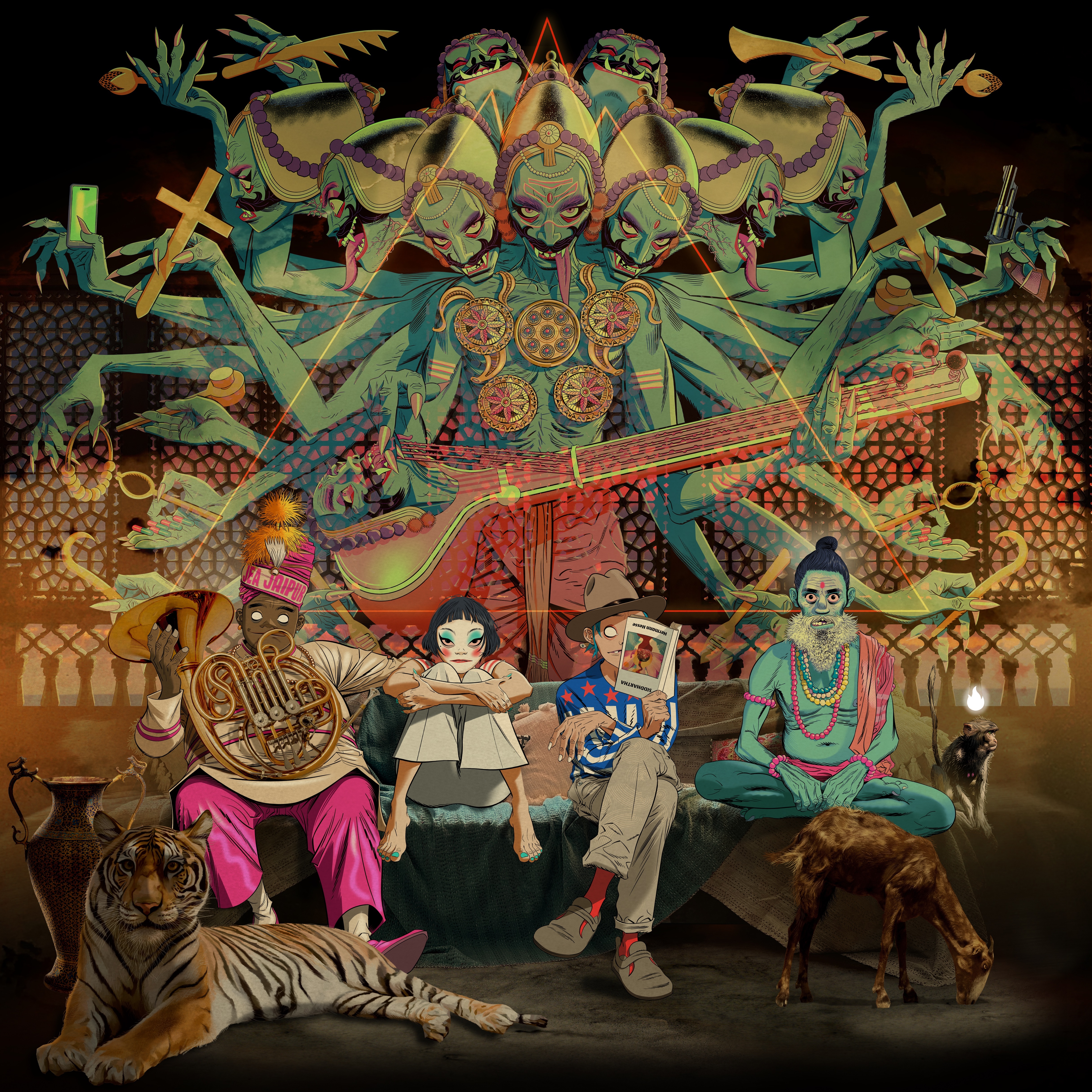
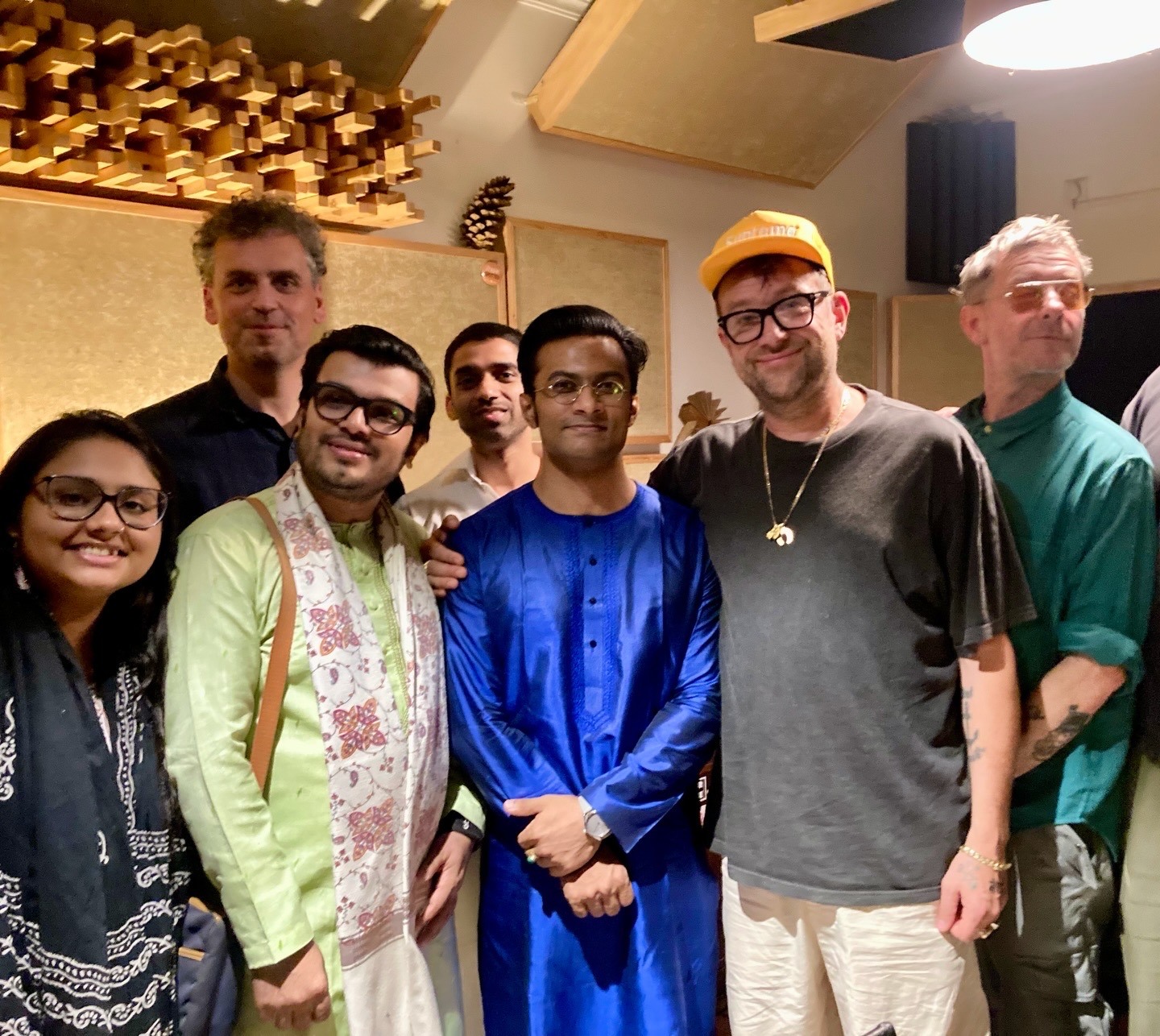
“Damon didn't articulate his personal journey to us during the sessions,” Ayaan Ali Bangash, who plays sarod (a fretless stringed instrument in Hindustani classical music) on the album with his brother Amaan Ali Bangash, tells Mixmag Asia. “But as we immersed ourselves in the music, we could feel an emotional current. It resonated deeply; almost like a silent conversation with something within.”
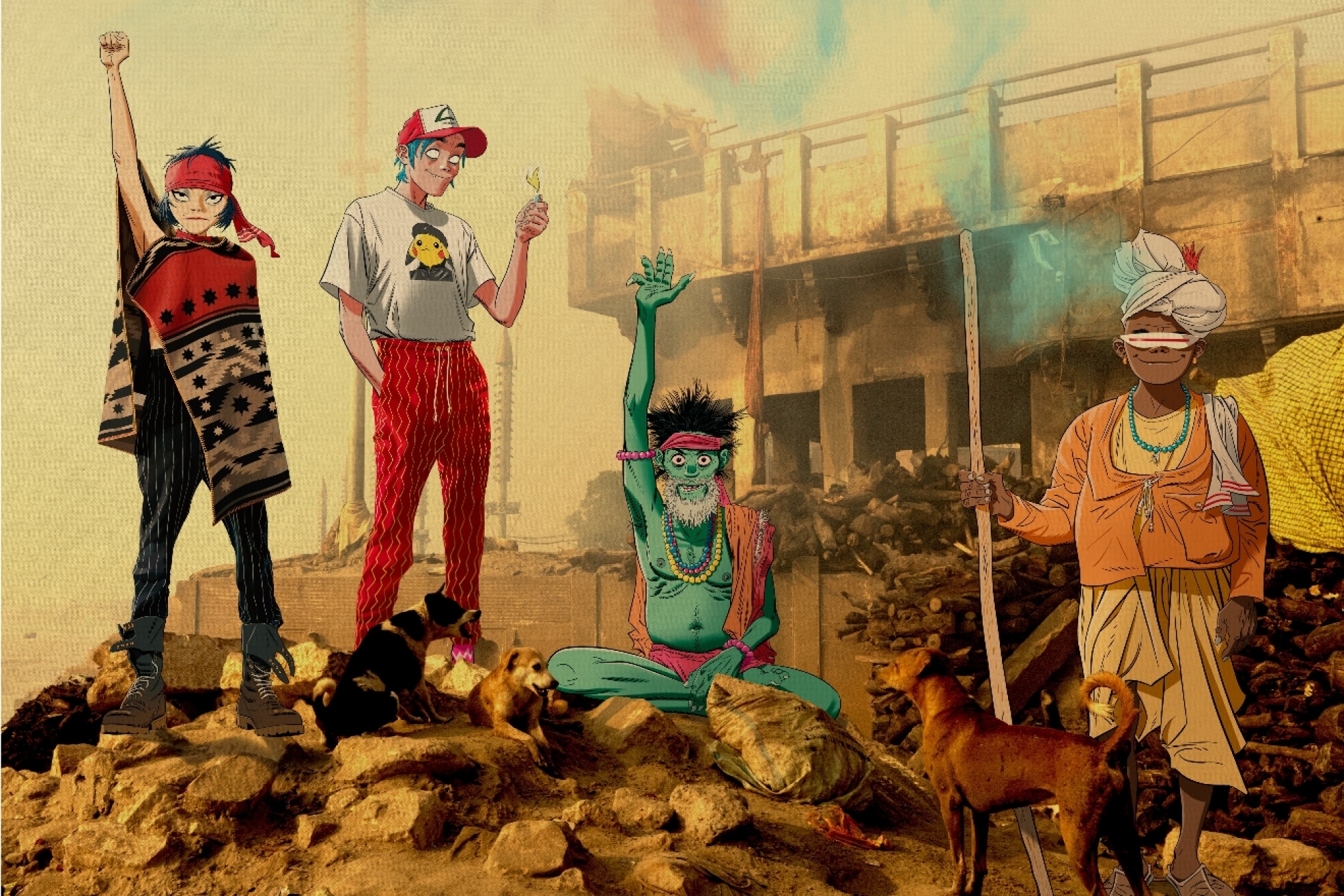
Damon Albarn and Jamie Hewlett came to India carrying a similar weight, though by separate roads. Varanasi is where Albarn had travelled to, and where he scattered his father's ashes in the Ganges; the city in North India considers it the most vital thing a place can do.
Hewlett, on an earlier trip in 2022, had been 900 kilometres away in the heritage city of Jaipur when his wife's mother suffered a stroke from which she would not recover. His own father passed away in the weeks that followed.
Two men who had spent 25 years building a virtual band to process the world now found themselves in a country with its own vocabulary for exactly what they were carrying.
For Hewlett, the album's architecture follows a logic that is both ancient and precise. “The mountain is a triangle," he says. “It's broad at the bottom, with lush green jungles and many paths, and becomes narrower and narrower until you reach the top. You go beyond the mountain — to the crystal lake, or the moon cave. You jump in. You reincarnate. And you start again.”
Read this next: Mixmag Asia’s 2026 Essential Listening
“I always thought of Gorillaz as being this glorious Trojan horse,” Albarn has said, “which gets you to places that you wouldn't otherwise reach.” What he wanted when Sweety Kapoor was brought into the project — the woman who helped build the Asian Underground movement from a Monday night at the Blue Note in London in the 1990s, a creative producer, founder of ‘Brown Girl In The Ring’, and Asha Puthli's manager — was authentic musicians and instruments that could hold the deeply personal ideas being explored.
“As music supervisor, your role is in service to the artist’s vision. It requires having the knowledge and expertise, and really leaning into the nuances of their vision to best support it,” Kapoor tells Mixmag Asia. What she's clearly presented is an incredible cross section of artists, instruments and musical traditions drawn from India's vast and rich musical landscape, joining the dots with heritage artists.
India has never treated death as an ending; the sadness, as Hewlett put it, comes from knowing you will not see that person in this form again. Kapoor came onboard as music supervisor and consultant for India and Indian artists on ‘The Mountain’, introducing the Gorillaz to the Indian collaborators who would be amongst a slate of artists to shape it. Other artists on the tracklist include the likes of Black Thought, Omar Souleyman, IDLES, Sparks and Bizarrap.
Read this next: Findings from Grassroots Rising: how community radios are amplifying new identities
The album was recorded across more locations than most bands visit on a world tour — Ashgabat, Damascus, Los Angeles, Miami, New York, and Studio 13 in London and Devon among them. In India alone, it was created in Kintsugi Studio in Delhi, Island City Studios in Mumbai, the Ghats at Varanasi, Rishikesh, Haridwar, Jaipur, and Amber Fort in Rajasthan (where the album's title track was born).
A man was sitting outside the fort playing what was probably a ravanahatha; the ancient one-stringed bowed instrument that Albarn would later describe simply as “a one-stringed violin”, considered an ancestor to the violin and a fixture of Rajasthani folk music for centuries.
Albarn filmed the whole performance, took a refrain from what he heard, and laid his own chords over it. He played the resulting melody to the Indian artists who contributed to the track (Ajay Prasanna, Anoushka Shankar, the Bangash brothers) and asked if they recognised it.
Nobody did, and he remains genuinely uncertain about its origins. “I promise you, it's a Rajasthan kind of thing,” he says — “the traveller who picks up a melody on his flute and then ten years later comes back to his village and plays it. But it's changed.” It is the oldest idea in folk music: a song that belongs to the road it travelled, not the person carrying it.
Read this next: “More fun outside club settings”: for better or worse, pop-up raves are taking over cities across Asia
In Varanasi, the Mukti Bhavan (the guesthouses where elderly Hindus come specifically to spend their last days) believing death in the city grants moksha (liberation from the cycle of rebirth) is the whole point of the city’s culture. Rishikesh and Haridwar brought stillness, and this is where ‘The Shadowy Light’ was recorded.

“If you had the opportunity to have Anoushka Shankar on your music, why wouldn't you take it?” - Damon Albarn
The first Indian musician to perform live at the Grammy Awards and the first Indian woman ever nominated, Anoushka Shankar appears on six tracks: the title track, ‘Orange County’, ‘The Empty Dream Machine’, ‘The Plastic Guru’, ‘The Sweet Prince’ and ‘The Sad God’.
Shankar hadn't heard any of the music before arriving at the studio. They played her the songs one by one, leaving some open, specifying others. What followed were, in her words, “Responsive, intuitive replies to the music I was hearing.” Shankar, who grew up across continents as a product of multiple cultures and has a range of influences, has brought the sitar into other spaces, finding what she calls “a fertile middle ground between cultures.”
The sitar on this record is rarely playing anything like a pure raga; it is playing melodies, textures, sometimes something more percussive. “It takes a level of openness and experience to be able to just code-switch in that way,” she tells Mixmag Asia.
Read this next: Sound as Medicine: the ancient roots of sonic healing in Asia
Albarn says, “If you had the opportunity to have Anoushka Shankar on your music, why wouldn't you take it? She straddles continents; definitely a kindred spirit.”
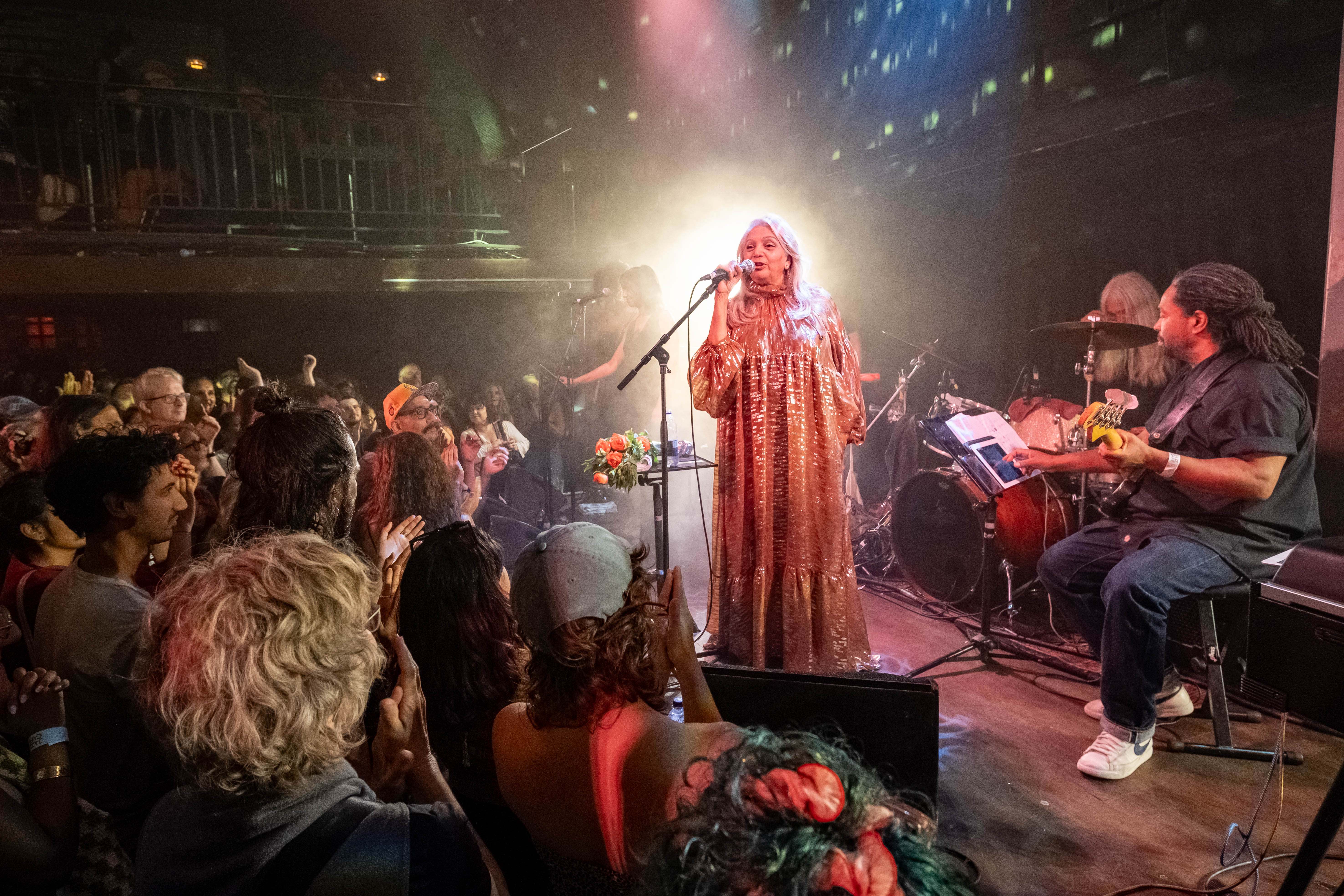
“I instantly connected to the themes of the album and ‘The Moon Cave’.” - Asha Puthli
Reaching for Asha Puthli for ‘The Moon Cave’ opens a different kind of argument, one that has been running beneath the surface of the whole record. Puthli was born in Mumbai, built her career in the West in the 1970s before the music industry had a framework for what she was doing. Her song ‘Space Talk’ was later sampled by Biggie Smalls and 50 Cent. Jay-Z carries a co-writing credit on ‘The World Is Filled’ from ‘Life After Death’ via the same sample.
Most people who know those records don't know it was Puthli underneath. India's contribution to the global music timeline has a long habit of arriving unattributed.
Puthli and Albarn first met in a Miami studio. “I instantly connected with Damon and the themes of the album and ‘The Moon Cave’,” she recalls. “I heard an early version there and we spoke about reincarnation, karma, the cycle of life, time-space travel and the idea that we’re eternally connected — and what might lie within the ancient ‘Moon Cave’, like a meditative, transcendental portal. When you’re invited into another artist’s journey, you step into their story. It was an open, embracing and truly collaborative, fun process.”
Kapoor, who was present, has previously described what unfolded as the two sparred off each other “magic”.
Read this next: The women who've shaped electronic music
Puthli appears on ‘The Moon Cave’ alongside the posthumous voices of Bobby Womack and Dave Jolicoeur of De La Soul, for which she and Albarn co-wrote in English with touches of Hindi and Sanskrit, improvising in the booth.
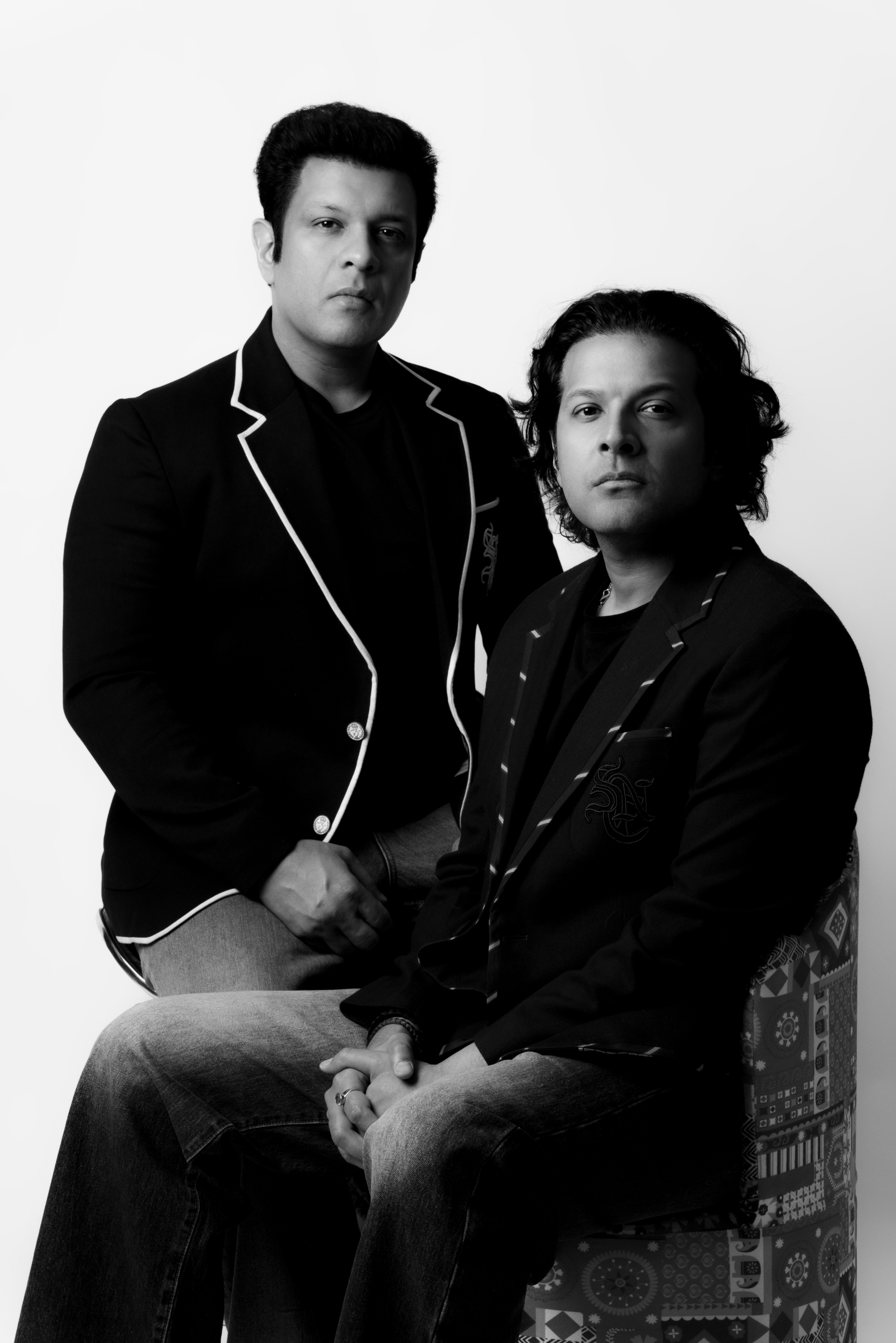
“To share space on the same project with Damon and Jamie was truly a ‘pinch-me’ moment.” - Amaan Ali Bangash
The Bangash brothers play sarod on the title track, ‘The Manifesto’ and ‘The Shadowy Light’, and the instrument arrives with a lineage. Their father is Ustad Amjad Ali Khan, one of the defining figures of Hindustani classical music. The instrument is heavy, fretless, with a melancholic sustain unlike anything else in the Indian classical canon.
Every note slides into the next; no hard edge, no definitive arrival. Amaan tells Mixmag Asia, “It has been a tremendous honour to be featured alongside the legendary Asha Bhosle, who has collaborated with our father on numerous occasions. To share space on the same project with Damon and Jamie was truly a ‘pinch-me’ moment.”
The Guinness Book of World Records acknowledged Bhosle in 2011 as the most recorded artist in music history. That 91-year-old Asha Bhosle sang ‘The Shadowy Light’ is the sound of a tradition answering a question it has been asked before.
The story behind ‘The Shadowy Light’ begins with a conversation. Well-loved Hindi lyricist Kausar Munir sat across from Albarn at a piano in Island City Studios in Mumbai. They talked about life, death, the meaning of mortality, and at some point, Albarn got up and played. “It was like a concert for one," she recalls. “I sat in front of him and he played for me.”
Read this next: Dualist Inquiry's 'When We Get There' is a result of & reason for self-reflection
Munir wrote the Hindi lyric and translated it back into English, evocatively enough that Albarn could feel the tone. “There are certain words and how they sound,” she says. “Otherwise it's just poetry. It becomes lyrics when the sound merges with the thought.”
In an interview with Vogue India, Bhosle explained what the words meant to her: “The boatman is a metaphor for my music, which has guided me across this river of life. When I get to the other side, my journey will be complete and I will attain moksha. If you listen carefully, you will be able to discern thousands of sounds floating around us. I shall become one of them.”
Of the finished track, Munir says simply: “It has a life of its own and that's how it should be. Otherwise it would be something I wrote in my diary.”
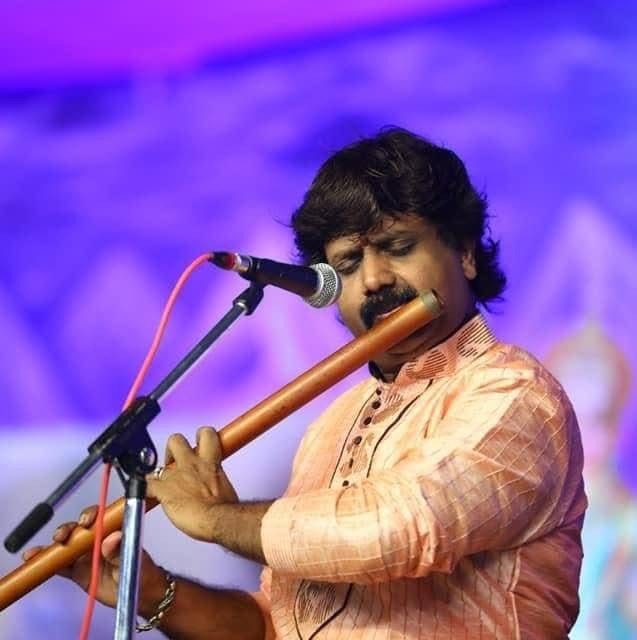
“Breath is life itself, and the bansuri is its purest vessel.” - Ajay Prasanna
On eight of the album’s tracks, Ajay Prasanna plays the bansuri; a breath instrument in which the player's body enters the sound in a way strings cannot replicate. “Ajay is just amazing,” Albarn says. “Honestly, I'd have him play my melodies for the rest of time. He's a virtuoso.”
The moment Albarn heard him play the melody back from the film recording from the fort near Jaipur, he knew exactly what he had to do.
“Breath is life itself, and the bansuri is its purest vessel,” Ajay Prasanna tells Mixmag Asia. “Light as bamboo, yet carrying the deepest of human emotions. Playing for someone's departed father, my body knew the weight of what was needed before my mind did. It became more than music; it was grief, longing, and love, told through every breath and every note.”
Read this next: Listen to Anish Kumar's "East meets West" playlist
On ‘The Manifesto’, Prasanna plays Raga Dhani and Raga Malkauns. “Raag Dhani and Raag Malkauns are both pentatonic scales, carrying contrasting emotions,” Prasanna tells Mixmag Asia. "Raag Dhani's cheerful lightness and Raag Malkauns's intense, meditative gravity — two contrasting souls united through Moorchana. Damon and Jamie's vision pushed me to let the music speak, and I simply listened to what the track was asking for. When you surrender to that, it becomes an experience far beyond just a song. We really enjoyed working on this track!”
‘The Hardest Thing’ places his bansuri alongside Tony Allen's posthumous voice, with Allen, who passed away in 2020, intoning “We are ready, let's go”, and Albarn's repeated line, “You know the hardest thing is to say goodbye to someone you love”.
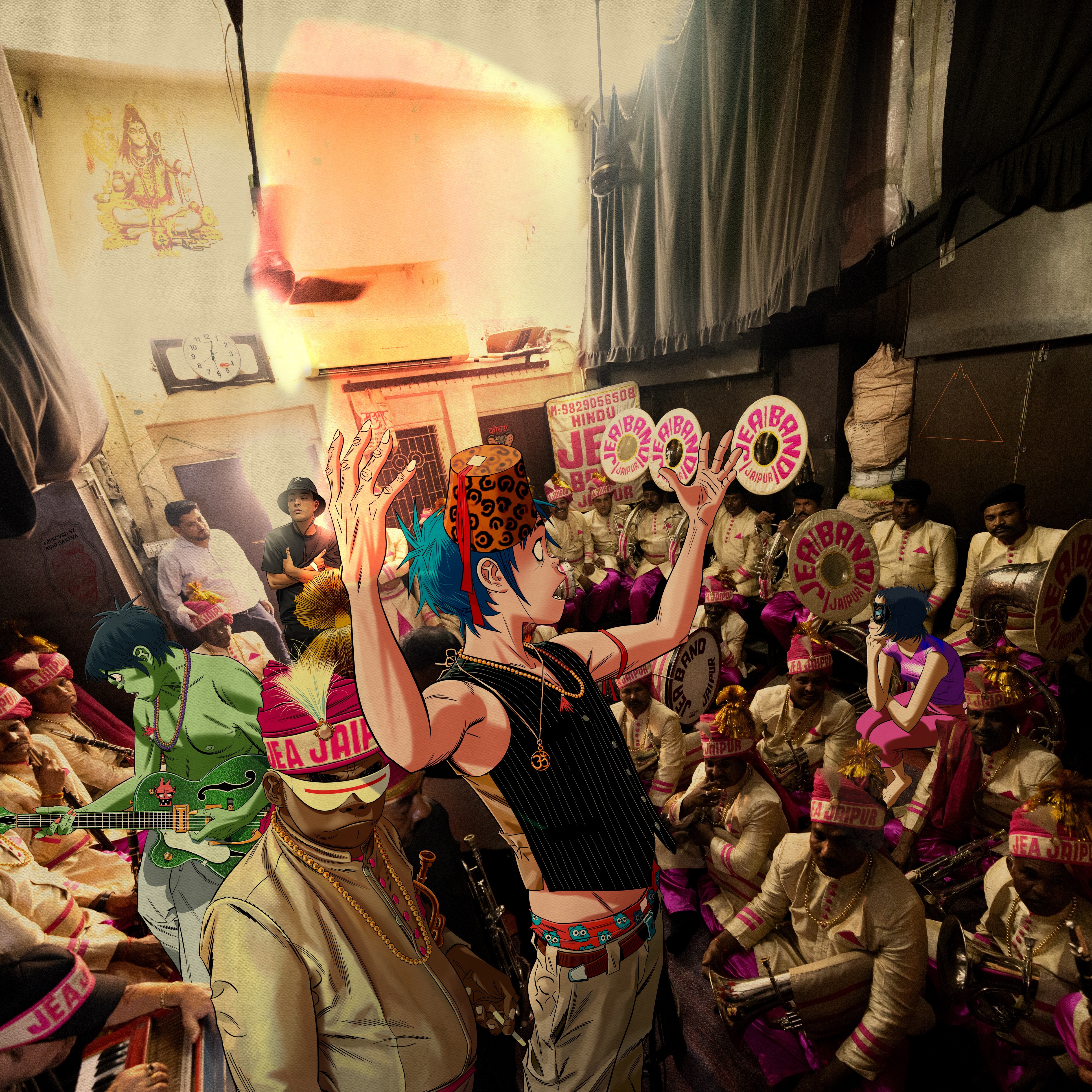
The Hindu Jea Brass Band Jaipur, formed in 1936, appears on ‘The Manifesto’. On the brass band's origins, Avinash Thadani of Hindu Jea Brass Band Jaipur says, “The band was started by my grandfather in 1936 — back then India, now Pakistan. After partition, we eventually moved to Jaipur, and we've been here since 1950, 1951. I'm the third generation in the business. My son is going to be the fourth — he's a drummer himself. It comes from within, you know.”
A tradition the British brought to India, so fully embraced that it became the sound of celebration itself at weddings, festivals, processions, and nearly every public milestone in Indian life. In this tradition, the music played at funerals and the music played at weddings are the same music. It answers the question the whole album is quietly asking: why does a record about loss sound, in its most densely Indian moments, like a party? Because at every threshold, whether birth, marriage, or death, the same procession plays.
The album's official sequence ends with the brass band still ringing. Then, on ‘Bolly Noir’, something older arrives.
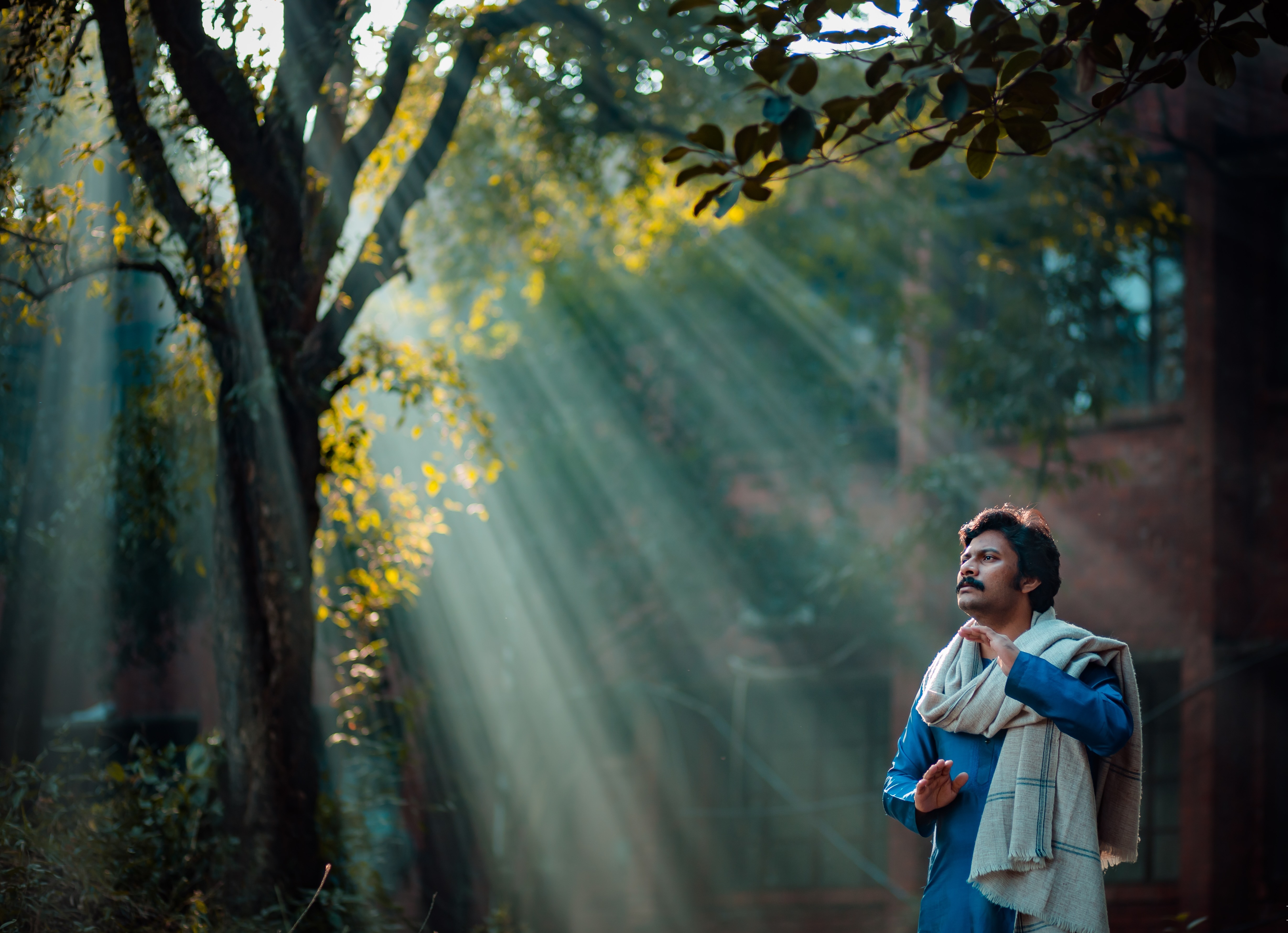
“During the recording, I was simply aligning breath and sound with the Tanpura. This is Nāda Yoga; the yoga of sound.” - Niloy Ahsan
Niloy Ahsan received the call from Sweety Kapoor without knowing who was on the other end of it. A group of British musicians, she said. Would he record with them? He said “yes” without asking who, and only found out on the drive home.
Read this next: Inside Glastonbury’s South Asian-focused Azaadi Stage in full colour
Ahsan sings dhrupad; the oldest form of Hindustani classical music, the one everything else grew out of. Just the voice, the drone, and the infinite space between two consecutive notes.
Albarn describes it simply: “I associate it with Sufism, ecstatic music. It takes me to people like Gurdjieff. Niloy’s just beautiful. Gorgeous.”
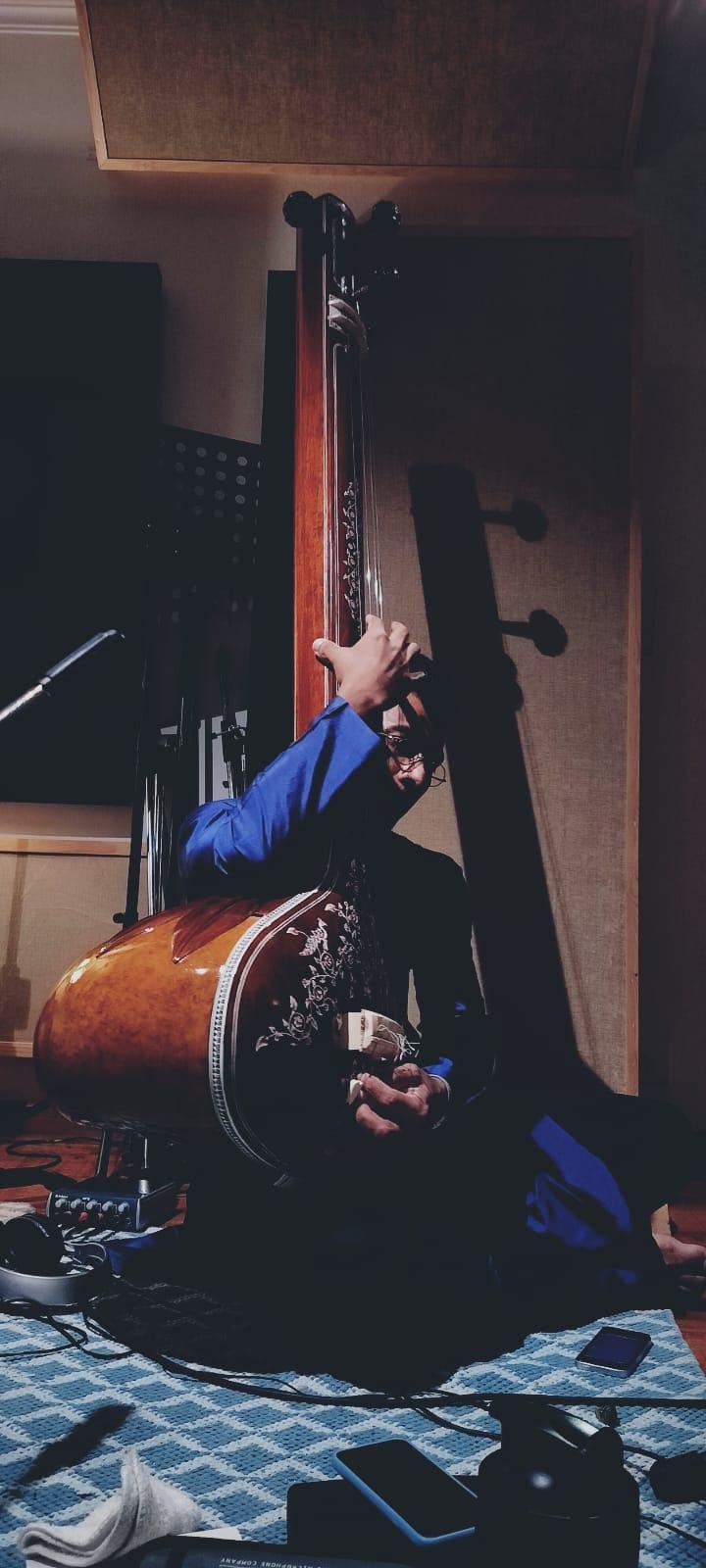
Niloy shares, “During the recording, I was simply aligning breath and sound with the Tanpura. This is Nāda Yoga; the yoga of sound. My Guru used to say that God resides between two consecutive notes. There is infinite space even within the smallest interval. To sing is to enter that infinitesimal infinity.”
“It does not attempt to fill the void,” Ahsan says. “It contemplates it.” After silence, the next sound is dhrupad.
“It's a stunning, standout album,” says Kapoor, of ‘The Mountain’. “And unique, I can’t think of many albums that have skilfully incorporated the rich tapestry of Indian music from a wide range of Indian artists, from the Jai Hind Brass Band, Indian classical, the ancient sound of dhrupad, with trailblazing female artists Asha Bhosle, Asha Puthli, and Anoushka Shankar — all weaved into the Gorillaz sonic DNA. A juxtaposition of languages, genres, and traditions that feels timeless, authentic, and unmistakably Gorillaz."
The challenge Albarn set himself was to make an album about death that made people feel less afraid of it. “Can music really do that?” he asks. “I don't know if we succeeded, but I've seen music do the most extraordinary things.”
Read this next: “It’s a family affair”: South Asian clubbers share what the dancefloor means to them
Kausar Munir puts it best. Damon, she said, is himself a kind of Manjhi; the one who brings many people together to transport an idea across, the boatman of the album. But the river he crossed was not his alone.
The Indian musicians who met him on those ghats, in those studios, outside that fort in the dust and heat of Rajasthan, were carrying their own grief, their own traditions, their own centuries of knowing exactly what this music is for.
Now that ‘The Mountain’ is out in the world, travelling towards strangers carrying griefs of their own, that image holds.
An album built in rooms where many people were mourning their loved ones has become something that belongs to anyone who has ever needed music to say what they could not.
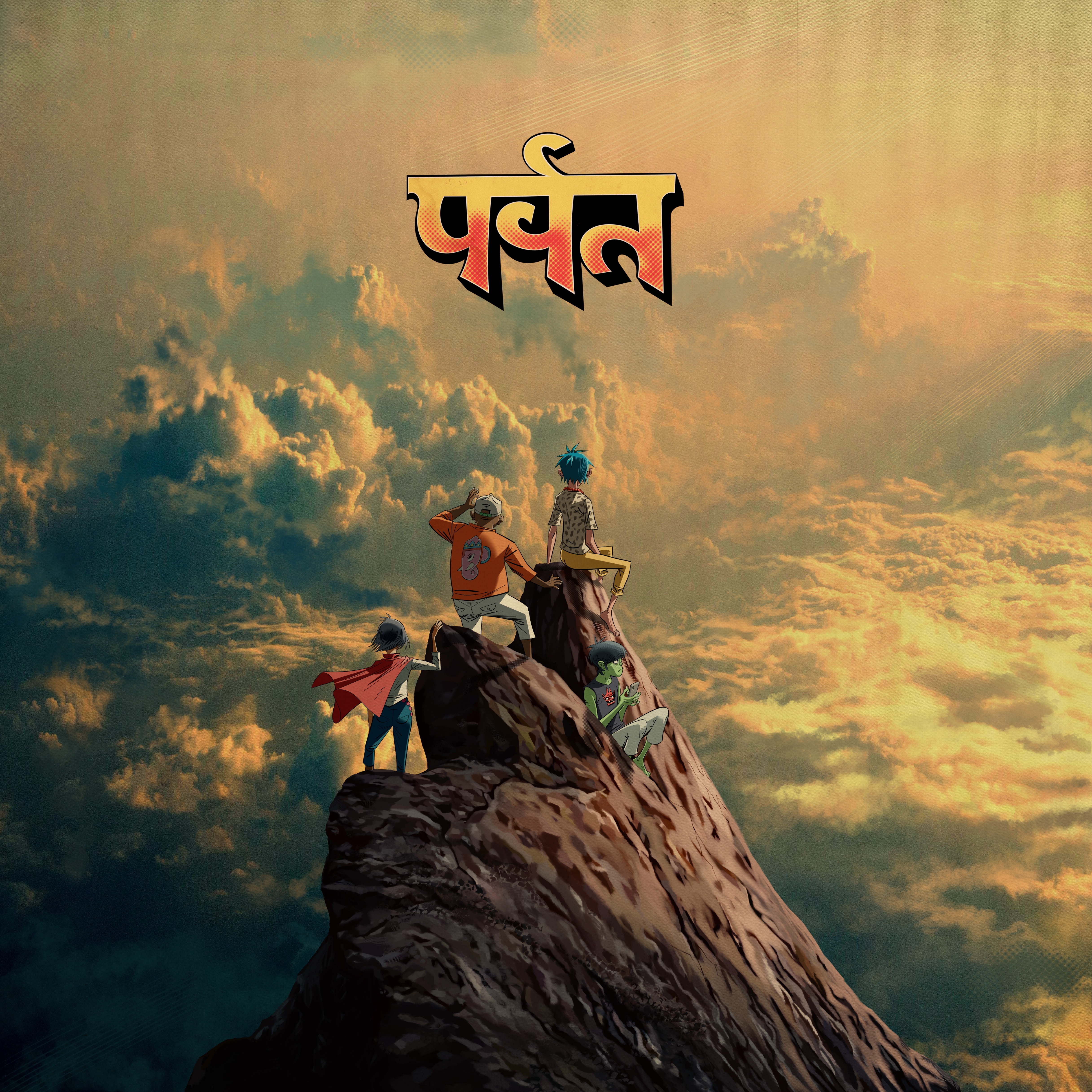
‘The Mountain’ by Gorillaz was released on February 27, 2026. Listen to it in its entirety here.
This is the first of a two-part series delving into ‘The Mountain’ by Gorillaz.
[Images of the Bangash brothers, Anoushka Shankar & The Hindu Jea Brass Band Jaipur via Robach Music Group]
[Image of Asha Puthli via Robyn Skinner]
[Images of Niloy Ahsan via Thouhid Tushar and Shivangi Mishra]
Aditi Dharmadhikari is a freelance writer for Mixmag Asia. Follow her on Instagram here.
Never miss a beat. Subscribe to our Scene Report newsletter or follow us on Instagram.
