


 Features
Sound as Medicine: the ancient roots of sonic healing in Asia
We speak to the producers-slash-researchers of Wonderfruit’s Sonic Minds programme, Nick Luscombe & James Greer, on how frequencies, natural textures & intentional silence can restore the mind & body
At Wonderfruit, amid the heavy beats and lively festival energy, there is one programme that stands out for its entirely different musical approach. A bit quieter; a bit more intentional.
That programme is Sonic Minds; a project co-produced by Nick Luscombe and James Greer of MSCTY Studio that treats sound not just as entertainment and something to dance to, but as something that can restore, realign, and heal.
Sonic Minds began as a collaboration between Sonic Elements and Wild Minds, two projects exploring ambient design and mindful listening. What started as shared curiosity grew into a camp, lab, and sanctuary where traditional Asian sound practices meet modern electronic experimentation.
Last year’s three-day programme in The Fields gathered musicians and researchers alike to explore how sound affects the body and mind. This year, Sonic Minds returns with that same sense of curiosity to share their sounds with Wonderers.
“As we learn more about how different frequencies and textures can influence us, it’s becoming clearer that sound can have a real impact on how we feel—emotionally, mentally, and even physically,” Luscombe explains.
Across Asia, sound has long been woven into spiritual and communal life, from Buddhist chants to Tibetan bowls, temple bells, and Indonesian gamelan. These sounds might feel more meditative than danceable, but they also create balance (which is something very welcome on festival grounds when you just need a breather).
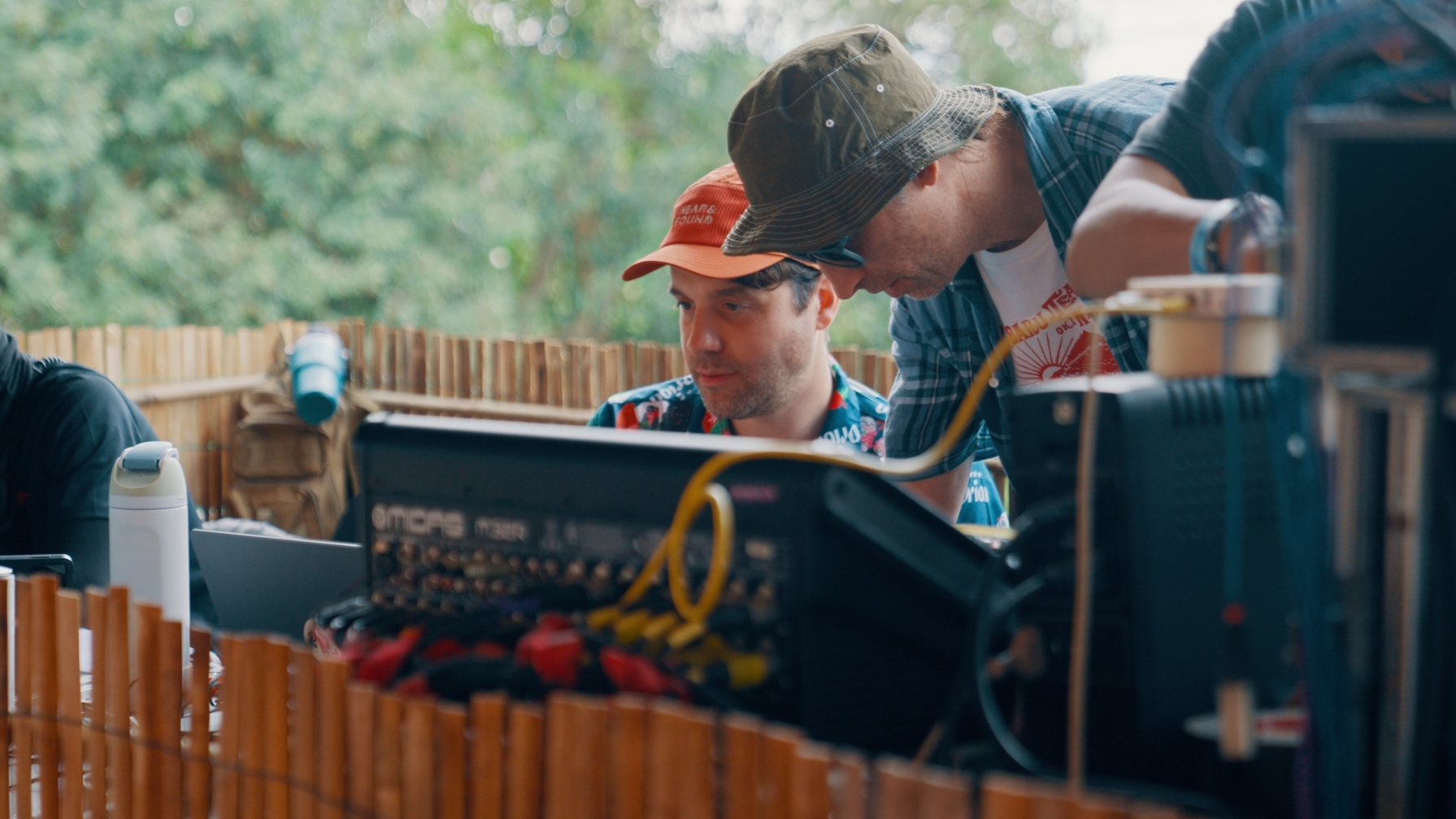
That said, the music remains very much the main attraction.
Greer, who has lived in Japan for many years, sees clear links between these ancient traditions and modern ambient or minimal music.
When asked what drew him to traditional Asian sound practices, he states: “I guess the perspective in which life is viewed in Eastern thought is in general much less individualistic than in the West, and, over time, I think I’ve grown more in tune with trying to lose the ego, the intentionality, and accept a more minimal approach.” This perspective has become a defining part of his musical identity.
Read this next: Have you got ‘rave fatigue’?: Why we’re all so tired after lockdown
He adds, “Eastern thought around tuning into frequencies and their healing capacities is another area which I’m now working in, and have been fortunate to learn about from shamanic practitioners in Thailand. Science and traditional practice tend to agree that tuning into circadian rhythms and earth’s cycles is beneficial, and I’m finding it very interesting to merge these thoughts into music and sound work.”
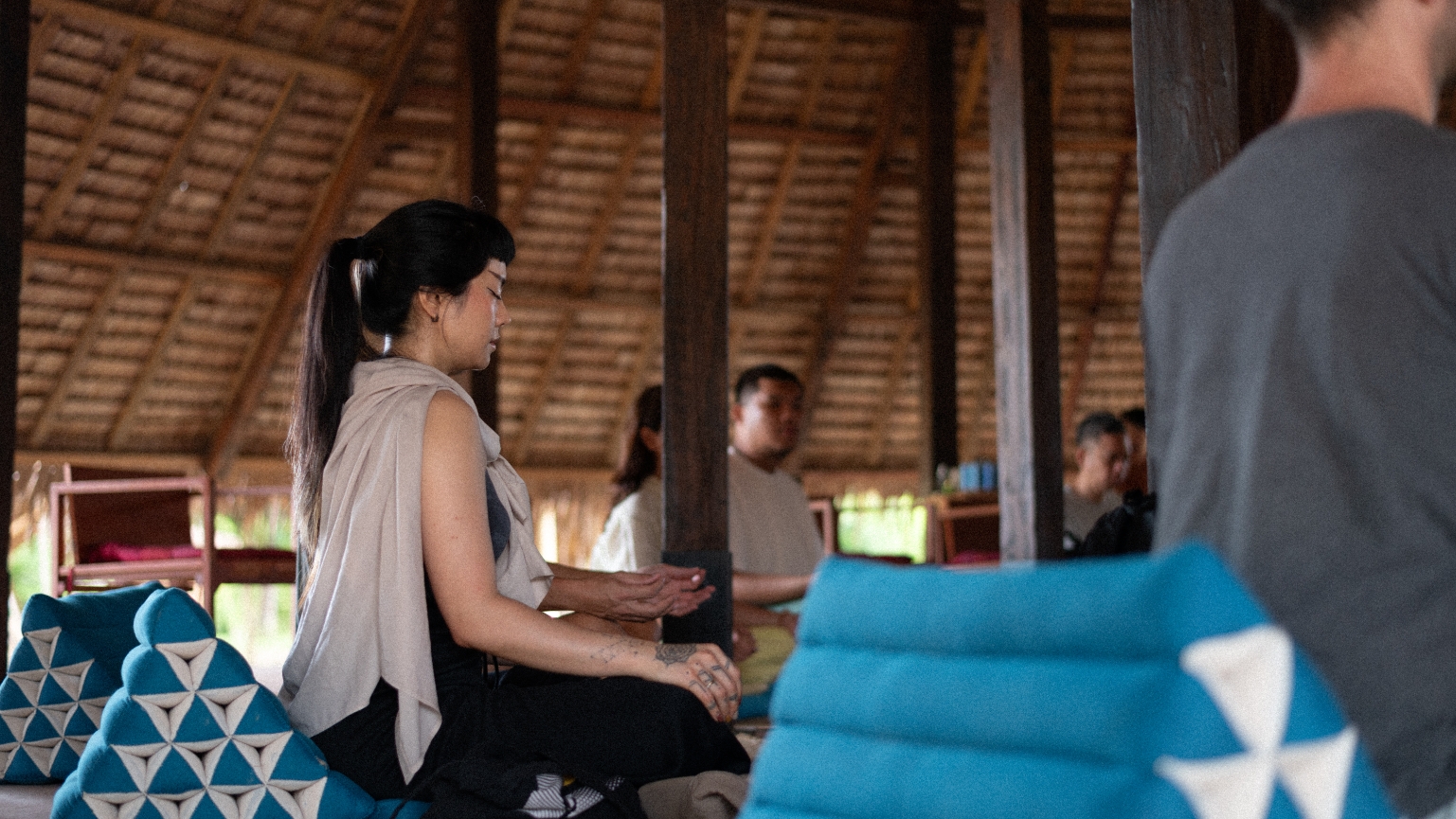
For Luscombe, the Japanese idea of “ma” (which he describes as the “gap” or “pause” between notes) is equally essential: “In meditative sets, that space gives listeners a moment to breathe, reflect, and absorb what’s happening around them.”
“It’s in those quiet moments that people can feel more present and, in many cases, find a sense of calm or even healing,” he adds.
Sonic Minds also connects with scientific institutions like the Okinawa Institute of Science and Technology (OIST) to study how sound influences well-being.
Greer explains, “What Sonic Minds aims to do is to focus on material that is derived from locations and spaces of natural wonder. Rather than driven by algorithms or AI it is driven by reconnecting to something real.”
Read this next: A look into Field Records’ intimate ‘Landscape’ workshops
Their work bridges empirical research with traditional knowledge, studying how specific frequencies and natural sounds ease stress.
Luscombe describes it as a shift in creative purpose. “I feel that by understanding more about music as a kind of medicine, I can help curate, collaborate, and create work that really nourishes people—maybe even helps them heal in some way.” Greer agrees, stating that “There is something grounding, universal, about the rhythms and sounds of nature.”
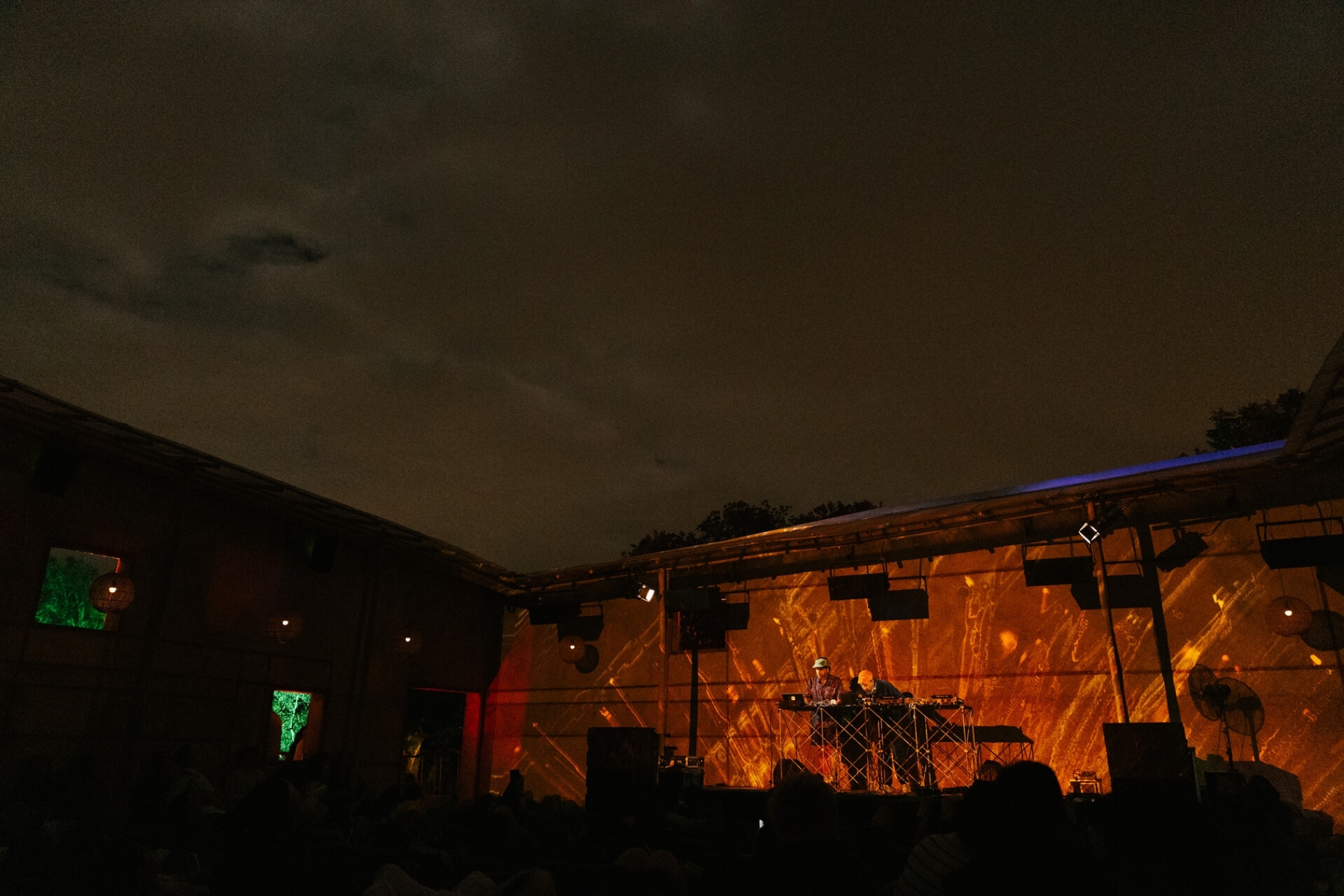
So what does this look and feel like at Wonderfruit?
Greer’s hope is simple: “It would be nice to help people to feel good, to see the world in new ways, to connect with nature, with new realities.”
One example would be the project Music for Rest Rooms, which Greer and Luscombe co-created alongside Japanese ambient artist Yumiko Morioka.
“It has 5 moments, each connecting to a different scent, memory, aura, frequency of a place, and based on a sort of meditative approach to listening to and responding to specific spaces and memories of them. I’d hope that in listening to it, they can share the experience of those memories, times, places, and also find solace and peace in them. I believe that music has a deep power to connect us to these other senses and in doing so to unlock deep memories and emotions,” Greer explains.
Another project by the two Sonic Minds producers-slash-researchers is the sound installation for the morning transitory period between meditation and daily activities at a new Wonderfruit stage, Baan Bardo.
“It takes sounds from bells at the Hua Lamphong temple in Bangkok and merges them with the nearby train station (also called Hua Lamphong) and voice textures reading from the Tibetan Book of the Dead,” Greer says. “I think that there is something that universally connects us all through these different parts of the story.”
Read this next: Sounds, sleep & wakefulness: Michael Diamond on how sonics shape the mind
Luscombe notes that this harmony is central to the collaborative Sonic Minds work he and Greer develop, where natural textures and field recordings become the raw material for their shared electronic practice.
“I don’t really see natural sounds as being separate from any other musical source. What I find interesting is how the textures and frequencies of natural sounds can be shaped and manipulated—sometimes very subtly—to bring something fresh and unexpected into modern electronic music,” he explains.

Who are examples of artists carrying the Sonic Minds philosophy forward in their performances and music?
Bandung-based duo Bottlesmoker, known for their bio-plant sonic sets, root their work in inherited traditions.
“We were born in a small village in West Java where traditional ceremonial practices using indigenous instruments for harvest celebrations, river cleansing rituals, and wedding preparations were simply the fabric of daily life,” they recall.
For years, those sounds were background noise, until academic research reawakened their meaning. “It was a complete revelation. We felt simultaneously illuminated and deeply humbled or, as we say, ‘slapped awake by the profound values and philosophies embedded in the culture we had almost dismissed.’”
Today, Bottlesmoker transforms that awakening into an electronic dialogue between human and non-human life.
“Every living organism, plants included, possesses complex bio-data,” they explain. “We utilise advanced biofeedback technology to translate this life energy into MIDI data. This allows the plant to become an organic sequencer, playing our synthesisers with unique, complex, and meditative notations.” What emerges is futuristic yet somewhat primal at the same time.
Read this next: Five tips for keeping your mind & body healthy in the studio
In performance, they treat each plant as a collaborator, not an instrument. “Respect as the key,” they insist, underlining that “The plant is a living being and cannot be forced to perform.”
It’s a philosophy that echoes the spirit of Sonic Minds that leans into an exchange between nature, technology, and consciousness. “By converting nature into a live, interactive element within electronic music,” they explain, “we move beyond sampling and into co-creation.”
Their music doesn’t aim to soothe in a predictable way; instead, it invites the listener into stillness through unpredictability.
“Since the plant's melody is naturally random and constantly changing, the human brain cannot anticipate the notes,” they say. “This forced surrender to the unexpected sound is highly effective in downregulating the nervous system.”
A process of healing, in a sense.

Thai musician and producer NOTEP works at the intersection of ecology, emotion, and electronic sound. Her music draws from her upbringing in Chiang Mai, where she was surrounded by traditional instruments.
“When I was a kid, I was taught traditional Thai instruments in school—the khim, ranad, Salor and Sueng,” she recalls. “The sound of those instruments stayed with me as a kind of distant memory, something nostalgic that never left.”
Over time, she began to reinterpret those sounds within contemporary frameworks. “I started paying attention to the sounds I used to overlook, even the silence between sounds. These became sacred to me. I realised they’re what make my identity unique, and that the sound of “home” carries a frequency that speaks beyond language,” she explains.
Elaborating on that last statement about silence, she shares: “Silence is as powerful as sound. It’s the negative space in music, the pause that lets emotion breathe. When held with intention, silence becomes a portal for imagination and release. It’s where the listener’s own energy begins to move. Every person will experience that stillness differently, and that’s the beauty of it. Healing often happens not in the sound itself, but in the space that sound opens up.”
Read this next: Humans of Wonderfruit 2024 in their element
For NOTEP, performance is always conversation: between past and present, the personal and the universal. Her sets that teem with field recordings, soft electronics, and traditional instruments carry that intimacy into expansive, immersive experiences.
“Nature is the original composer,” she says, adding how “Scientifically, sounds of nature have the power to calm our nervous system—birdsong, ocean waves, rainfall—they bring us into what’s called the ‘blue mind’ state.”
This year, her collaboration with Nisatiwa supported by Vietrio Orchestra at the festival will merge electronic textures with live Thai instrumentation. “It’s going to be a powerful and emotional performance that bridges tradition and modern expression in one flow,” she says.


If sound can heal, silence completes the process.
Luscombe explains: “It’s really about the silence between the notes. It’s an active part of the experience,” as he refers back to the “ma” philosophy.
Bottlesmoker describe it as the point where sound’s effects take hold: “Silence is not the absence of sound; it is the most potent layer of the medicine. In a sound bath, the moments of silence are essential for the brain to process the complex frequencies it just received.”
Sonic Minds’ involvement at Wonderfruit also potentially raises discussions about how festivals use sound. As events evolve, they’re becoming more than just stages for music and instead become sites for rethinking how we listen.
Read this next: “Jazz is the teacher”: Theo Parrish on tradition, records & the roots of dance music
Luscombe and Greer’s curation of the programme invites audiences to slow down, notice detail, and experience sound as an environment rather than a product.
“When I started DJing back in the 90s, I often played in Chill Out areas, which were basically early versions of these curated healing spaces,” Luscombe recalls. “A good DJ or selector is really key to making that work—someone who can read the room, connect the music, and craft a bespoke sonic tonic that lifts and supports everyone in the space,” he adds.
Bottlesmoker see the boundary between wellness and nightlife dissolving: “The line between the dancefloor and the healing space is blurring. We observe an intriguing trend, even in traditional club settings, where the night concludes with a meditative decompression, often anchored by the DJ playing ambient like ZERØBPM that invites you to pause, no talking, no phones, no alcohol, just presence.”
In a nutshell? “Connection doesn't have to end when the party stops,” the duo state.
For NOTEP, this evolution is about awareness, which leads to the need for intentional listening spaces: “Music has become so constant in our lives that we sometimes forget to truly listen.”
The shared message is that attention, not volume, is what transforms a sound into an experience.
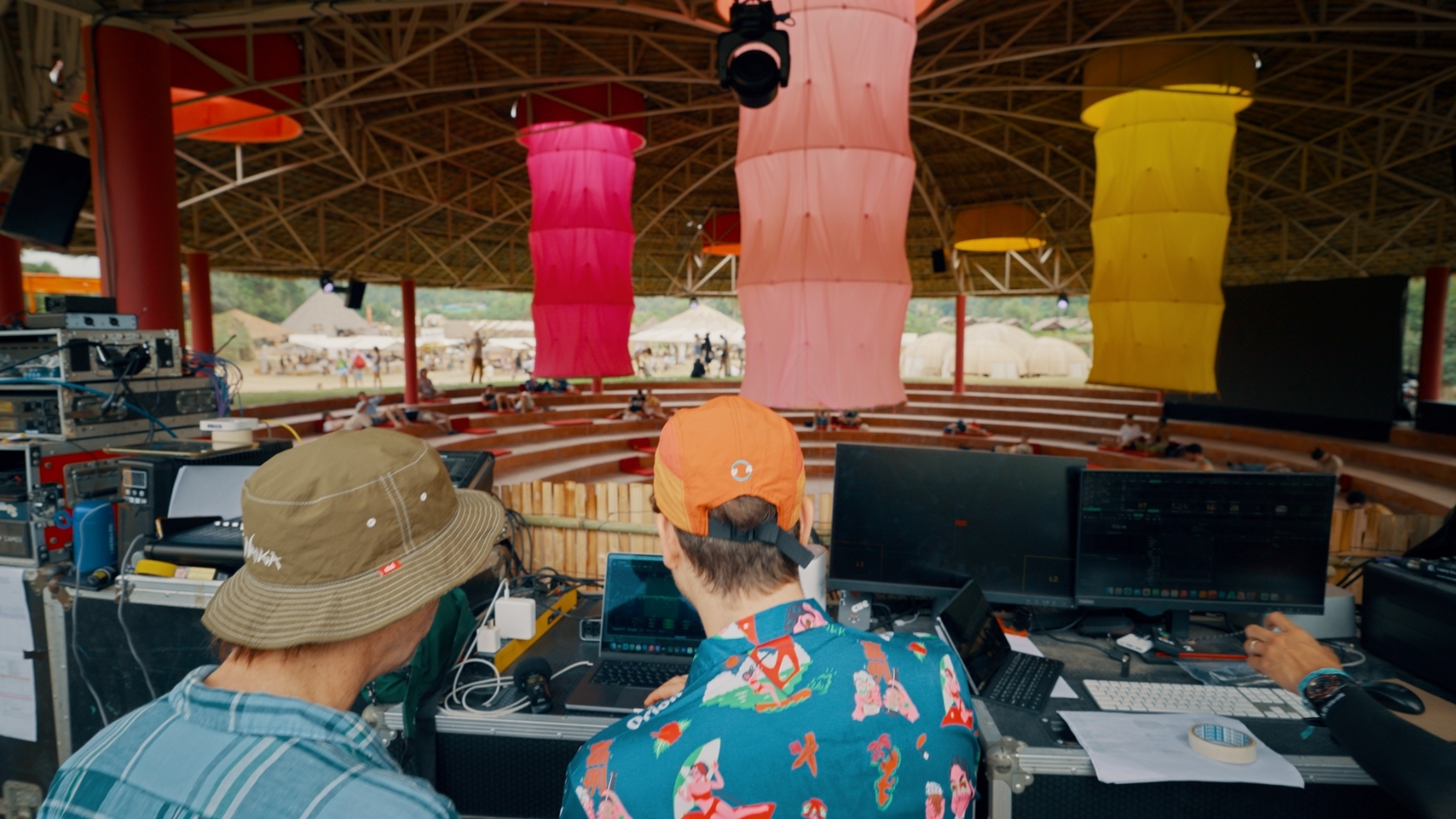

Sonic Minds points toward a larger movement in sound culture; one that values listening as participation rather than consumption.
“I hope it gives people a sense that the possibilities are endless—that what they’re hearing is just one interpretation out of a thousand potential sonic conversations,” Luscombe says.
He adds: “Music already supports us all in our everyday lives, and that in itself is amazing. But I think it’s also time to look a little deeper, to understand why and how it works. Sonic Minds gives me a beautiful opportunity to explore that side of things and take my research into new, more meaningful areas.”
Read this next: Turn up the wind-down: slumber tips for night owls
Greer sees it as an invitation. “To help people to feel good, to see the world in new ways, to connect with nature, with new realities.”
For Bottlesmoker, NOTEP, and the Sonic Minds curators, the message is consistent: sound is more than entertainment, but also a form of communication that links people to their environment and to one another.
And at Wonderfruit, the idea lingers: that the act of listening itself might be the most transformative medicine of all.
Exploring The Fields this year? Make sure to look out for the Sonic Minds activations; from collaborative live performances to hidden sound installations. For more info, head here.
Amira Waworuntu is Mixmag Asia’s Managing Editor, follow her on Instagram.
Cut through the noise—sign up for our weekly Scene Report or follow us on Instagram to get the latest from Asia and the Asian diaspora!
