


 Features
Findings from Grassroots Rising: how community radios are amplifying new identities
At ADE’s Nighttime Lab, we discussed how independent stations are reshaping dance music ecosystems by driving discovery, representation & cross-border collaboration across the Asia-Pacific
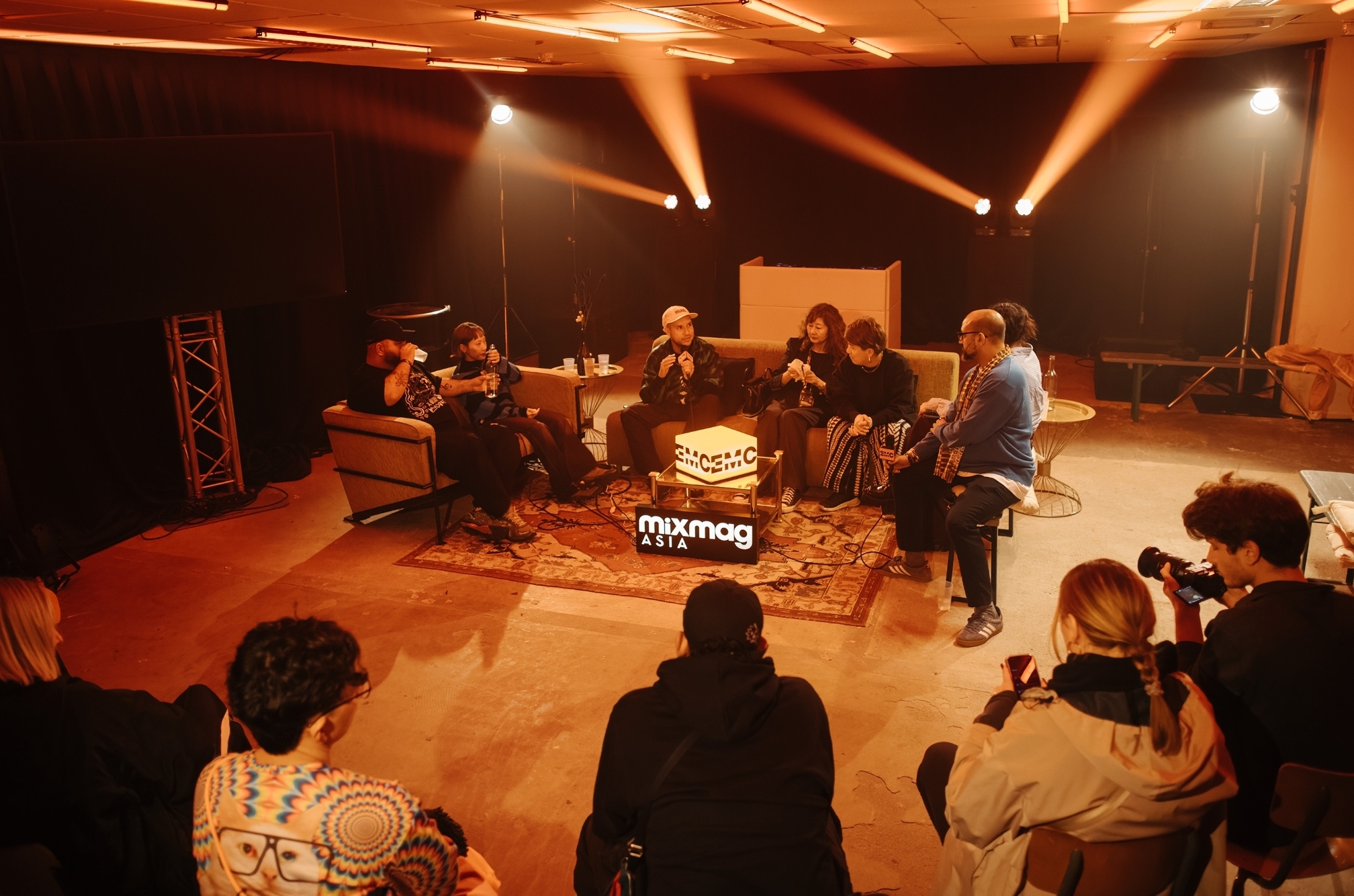
At this year’s Amsterdam Dance Event, EMC and Mixmag Asia brought together a wide network of radio practitioners, DJs and cultural organisers for Grassroots Rising: Community Radio’s Power in APAC; a two-hour exchange held as part of Nighttime Lab 2025.
What made this panel distinct was its cross-continental mix of perspectives. Seoul, Bangkok, Tokyo and Melbourne aren’t typically discussed in the same breath when talking about electronic music ecosystems, yet the session made clear how closely these scenes inform and support one another.
In APAC, community radio often grows out of necessity rather than strategy—filling gaps where local infrastructure is thin, creating opportunities where industry pipelines don’t yet exist, and providing visibility that larger media rarely extend.
Guided by Shivani Sharma (Community Engagement Manager of EMC) and Arun Ramanthan (Director of Mixmag Asia), the session explored how community radio in the Asia-Pacific region has moved well beyond traditional broadcast models, evolving into social infrastructure, creative incubators and connective tissue between rapidly expanding scenes.
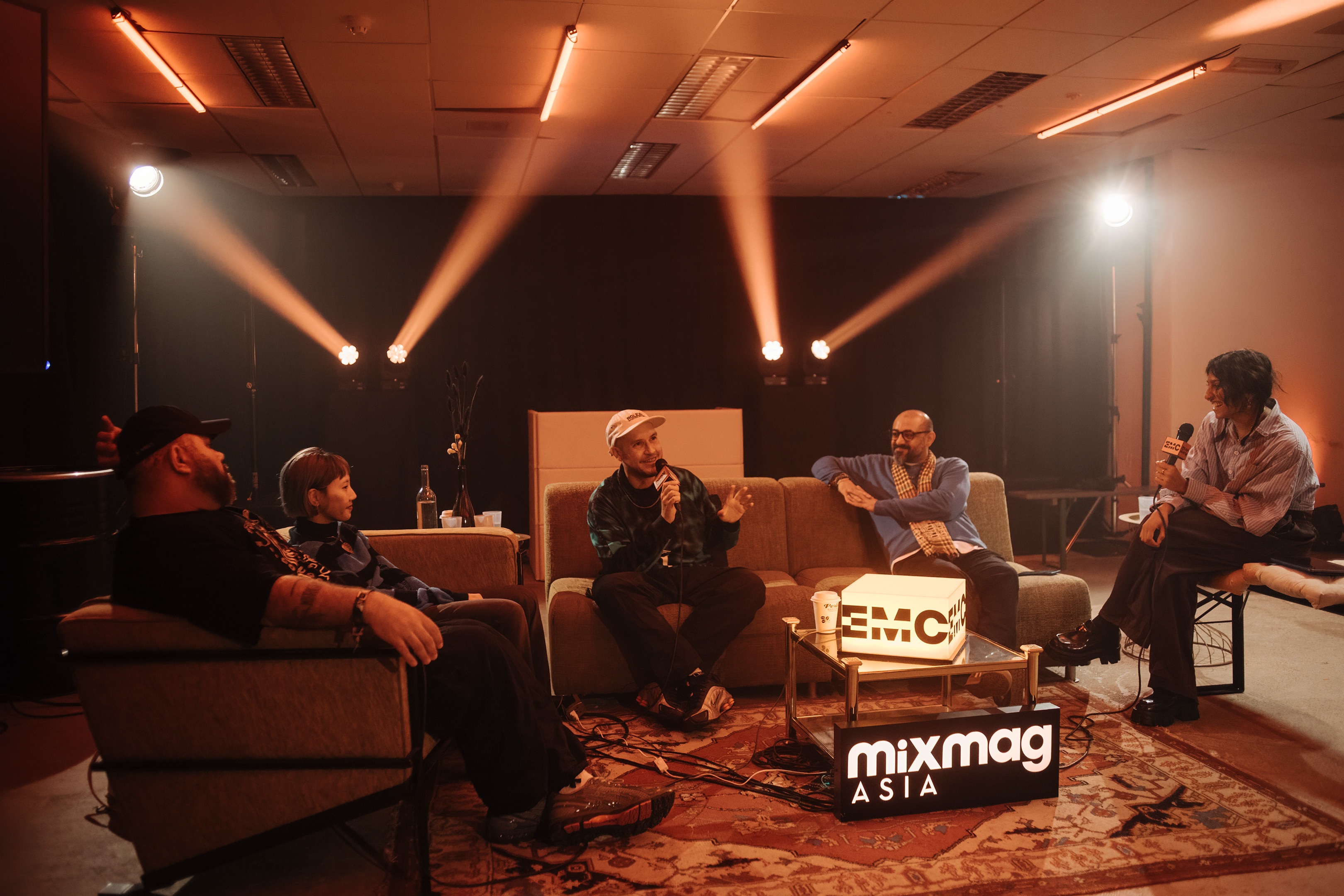
The discussion opened with introductions that immediately set a practical, grounded tone rooted in lived experience.
Rich Price, founder of Seoul Community Radio (SCR), reflected on the station’s approaching 10-year mark and the shifts he has observed during that time. But the most significant change, he noted, came from the grassroots.
“Everyone who gets into radio treasures music discovery and likes to give chances,” he explained, noting that SCR’s earliest mission was not to broadcast perfection but to give people space to try, fail, grow and be visible. He described how the station moved through phases: first building identity, then turning toward innovation through streaming and video, and now emphasising diaspora links and deeper community support.
SCR’s recent activities at SXSW London—including a panel session on K-Bass and a party hosted inside a Korean supermarket—illustrate how far a homegrown station can travel while staying grounded in its local context.
“We originally started off as purely audio, in a type of NTS, Rinse style, and then the advent of video actually gets you. Allow people to see Asian faces, people from the scene, how they look, how they dance, how they mix, how they play, and I just think that that was a really powerful thing for people in Asia to show that,” he said, underscoring how representation and access have guided the station more than conventional broadcasting goals.
Read this next: Without independent radio, homogeny thrives
Bringing a different vantage point, Takky from Bangkok Community Radio (BCR) spoke about building something much younger and still in rapid motion.
Only four years old, BCR is a platform still finding its structure while widening its reach. “Our radio just opened only four years… we try to work with the community around Asia and try to push out our DJs to the outside,” she explained. The station has been forging active connections with Jakarta, Hong Kong and Vietnam, and recently launched a Rising Stars programme to develop new local DJs.
For her, the growth of a distinctly Thai club sound has been one of the most exciting shifts around the station. Playing a track called ‘Pee Fah’ by Meltmode, she described a wave of producers blending Thai instruments and melodic motifs into house-driven frameworks.
“This kind of music now in Bangkok has become popular in the past one or two years… People start bringing good Thai tracks and make a new version to represent something,” she said. The station, she emphasised, is committed to amplifying this energy while formalising itself as a company and preparing for its first major event with other regional stations.

From Australia, Paul Gorrie (DJ PGZ) offered a perspective grounded in community radio’s long history in Naarm/Melbourne. He spoke about Triple R—a fully volunteer- and donor-funded station with a 48-year legacy—and how such structures have created space for experimentation and representation long before mainstream outlets took notice.
Asked about the track defining his current landscape, he pointed to artists connected to Butter Sessions, including Sleep D. “They’re really leading this sound… it can fit in a lot of different contexts,” he noted, describing a flexibility that mirrors the open, improvisational spirit of community radio.
Paul also highlighted how Indigenous artists are integrating traditional sounds—like clapsticks and Yidaki—into electronic production. “It sounds like a rim shot or woodblock… we use that with playing the Yidaki,” he said, illustrating how these elements are shaping a distinctly Australian sonic identity rather than being treated as samples or symbols.
Read this next: Dresden on the art of going forward and never arriving
Adding further regional nuance, Akiko Usuki (CEO of Teal Inc.) offered an historical and personal view of Japan’s radio landscape. She described a long-standing radio community shaped both by domestic culture and the influence of foreign music.
“We’ve had a radio community since a long time, especially for foreign music,” she said, noting how the rise of dance music helped expand DJ-focused programming. She also reflected on the shift brought by the pandemic, when streaming became central to how Japanese audiences engaged with music. Drawing from her own experience hosting Tokyo Night Story on an internet radio platform, she shared: “I had 34 stories. I invited the DJ or organiser or club owner and I’ve been asking all the questions about was were the special moments they had and also why they became a DJ.”
The project became a vehicle for preserving and sharing lived histories of the city’s nightlife—a reminder of how radio in Japan continues to operate as an archive, a storytelling space and a bridge between generations.
Read this next: Radio Alhara: The online radio station connecting the Arab world during lockdown
Building on this, Mimi Shimada, CEO of Mimi Shimada LLC, spoke about the unique realities of Japanese listener culture, where radio engagement still happens heavily on X (formerly known as Twitter).
She explained that Tokyo’s commuter-heavy environment favours text-based interaction, giving radio a different rhythm: “They still get requests of songs… they tweet it like, ‘can you play this?’”. She also noted the strong cultural value placed on curation and discovery—elements that keep Japanese community stations feeling intimate even within a crowded media landscape.

If the session made one thing clear, it’s that APAC’s community radio movement is defined by constant reinvention shaped by locality rather than a uniform model.
From Seoul’s decade of experimentation to Bangkok’s emerging confidence, Melbourne’s volunteer-driven resilience and Tokyo’s distinctive listener behaviour, each story revealed a network still expanding, still learning, and still essential to the movement of ideas and sounds across the region.
Amira Waworuntu is Mixmag Asia’s Managing Editor, follow her on Instagram.
Cut through the noise—sign up for our weekly Scene Report or follow us on Instagram to get the latest from Asia and the Asian diaspora!
