


 Interviews
Perpetual jazz: Kuniyuki’s sound is shaped through the void of time
As he prepares to take over Hong Kong's Salon10 this weekend, Kuniyuki Takahashi discusses borderless expression, primordial influence & the emotional depth behind his approach to music
In an industry defined by fleeting trends and algorithmic precision, Kuniyuki Takahashi remains a timeless figure.
For decades, the Sapporo-based producer and multi-instrumentalist has crafted a sound that is both deeply personal and universally resonant. Behind the electronic framework lies an artist fluent in multiple disciplines—a dimension of his practice fundamentally shapes how he approaches his deeply emotive live performances.
Anchored by the reflective quiet of his hometown, his music travels without confinement, a testament to a process that values patience and human connection over hype.
While the world chases the new, Kuniyuki looks for the perpetual. He embodies the “primordial sound” found in a silent cave, the shared energy of a live improvisation, the warmth of a record passed between friends; such records of his can be found on deeper shaded imprints like Mule Musiq, Music from Memory and Sacred Rhythm Music.
His work is a quiet rebellion against the ephemeral, a powerful reminder that the most enduring music is born not from code, but from the complex, imperfect, and beautiful narratives of the human heart.
As he prepares for his upcoming show at Hong Kong's Salon10, we spoke with the artist about his borderless philosophy.
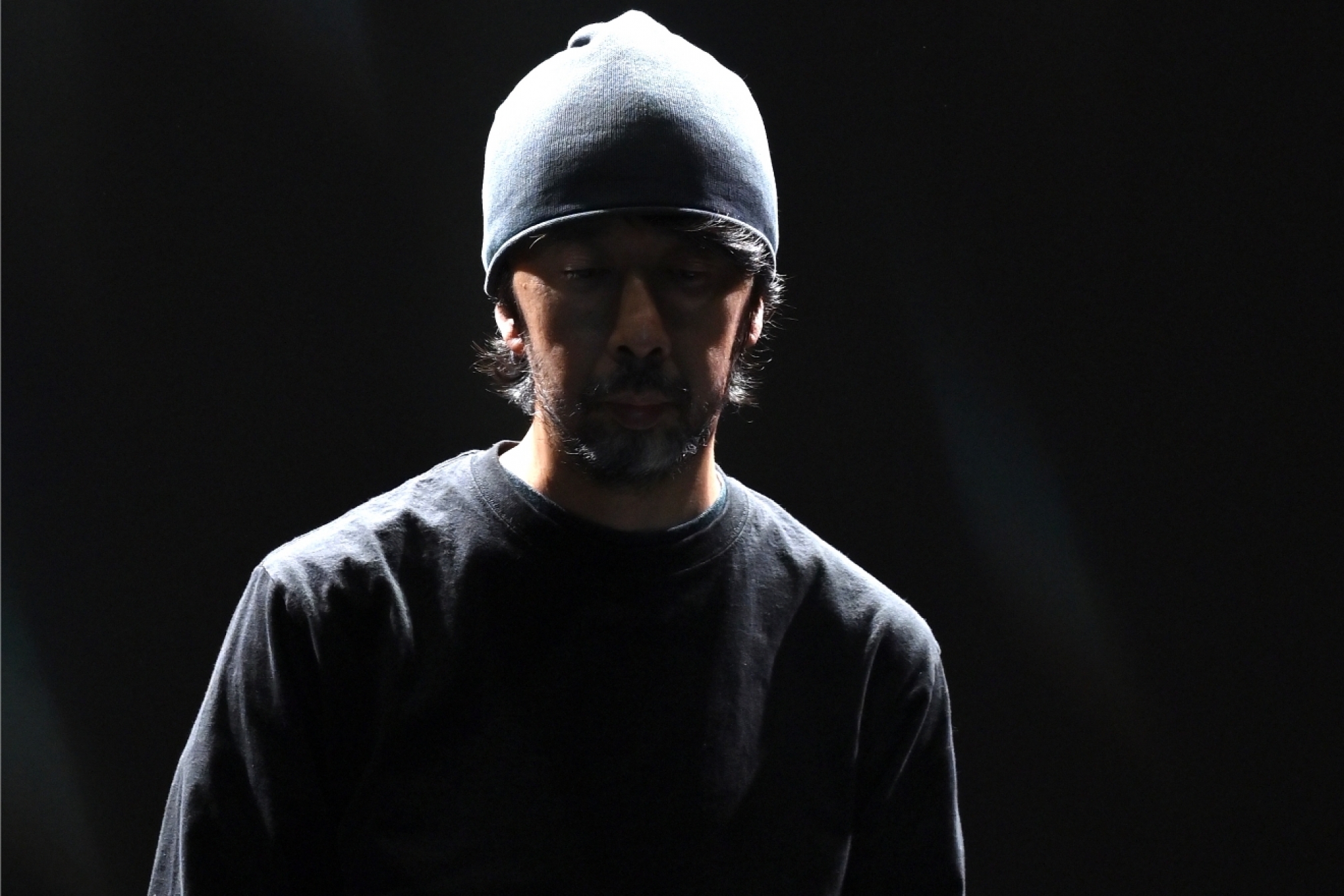
You've described your music as "borderless", yet you've remained rooted in Sapporo throughout your career. Rather than seeing this as a contradiction, how do you view the relationship between your deep connection to place?
One of the things I love most about being based in Sapporo is the sense of time and space it gives me to really feel music.
When I tour and play in different places, I meet people, share music, and gather new experiences. There’s a lot happening in those moments. When I come back to Sapporo, I can slow down and reflect. I let those experiences slowly overlap and blend together, eventually leading to new forms of expression.
For me, that movement between traveling and returning home feels connected to what I mean by “borderless”.
In an era where AI and algorithmic music generation are becoming more prevalent, your commitment to organic, emotionally-driven sound creation feels increasingly countercultural. Why is this distinction so important to you, and how do you see it shaping the future of electronic music?
I believe AI will continue to deepen its relationship with human society, and in music it can certainly serve as a tool that offers new triggers or starting points. I personally haven’t brought AI into my own creative process so far. It’s still developing, and I think we’re all still learning how to work with it in a thoughtful way.
I don’t reject AI, but for me, making music is a very personal process; it’s born from the human heart. I feel that such music carries more complex and layered emotions. There’s a certain imperfection; a narrative quality that leaves space for the listener’s imagination. Within that space, I believe there’s true movement and profound emotion.
I think electronic music will keep evolving, but I feel there will always be space for that human presence within it.
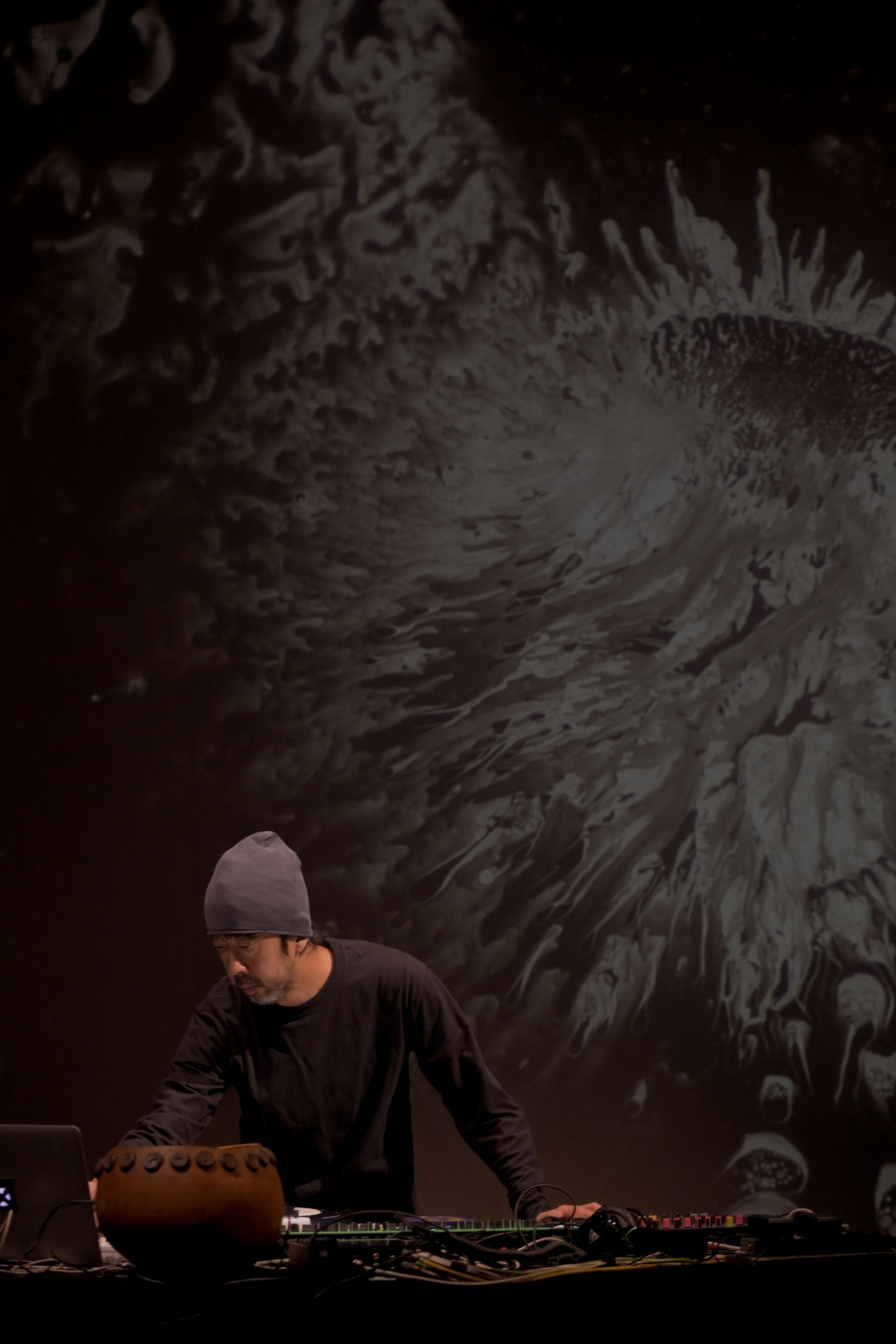
Your live sets are described as a "powerful combination of improvisation and dance music". When you're preparing for a show like Salon10, how much do you plan versus discover in the moment?
Experimentation is a big part of both my live performances and my daily studio work. A few days before a show, I take inspiration from the line-up and the key themes of the party, and I adjust my instrument setup according to the direction I want to explore.
During the performance, I pay attention to the atmosphere of the venue, the flow of time, and what the audience is feeling. The music can change (dramatically, even) depending on how I connect with the people in the room. Sometimes their energy leads me toward musical directions I hadn’t imagined before. It’s in those moments where it feels like we’re creating the music together.
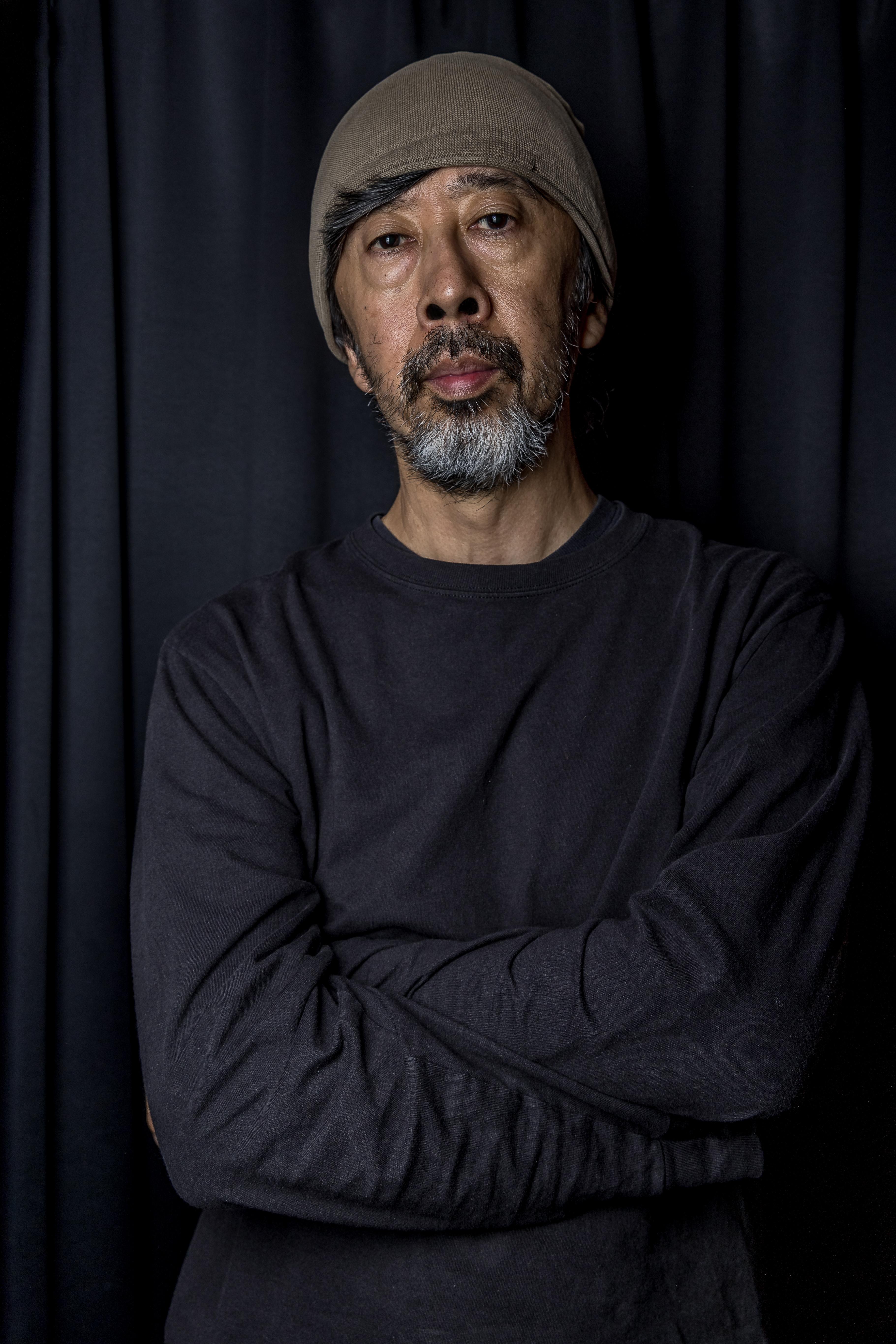
When you're improvising live with musicians, how much do you communicate beforehand versus discovering things in the moment? Is there a language or shorthand you develop with frequent collaborators?
I’m really grateful to have had the chance to improvise with so many different and wonderful musicians. The way we sense the music together and shape it in real time, how the intensity shifts during a performance, or how we react to something unexpected, it’s always a unique experience; always thrilling, and is never the same twice.
With musicians who are used to improvising, they usually don’t settle too many details in advance, avoiding fixed decisions or rigid structures. Instead, they focus on how much energy they can release in the moment, and this approach allows for a much greater freedom in the music.
Read this next: A glimpse into the intersection of music, art, fashion & AI with 0010x0010
You've performed across Europe, South Africa, and beyond. How does performing in different geographic and cultural contexts change the way you approach a set? Does the energy of a room in Berlin differ fundamentally from a room in Tokyo or Hong Kong, and if so, how do you adapt your improvisation in real time?
Geographical and cultural differences definitely influence how music is received, and that naturally feeds into how I improvise. I tend to adjust things like rhythm, resonance, tempo, and tone so they sit well in each space. At the same time, I try to incorporate new challenges for myself each time I perform, so the set stays open and responsive.
To do that, I constantly explore sound in my studio — how it changes, how it transforms, what possibilities it holds. Through daily technical and creative practice, I build a kind of familiarity with these possibilities, which then allows me to express them naturally in performance.
Your collaboration with pianist Fumio Ishibashi on ‘Feather World’ marked a significant shift in your work. Beyond the technical aspects, what was the emotional or philosophical connection that made that partnership feel necessary?
Fumio Itabashi became involved in my work after an introduction from Toshiya of mule musiq, starting with the album ‘Walking in the Naked City’. His piano has a very strong, immediate energy. During the production of that album, I learned a great deal from him, and in our live performances we shared many moments where harmony and feeling came together in a natural way.
When emotion rises up through his playing, it genuinely moves me. I have a lot of respect for him, both as a musician and as someone who has given me valuable opportunities along the way.
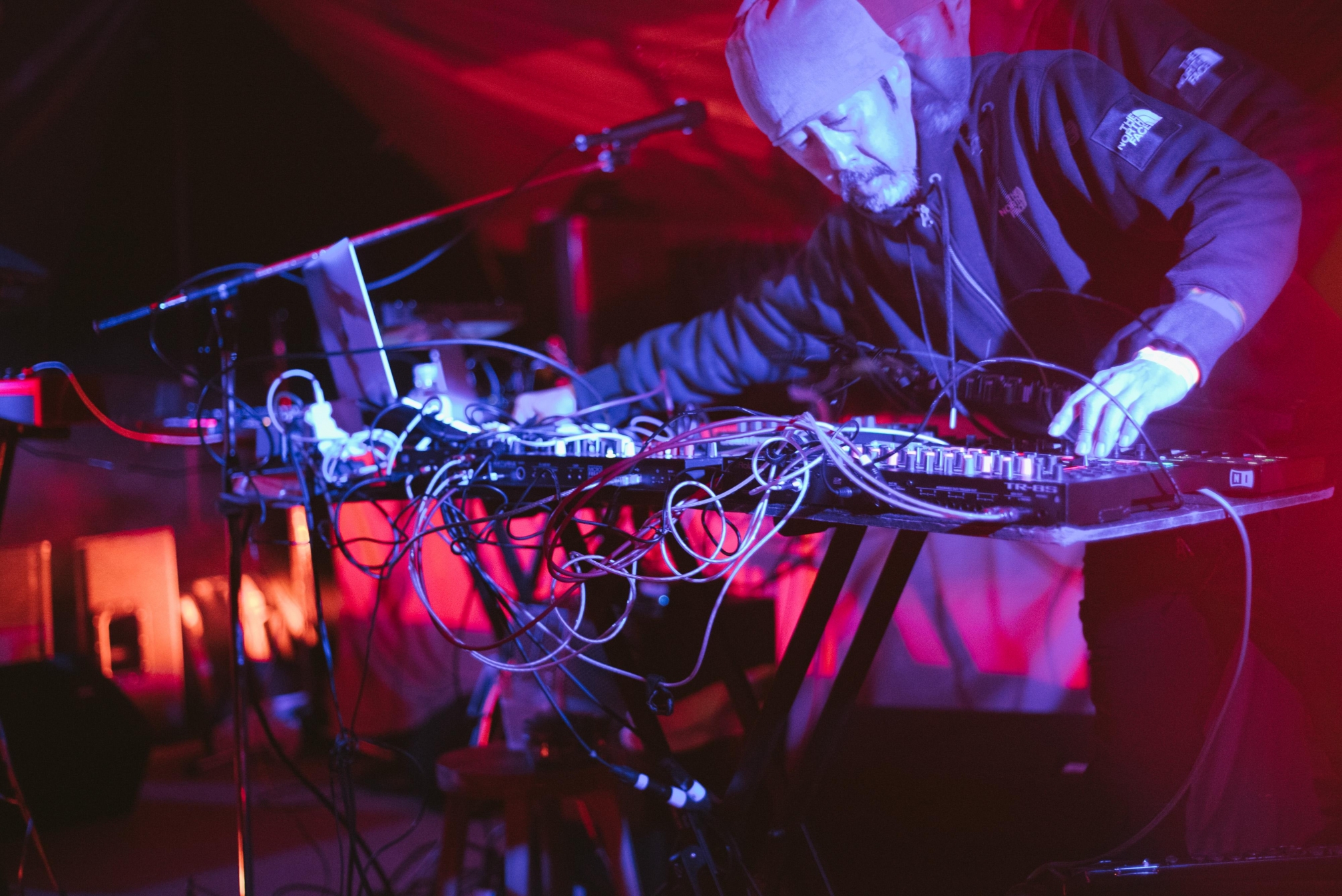
How do you decide when a sound requires a live musician versus a synthesizer? What is your technique for capturing that fleeting "human emotion" in a recording so it can be felt by the listener?
I value allowing musicians to express their unique musical spirit as purely as possible. To achieve that, it is essential to create arrangements and recording environments where they can feel comfortable and intuitive.
When recording, I focus on creating a space where the musician feels at ease and able to respond naturally. I try to stay physically and emotionally close to the performer, in order to share what they’re feeling, and respond to it in real time.
Through that kind of exchange, the performance can take on a sense of depth that carries through the recording and reaches the listener.
Read this next: Tune In: Must-know community radios from Asia
You've mentioned a desire to create "simple but with heart" music, inspired by a "primordial sound" you experienced in South Africa. Can you describe what this primordial sound feels like to you? How are you technically approaching this quest for simplicity without losing the deep, layered complexity your music is known for?
During a tour in South Africa, a close friend took me to visit an ancient cave. It was surrounded by vast plains, with small trees stretching along the horizon, glowing in the sunset. Standing there, I really felt the scale of the landscape.
At the same time, I started noticing very subtle sounds — my own footsteps, the soft rustling of trees, distant echoes carried by the wind. I found myself thinking about how people long ago might have understood their surroundings through those small, delicate sounds.
It made me realise how a single sound can open up many different images in your mind. Realising that was a profound gift. I’ve been trying to bring more space and quiet into my music, so those kinds of subtle resonances have room to be heard.
You've worked across so many genres and styles—deep house, acid house, jazz, folk, world music. Is there a unifying thread that connects all of your work, or does each project exist in its own universe?
My relationship with music has been long and close, so it feels woven into my everyday life. It’s hard for me to point to one clear thread that defines everything I do.
Beyond genre or style, though, I feel that the landscapes and emotions I receive from music are not separate entities. They are part of one larger, continuous flow.
Read this next: Mixmag Asia’s 2026 Essential Listening
In a world increasingly dominated by streaming and algorithm-driven discovery, how do you think about the longevity and legacy of your work? Does it matter to you how your music is discovered and consumed?
Music keeps expanding in volume and variety, and in such a large archive, the way people come across something meaningful starts to matter more.
Personally, many of the most beautiful musical discoveries in my life have come through friends. Of course, finding music on my own is also special, but when music travels through people—through shared love and experience—it gains a deeper warmth and story. I’d like to keep appreciating that kind of connection as my work finds its way to listeners.
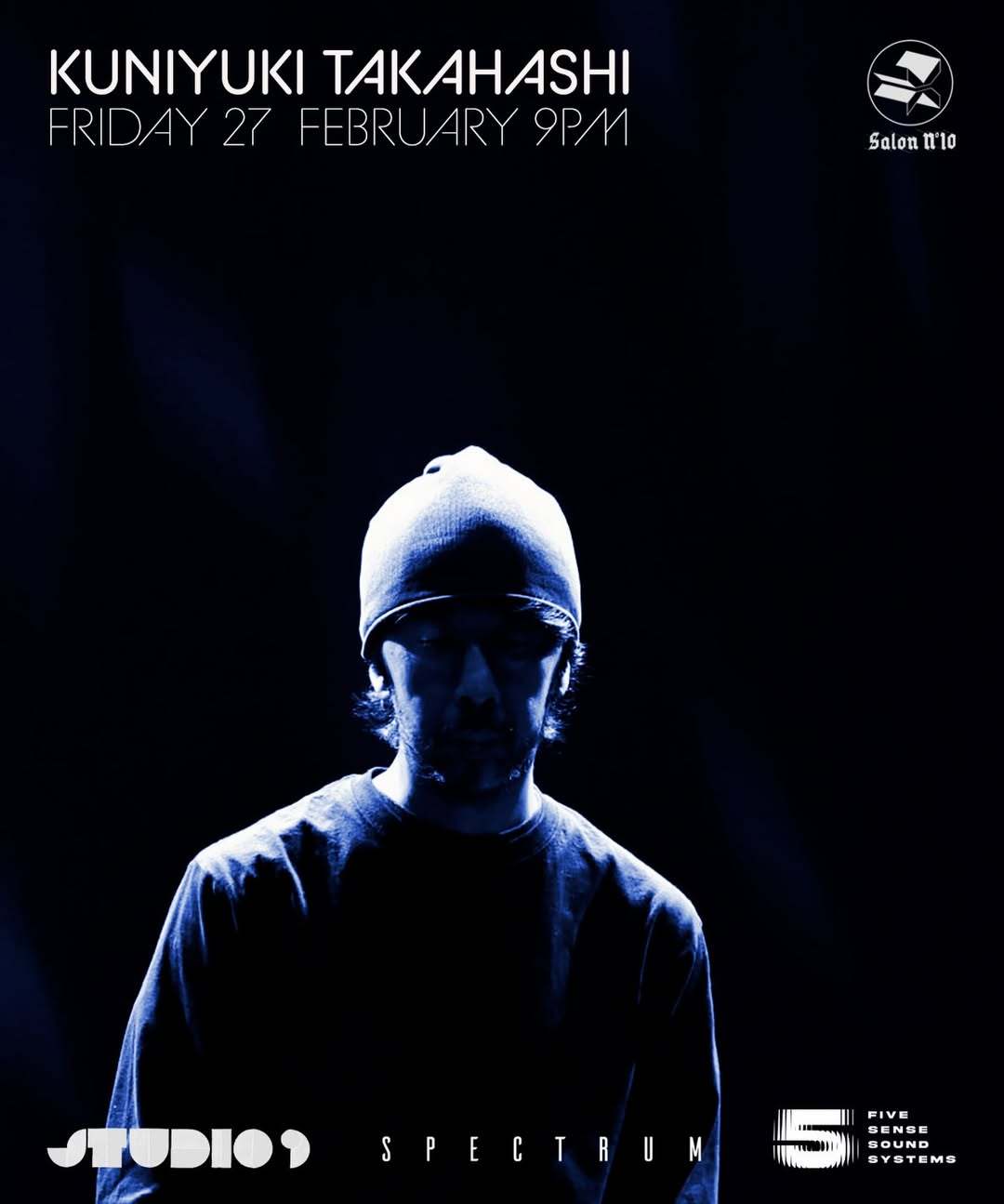
Kuniyuki Takahashi will perform at Salon10, Hong Kong, on Friday, February 27. More info and tickets here.
Arun Ramanathan is Mixmag Asia’s Director. Connect with him via LinkedIn.
