


 Mixes
Mixes
Mixmag Asia Radio 172: NON NON NON takeover at UNMUTE
Mae Happyair, Phát Paris and Phong discuss queer culture, lineage and what's next for the scene while unleashing a flurry of techno, hard house and hyperpop in Hanoi
Nightlife doesn't travel well in straight lines—it moves like NON NON NON does: city to city, dancefloor to dancefloor, carrying its ethos while letting each new room and audience help shape the experience.
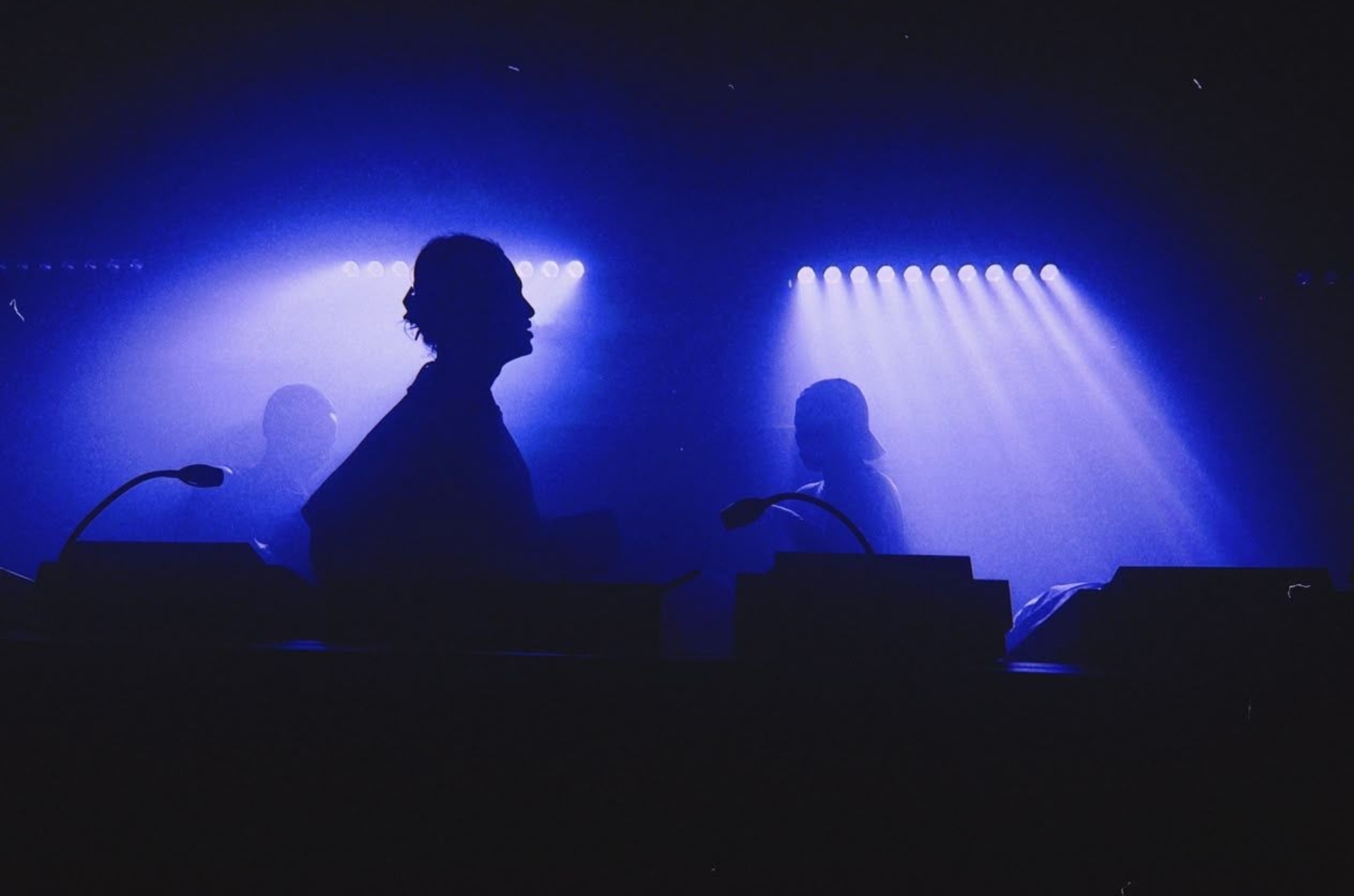
On the ones and twos were three people who shaped that night from different corners of the scene: Mae Happyair, the always impressive mind behind NON NON NON; Phát Paris, the Saigon-based DJ; and Bung L0n founder who brought Latin rhythm and low-end heaviness to the night; and Phong, the Hanoi artist behind Nhạc Gãy, warmed the room up expertly.
All three artists are shaping what Asian queer nightlife can look like.
Last month, Mixmag Asia teamed up with NON NON NON and Goethe-Institut for Echoes of Plurality, a podcast unpacking what plurality actually sounds like across Southeast Asia's queer scenes.
This time, we went from the mic to the dancefloor; following the NON NON NON takeover of Hanoi's Unmute for a night that lived up to everything we'd talked about.
We sat down with all three to talk about safe spaces, pan-Asian queer culture, and why queerness and lineage don't map neatly onto Western frameworks once you're actually in Saigon or Hanoi, plus what it takes to keep a scene alive in 2026.
Read what they had to say below, and listen to the sounds from the night on SoundCloud.
NON NON NON started as a queer safe space in Bangkok; how does that ethos travel when you take the party to a new city?
Mae Happyair: We try to bring the soul of NON NON NON with us, while blending it with the local scene in each city. For us, arriving somewhere new also means learning from each other—through the music, the energy, what happens on the dancefloor, or even a short chat in the smoking area. At the end of the night, I want people to leave feeling cheerful and warm, like: go live your life, go for what you stand for. We're all here with you.
Has the audience for NON NON NON changed since 2018? Who's showing up now that maybe wouldn't have five years ago?
Mae Happyair: The audience has definitely changed. Many people who used to come and dance with us have gone on to start their own collectives and build their own narratives. I think that's beautiful because now we can see so many different perspectives and ways of expressing what it means to be human through music.
Time has passed too, and the context of living in this world keeps changing. What it meant to be queer ten years ago can't really be compared with what it means today. But I think people carry these small histories with them—from the spaces they were part of, the people they met, and what they experienced—and continue them in their own ways. That keeps opening more space for us to hear different voices and perspectives. New people discovering NON NON NON are a bonus. I don't really measure that by quantity anymore.
What matters to me is that the people who find us really understand what NON NON NON stands for and connect with the message in their own way.
If NON NON NON didn't have to worry about safety, money, or venue politics at all, what would the ideal party look like?
Mae Happyair: That sounds like heaven—but maybe NON NON NON wouldn't have been born in that world in the first place. If we really didn't have to worry about any of those things, I don't think my ideal would even be centered around music anymore. I'd love to use what we've built to do more charity events and create support for queer communities and animal shelters.
Maybe the dream isn't necessarily a bigger or better party, but having the freedom to turn this platform into something that can care for others in different ways.
Where are you based, and if you're not from there, how did you get there?
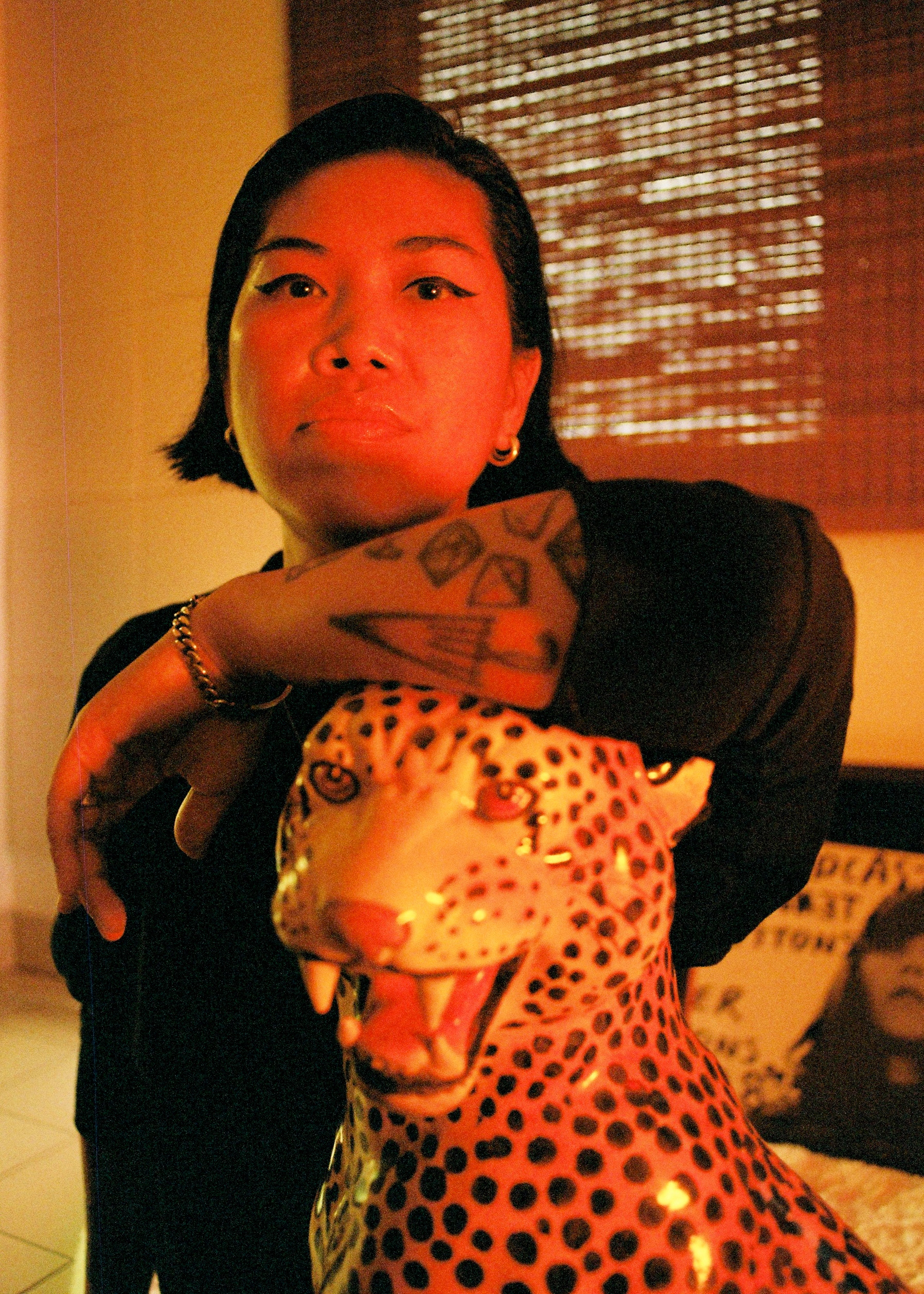
Phát Paris: I'm currently based in Saigon! I first came here in 2018 from my hometown Bình Phước, which you probably haven't heard of, but it's a pretty place—think forest and nature. Saigon was where I really began discovering myself and the wild world around me.
Phong: I'm from Hanoi, moved to Saigon for a while, but now I'm based in Hanoi.
Tell us about the NON NON NON takeover at Unmute!
Phát Paris: OMG it was sooo good! Sweaty, intimate and dancing all night. The energy from the crowd was beautiful, everyone was into it and giving themselves to the music. It felt like the room rode the same wavelength together until the end.
Phong: Intimate and “dancemania” to say in short, and each of our sets are a different ride on their own, so it's very NON NON NON.
Read this next: A conversation on craft & community with Mae Happyair, Olympe4000 & Sarah Farina
How would you describe your set?
Phát Paris: It felt like the perfect night for Latin rhythm infused with low-end frequencies, and people seemed to respond instinctively. I started pushing things deeper and heavier towards the mid-late part of my set, before ending with pop edits.
The idea was for people to lose themselves in the journey before bringing them back up for air with something familiar and loved.
Phong: Warming up with some chaotic yet organised style I've always been, with tracks that I want to shake hips to, and friendship wins!
Your favourite dancefloor in Asia?
Phát Paris: I mean, we're seriously blessed right now. I've been on explosive dancefloors all across Asia, powered by talented DJs everywhere putting their energy, passion and dedication into the scene. Every place has its own unique energy, so it's really hard to pick just one!
Phong: Any parties by local organisers, I can't even name them all, but pay attention to promoters and DJs—anyways, Oil Shenzhen, FINAL Taipei, HORN Bangkok, Unmute Hanoi, Heim Shanghai, and Reactor Shanghai.
What's needed for a healthier, more sustainable underground scene in Southeast Asia right now?
Phát Paris: I think Southeast Asia still needs a lot more attention. There are so many young talents working hard every day, carrying the fire and energy of their own communities and countries. What we need is more support, more opportunities, and more space for these artists to grow without having to leave their own scene to be recognised. There is already so much here; people just need to look closer.
Phong: Coffee in the club. Give funds to the right organisers. Amplify young queer voices.
What does "safe space" actually mean in practice for you; is it a door policy, a set of house rules, who's booked, all of the above?
Phát Paris: All of those things are important, but the tone is set by the promoter, DJs and what they stand for, and that flows through to the atmosphere itself. Music is about connection, so that needs to feel genuine for the safe space to exist.
The space I want to create? One where you can completely lose yourself in the music, dance without fear, and feel confident being themselves on the floor.
Phong: All of the above, but especially give queers/alternative promoters a space to prove their concept. House rules not just for the internal team, but where etiquette is embedded to ensure the wellbeing of nightlife—venue staff being treated well, since working in nightlife can take a huge toll on your health.
And definitely be kind and take care of each other, and come to enjoy yourself, don't expect much other than your own energy; it's up to you to make the dancefloor. Every single person makes the night better.
Read this next: The Orange Mic: Radio and relaxation at Airtime Asia’s inaugural conference fuelled by community
Do you feel pressure to represent "the queer scene" every time you play, or do you get to just be a DJ some nights?
Phát Paris: Being queer is part of who I am, but I am more than just my queerness. I don't feel the need to force things in my set or feel like I'm representing anything. I'm just being me, playing music I love, connecting and dancing with everyone no matter who you are.
Phong: Coming from Hanoi I don't feel the pressure to represent—I constantly reflect the reality of living in Hanoi, what the collective consciousness is trying to say, or simply when I know my people will go out, and they know which DJ they want to see, or the music they want to hear, the audience knows where they're not tokenised and when it's an integrated space. I think of my friends and the people I care about to represent a quality experience for all, and that's all anyone only asks of me—not just my queerness, but my heart and spirit.
I must say queer experiences in SEA are vastly different to the West, even from Hanoi to Saigon it's already quite different (well, slightly). Here, some people don't understand that a diverse program is better than a few tokenised queer parties, but the line between integrating queerness into a system versus blindsiding a marginalised group is a thin one. If I'm making any sense right now.
House, techno and disco have queer roots going back to the starting days—do you think about that lineage when you're building a set, or is that more a Western framing that doesn't map onto what you're doing here?
Phát Paris: For me, queer culture is deeply connected to the culture and environment of that country. Here in Vietnam for example, I see music as something more fluid and experimental. We're very lucky that people are open to almost anything in terms of sounds and genres the DJ brings to the dancefloor. We see that at our Bung L0n parties! More important than the genres is the freedom people have to move and be themselves.
Phong: I initially started as a techno queer, and having guidance from my time working under Savage Hanoi, these genres and old school queerness gave me a strong foundation. But over time I tend to mix different, non-rave genres I like into a set—all thanks to my stint in Saigon, which was such a canon event, an eye-opening time in recent years.
Sometimes I throw in a Vietnamese folk song, or scream in a mic in the middle of a rave. Letting myself get crazy once in a blue moon sets me free.
Queerness also means alternativeness, so I always try to achieve both of those things, and I guide myself out of frameworks and trust when the atmosphere is created. I'm timid until I get an idea I can't refuse to channel, haha. And femininity without inhibition is always a strong element that fuels queerness, too.
What's one track in your USB that will always make an appearance?
Phát Paris: One track that will always have a place in my USB is the UNIIQU3 Remix of ‘Better Off Alone’. Or any remix of ‘Better Off Alone’, TBH. I could play it forever. The title says it all: you might think you're better off alone, but at our party, you'll never be alone. So leave that loneliness behind and come dance with us.
This track also means a lot to me personally. When I first started DJing, my closest friends and I used to dance together and have so much fun whenever I played it. They'd all recognise it after just a couple of notes! So it always brings us back to those special memories together.
Phong:
- nguyendowsXP ‘Đi Vào Hư Vô’
- Nhóm 666 ‘Ngày gió và cánh diều’
- Fuego ‘El Diablo’
- Cora ‘The Heart Sutra’
- LSDXOXO ‘Burn The Witch’
Read this next: On queer futurity through rave collectives in Southeast Asia
Who are some other queer collectives or promoters elsewhere in Asia you think deserve more attention?
Phát Paris: Where to begin… there's so many! In Vietnam, I'd mention Bung Lon (duh), Gái Nhảy, :Dismal, Hamchoi, VAPCUCDA, Snug, Scissors, Peach, Chuột Cống, G29 Club just to name a few.
In Thailand, there's NON NON NON, YUMM, Giamtua, BEATFOREST, and others. And in Singapore, Bussy Temple, HYPERFOCUS and Cindy.
In the Philippines, I'd definitely mention Church, and there are so many more collectives across Asia working across different sounds and styles that I honestly couldn't name them all.
There are so many people building their own spaces, sounds and communities across Asia right now. I think it's important that we pay more attention to what's happening here, rather than always looking outward.
Phong:
- Nhạc Gãy (Sài Gòn - Hà Nội - Đà Lạt - New York), stay tuned for our comeback.
- Kencor.e (Sài Gòn - Hà Nội)
G29 Club (Hanoi)
- Cót Két, Cót Két, Cót Két (Saigon) — a collective of experimental music in need of so much support
- HAM CHƠI
- CHUỘT CỐNG (Saigon)
- Scissors (Saigon)
- GÁI NHẢY (Saigon)
- bep2bep (Saigon)
- VAPCUCDA (Saigon)
- PURE G (Taipei)
- Candy Mountain (Taipei)
- Bung Lon
- NON NON NON Bangkok, of course
What's one thing about queer nightlife in your city that you wish outsiders understood better?
Phát Paris: Queer nightlife in Saigon is vibrant, fiery and full of life. People come with an open mind, ready to explore and give themselves fully to the intensity of the party. Sweaty and celebrating their bodies.
This year, throwing parties in Vietnam became a bit more challenging due to changes in the local landscape, but still, the fire in people's hearts and their love for music burns on. You can see that in the parties happening in Saigon. The fire is still burning and people are still creating amazing parties.
Phong: Follow your local organisers, and know that every queer party has a different spirit to it. And about the city—release some of your expectations and you'd find the people, and how communities move and adapt to their rapidly changing landscape. It's unique everywhere in Asia, and there are constant challenges we have to get through to unite and create spaces for ourselves.
Any upcoming projects you can tease us with?
Phát Paris: Coming up, we'll be putting together a new Bung L0n event for Halloween here in Saigon. This time, I'm focusing more on drag performances and making the performance side of the party a bigger part of the experience for our audience. It's a new investment and a new direction for us, so I'm really hoping it will come together beautifully. If you're in Saigon this Halloween, see you there!
Phong: Together with two other members, we're shaping a first-ever listening room in Hanoi, and a new compilation from Nhạc Gãy featuring Asian and diaspora artists contributing in the works; like a requiem or “postmortem” if I could say for what we went through the past six years in constant mutation.
Henry Cooper is a Writer at Mixmag Asia. Follow him on Instagram.
Never miss a beat. Subscribe to our Scene Report newsletter or follow us on Instagram.
