


 Interviews
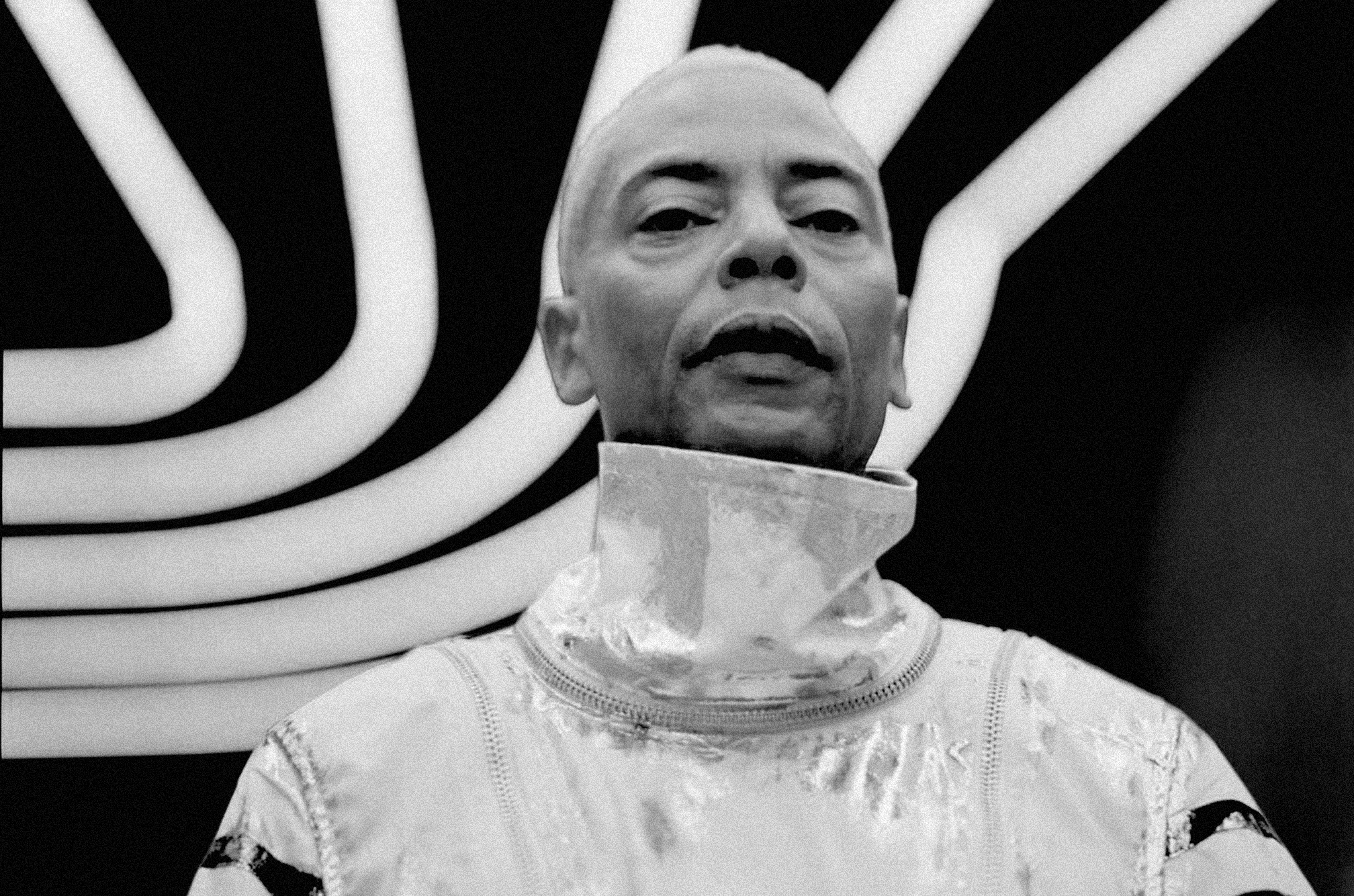
Jeff Mills: “Techno is the perfect universal language in which to communicate”
Ahead of his Mainland China debut, The Wizard shares with us on the excitement of “first encounters” & unpacks the craft behind ‘Live at Liquid Room – Tokyo’
Thirty years ago, Jeff Mills walked into the Liquid Room in Tokyo and recorded what would become one of the most studied DJ sets in techno history.
Playing and changing records in under a minute, layering tracks by frequency and harmonic logic, calculating each transition well in advance, the performance captured something genuinely difficult to replicate.
As Mills describes it, knowing the next track earlier gave him time to "analyse and calculate" rather than react. The result, ‘Live at Liquid Room – Tokyo’, documented an approach to vinyl manipulation that still gets referenced to this very day.
Mills came up through Detroit radio in the early 1980s, spinning new wave, house, and early techno as The Wizard on WDET before co-founding Underground Resistance (UR) with Mike Banks and Robert Hood in 1990.
After leaving UR, he launched Axis Records in 1992 and signed to Berlin's Tresor, releasing the ‘Waveform Transmissions’ albums that cemented his reputation in Europe.
His work has since expanded well beyond conventional club music, taking in orchestral collaborations, original film scores and audiovisual installations shown at the Tokyo Dance Music Event, Centre Pompidou and the Royal Albert Hall.
In 2000, he became one of the first electronic artists to perform a live score for Fritz Lang's Metropolis, and in 2005 played alongside the National Orchestra of Montpellier in a concert that brought electronic and symphony music together.
Now, for the first time, Mills is bringing his sonic wizardry to Mainland China, and by his own account, he's approaching it the way he approached Tokyo some 30 years ago: with a lot of music he thinks the audience should hear, and genuine curiosity about who's in the room.

‘Live at Liquid Room – Tokyo’ has become one of the most iconic techno recordings in history. When you listen back to it now, what aspects of your mixing philosophy or performance style from that era stand out to you the most?
Probably the most noticeable aspect was the layering of tracks together to create one impression. This was happening throughout the mix in various ways for various reasons. Sometimes, they were combined by frequencies and harmonics, other times to create an entirely new track and sometimes to increase the intensity to make the overall signal more robust.
Then in 1995, the technical aspects were not as advanced as they are now, so there were many aspects that had to be considered. Selecting the next track further in advance was one thing we were careful about. So, by knowing what the next track in the mix would be earlier, this would allow me to think more about the way to mix it into the other track. I had time to analyse and calculate.
In regards to the set’s 30th anniversary, how do you reflect on the evolution of your artistic identity; from The Wizard radio days to Underground Resistance, and into your more experimental, cosmic-themed performances today?
The past belongs to other people and I tend not to think so much about it. I’m just grateful to have been able to be in those positions. In an effort to stay engaged—to continue to help propel things forward, the future and what I’m planning for, like coming to Asia to some cities for the first time, is even more interesting.
Like 30 years ago at Liquid Room in Tokyo, I’m preparing to bring a lot of music that I think the Shanghai and Beijing audiences should hear. One of my goals will be to try and find out how musically educated the techno audiences are there. So, I’d like to have wider conversations with techno on this leg of the tour.
After decades of your music travelling to Mainland China without you (through records, mixes, streams, and the artists you've influenced) what do you want this first visit to say; what do you hope the audience in mainland China takes away from these two nights?
Generally, I have some idea as to the make-up of the audiences before I arrive, but in these cases, I have very little reference to go by. So, this makes the occasion very exciting. In fact, I wish that every party I played with was this way. First encounters.
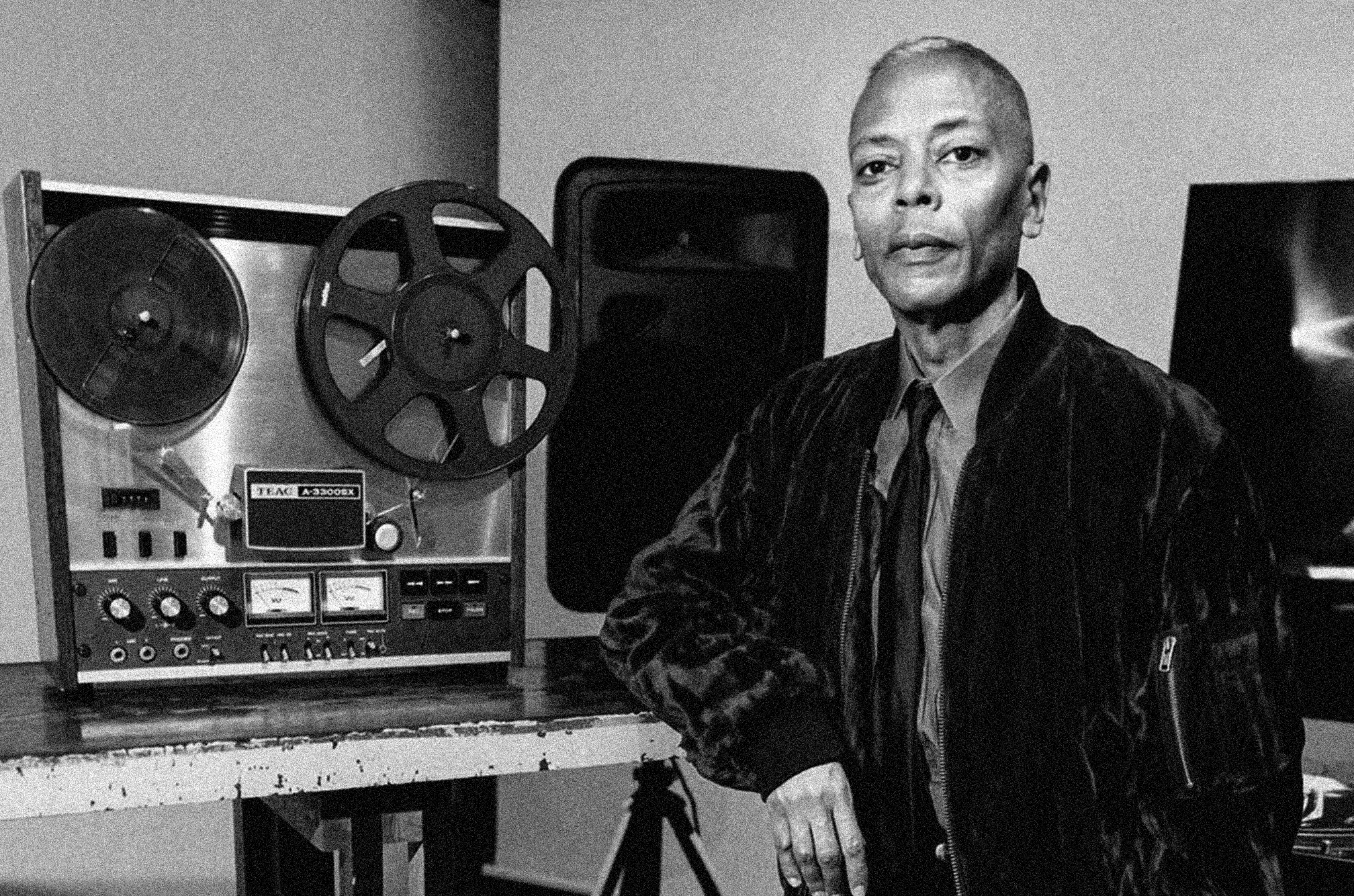
Congratulations on your recent release under Millsart for ‘Whatever The Case’! You describe this music as reflecting “the complexity and simplification of life”; how do you translate something so abstract into rhythm and texture without losing emotional clarity?
I think it’s the usage and placement of sound more than the sounds themselves that makes this project unique. Like in blues music, the instruments used to create it are the same as in other genres, but it’s the way blues musicians use them that makes it special.
This project is similar to this aspect. My primary objective is to think beyond dance music, although some tracks are playable in that context. Instead, I’m focusing on reaching the soul of the listener. ‘Whatever The Case’ is the ninth release in the series.
Are there Asian producers/artists you’re excited about or interested in collaborating with, and why (what makes them stand out among the rest)?
Yes, there are. As long as I can remember, there has always been a goal from many other artists in the West to decrease the distance between these two parts of the world through techno music. In my opinion, techno is the perfect universal language in which to communicate.
A particular level of rhythm allows the listener to realise things about themselves in ways that can’t be done by any other means so, by this, there could be a special bond that we might be able to create.
Do you think storytelling in techno is more powerful when it’s explicit, or when it remains unresolved and suggestive?
I would have to say the latter might be more effective. When it is unresolved and open to interpretation. That there is no right or wrong way to understand it. It is what it is and that’s enough. I think that the artistry of storytelling is the oldest form of communication and probably precedes humanity. As a method to teach, allowing one to think and rationalise is probably most psychologically effective.
Amira Waworuntu is Mixmag Asia’s Managing Editor, follow her on Instagram.
Cut through the noise - sign up for our weekly Scene Report or follow us on Instagram to get the latest from Asia and the Asian diaspora!
