


Behind the Lens: Kirill Sokolov is chasing the chaos & intimacy of China’s underground
Six years in, the Russian photographer has captured lockdowns, raids, “Blood Bath” parties, marathon raves, and more with his Olympus, and he’s far from finished
-
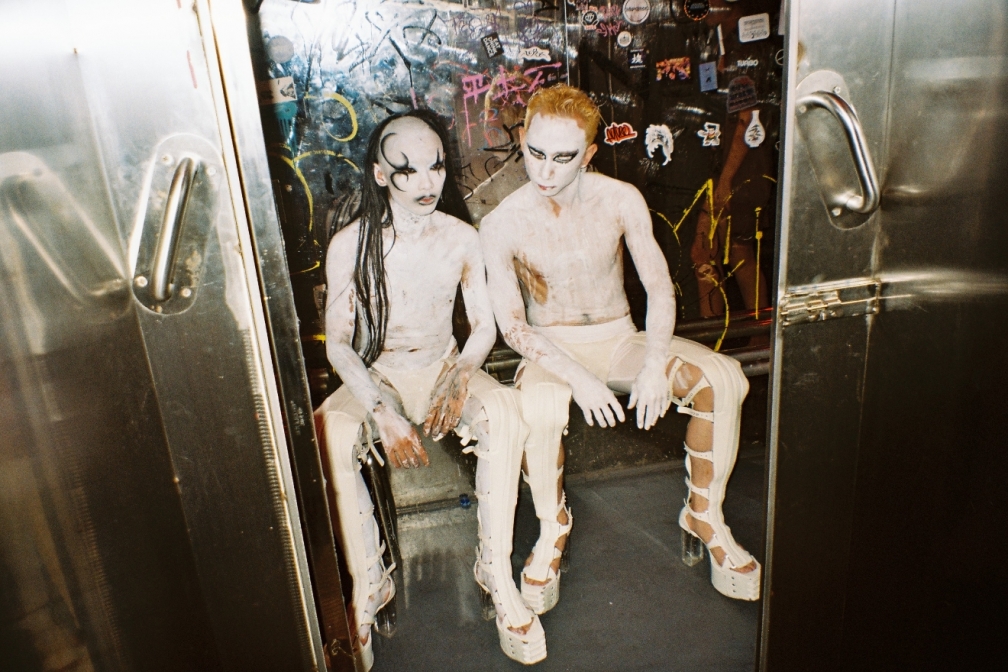 Behind the Lens: Kirill Sokolov is chasing the chaos & intimacy of China’s underground
 -
 Behind the Lens: Kirill Sokolov is chasing the chaos & intimacy of China’s underground
 -
 Behind the Lens: Kirill Sokolov is chasing the chaos & intimacy of China’s underground
 -
 Behind the Lens: Kirill Sokolov is chasing the chaos & intimacy of China’s underground
 -
 Behind the Lens: Kirill Sokolov is chasing the chaos & intimacy of China’s underground
 -
 Behind the Lens: Kirill Sokolov is chasing the chaos & intimacy of China’s underground
 -
 Behind the Lens: Kirill Sokolov is chasing the chaos & intimacy of China’s underground
 -
 Behind the Lens: Kirill Sokolov is chasing the chaos & intimacy of China’s underground
 -
 Behind the Lens: Kirill Sokolov is chasing the chaos & intimacy of China’s underground
 -
 Behind the Lens: Kirill Sokolov is chasing the chaos & intimacy of China’s underground
 -
 Behind the Lens: Kirill Sokolov is chasing the chaos & intimacy of China’s underground
 -
 Behind the Lens: Kirill Sokolov is chasing the chaos & intimacy of China’s underground
 -
 Behind the Lens: Kirill Sokolov is chasing the chaos & intimacy of China’s underground
 -
 Behind the Lens: Kirill Sokolov is chasing the chaos & intimacy of China’s underground
 -
 Behind the Lens: Kirill Sokolov is chasing the chaos & intimacy of China’s underground
 -
 Behind the Lens: Kirill Sokolov is chasing the chaos & intimacy of China’s underground
 -
 Behind the Lens: Kirill Sokolov is chasing the chaos & intimacy of China’s underground
 -
 Behind the Lens: Kirill Sokolov is chasing the chaos & intimacy of China’s underground
 -
 Behind the Lens: Kirill Sokolov is chasing the chaos & intimacy of China’s underground
 -
 Behind the Lens: Kirill Sokolov is chasing the chaos & intimacy of China’s underground
 -
 Behind the Lens: Kirill Sokolov is chasing the chaos & intimacy of China’s underground
 -
 Behind the Lens: Kirill Sokolov is chasing the chaos & intimacy of China’s underground
 -
 Behind the Lens: Kirill Sokolov is chasing the chaos & intimacy of China’s underground
 -
 Behind the Lens: Kirill Sokolov is chasing the chaos & intimacy of China’s underground
 -
 Behind the Lens: Kirill Sokolov is chasing the chaos & intimacy of China’s underground
 -
 Behind the Lens: Kirill Sokolov is chasing the chaos & intimacy of China’s underground
 -
 Behind the Lens: Kirill Sokolov is chasing the chaos & intimacy of China’s underground
 -
 Behind the Lens: Kirill Sokolov is chasing the chaos & intimacy of China’s underground
 -
 Behind the Lens: Kirill Sokolov is chasing the chaos & intimacy of China’s underground
 -
 Behind the Lens: Kirill Sokolov is chasing the chaos & intimacy of China’s underground
 -
 Behind the Lens: Kirill Sokolov is chasing the chaos & intimacy of China’s underground
 -
 Behind the Lens: Kirill Sokolov is chasing the chaos & intimacy of China’s underground
 -
 Behind the Lens: Kirill Sokolov is chasing the chaos & intimacy of China’s underground
 -
 Behind the Lens: Kirill Sokolov is chasing the chaos & intimacy of China’s underground
 -
 Behind the Lens: Kirill Sokolov is chasing the chaos & intimacy of China’s underground
 -
 Behind the Lens: Kirill Sokolov is chasing the chaos & intimacy of China’s underground
 -
 Behind the Lens: Kirill Sokolov is chasing the chaos & intimacy of China’s underground
 -
 Behind the Lens: Kirill Sokolov is chasing the chaos & intimacy of China’s underground
 -
 Behind the Lens: Kirill Sokolov is chasing the chaos & intimacy of China’s underground
 -
 Behind the Lens: Kirill Sokolov is chasing the chaos & intimacy of China’s underground
 -
 Behind the Lens: Kirill Sokolov is chasing the chaos & intimacy of China’s underground
 -
 Behind the Lens: Kirill Sokolov is chasing the chaos & intimacy of China’s underground
 -
 Behind the Lens: Kirill Sokolov is chasing the chaos & intimacy of China’s underground
Kirill Sokolov is a wanderer; a Russian misfit observing, capturing and blending in within China’s electronic underground.
For over six years, the young photographer has travelled through the country, from major capitals to remote cities, documenting and experimenting with the changes in the clubbing scene through the clashes of COVID-19.
His shots portray the ups and downs of clubbing during the pandemic, the rise and fall of venues, and offer a personal gaze into people’s shifting relationship with the scene.
But then again, Sokolov’s place in those scenes was more than that of an observer. He moves closer to the role of a visual ethnographer, using images to capture the raw energy, “freedom, and unpredictability” that make the underground a unique landscape to photograph.
Dive into Sokolov’s visual diary and interview, as we explore his position within these chaotic sonic environments.
First of all, what brought a Russian documentary photographer to China, and what is your background?
In 2020, during my final internship before graduating, I received a contract to work in China for what was supposed to be just 40 days. I arrived in the midst of the pandemic, just before the borders closed. Somehow those 40 days turned into six years…and I’m still here.
Before this project, what were your main subjects of interest? Were underground subcultures already part of your focus?
I’ve always been drawn to underground scenes, along with different kinds of parties and music in general. I guess it was just the age I was at; at the start of the project, I was 22. Before that, I’d take pictures now and then, but they were mostly just memories of nights out with friends, casual and unplanned, with no real direction behind the lens.
How did you come up with the idea of documenting the Chinese underground scene? Was it accidental, or intentional? Was there something particular about the Chinese scene that pushed you to document it?
If I were to pin a beginning to it all, I’d mark 2021 as the real start. That year, I travelled to Chengdu for Chinese New Year. The famous club .TAG was there, but it wasn’t a priority for my trip. I’d already received a couple of invitations to visit before, and honestly, it struck me as odd—some club in what seemed like a provincial city, where there seemed to be nothing interesting, did not attract me at all. But that time, I pushed myself to go. I decided to stop by for just an hour to see what was so special about it. When the elevator reached the 21st floor of what I thought was an ordinary office building, I was absolutely stunned. I couldn’t believe what I was seeing.
A tall building in the middle of a residential district, with windows overlooking the entire city. And just imagine, this was during the pandemic. Everyone was holding back from travelling, life felt slow, almost stagnant. I could even say you didn’t feel alive at all. The whole world was wrapped in this uncertainty, not knowing when it would end.
But here on the 21st floor, life was pulsating. A whole community had gathered from all over the country to celebrate the New Year. The parties went on all week, every night, and the final two days were a non-stop party called Hotpot Marathon. That night, I felt as if nothing in the world had happened at all. Everyone was dancing, happy, welcoming the gentle rays of sunrise right on the dancefloor; and they kept dancing until noon, while parties in the capital cities would wind down by 3AM at the latest.
Standing there, I couldn’t understand why no one was talking about this place and these people. Since I always carry my little pocket film camera with me, I took some of my first real shots there, just to document that moment and night. Overall, I developed a strong desire to tell and show this community and its spaces; and that’s probably why I started doing it.
Your pictures are unique and somehow feel performative. Some feel very grunge, some sensual, and others almost like an alternate universe. How did you find these spaces, or did the spaces find you?
It happened quite organically. At first I was simply curious and started exploring different underground parties, clubs, and communities. Through friends and chance encounters, more spaces slowly revealed themselves. In some ways I was searching for them, but I also feel like they found me
When I arrive at a party, I spend most of my time simply observing. I watch people, the atmosphere, the movement in the room. Sometimes I’m waiting for the right moment; the right light, the right person, or a certain tension in the space. In that sense, I’m constantly looking for the image. Sometimes I gently guide the situation, and other times I just catch it as it naturally unfolds.
Read this next: Behind the lens: a photographer’s love letter to Taipei’s techno scene
Somehow, it feels like in order to enter these spaces, you need to belong. Who are you within those spaces, even when you are not the one being photographed?
I think belonging in those spaces isn’t only about being the one behind the camera. Sometimes I’m there as an observer, sometimes as a witness, and sometimes as someone holding the atmosphere together. Even when I’m not the one being photographed, I’m still part of the moment, shaping it in subtle ways.
What is the personal meaning of underground subcultures for you? Do you see any part of yourself reflected in them?
For me, underground subcultures are about freedom, self-expression, and experimentation. I see myself in them; my curiosity, my love for observing, and my fascination with people being fully themselves. These spaces shape both my perspective and my work as a photographer.
There’s a sense of lived, felt experiences in your work. How does your personal practice intersect with the soul of the underground? In what ways does it connect to the underground spirit?
My personal practice is rooted in observation. I spend most of my time simply watching, waiting for the right moment, the right light, or the right person to appear. Sometimes I gently influence the scene, but often I just capture it as it naturally unfolds. Through this approach, I try to connect with the raw energy and experimentation that define underground communities. Being present in these spaces allows me to translate their spirit through my lens, preserving the intimacy, freedom, and unpredictability that make them unique.
Read this next: Behind the Lens: a visual diary of Teng’s journey through China
Which cities or scenes in China were most memorable to you and why?
Let this be the photograph of dawn, taken at .TAG in the summer of 2022. It was the hardest time for all of us during the pandemic; as I mentioned before, I felt like life had stopped. Shanghai and other cities had been locked down for months, and I was just drifting across China. But in one spot, life still pulsed.
So for a whole summer, .TAG held parties they called the Marathon, where one resident DJ would play all night long; at least eight hours, sometimes even 12. .TAG became a refuge for those of us who’d escaped the lockdown. A harbour in the stillness.
I also really love Shanghai for its constant change and unpredictability. Everything moves at lightning speed; new places open, legendary ones close. Life is always in flux, and that’s a beautiful thing
Through your lens, what have been the most significant changes witnessed in the electronic scenes over time?
I think the approach to clubbing has changed - it’s no longer just about enjoying music or meeting people. Clubs now have to constantly surprise their guests with new forms of entertainment. You can get a massage at the club, play ping-pong, watch a drag show, or get lost in a maze of installations. People expect a lot to be happening around them at once - almost like scrolling through an Instagram feed - and only then do they feel fully entertained.
Read this next: Double vision: b2b photography on the bass-laden dancefloor
From what you observed, which scenes in China remained resilient, and which ones faded? Why do you think that happened?
Everything has changed, and continues to change every day. When China reopened in 2023, clubs rushed to book international DJs at full speed, offering more nightlife options than ever before. But as the economy slowed down, people started cutting back, skipping expensive club tickets in favour of more affordable nights out, like a visit to a simple bar. Even with tourists returning and dancefloors looking full, many clubs still couldn’t stay financially afloat and ended up closing.
At the same time, a new wave of venues emerged: listening bars and concept spaces where there’s no cover charge, but the music quality remains high. You might be lounging on carpets at Tang, settling into the laid-back lounge vibe of Wigwam, or watching Cedar Kitchen transform from a garage by day into a bar by night.
Community-wise, things have scattered. While China was closed, there was a strong sense of solidarity; DJs toured between cities, and everyone supported each other. Now, with international lineups almost nightly, local DJs often play to smaller crowds, and that tight-knit support has faded. The scene has entered a new phase, a kind of “survival mode”.

Can you tell us a story behind one of your photos?
The photo was taken last summer at the “Blood Bath” party organised by the
in the K11 parking lot. Hundreds of people were dancing under streams of red water that pooled on the floor, creating one large puddle.
The water was only faintly coloured, and with the flashing lights, it was hard to tell if it was really “blood.” I asked a girl who was already soaked to lie down in the puddle so I could capture the shot.
What was the craziest experience you had during your travels and while documenting these scenes?
It’s hard to pick just one, as so many nights have flown by, but let’s go with a party in Beijing organised by NTS x Diesel. One of their biggest events took place at the end of 2023, with incredible support for local DJs; only locals behind the decks.
Halfway through, the police shut it down, and honestly, isn’t that the ultimate sign of a truly unforgettable party?
Read this next: Mixmag Asia’s Standout Snaps of 2025
What’s your weapon of choice (favourite camera and lens)?
I’ve shot all my photos with the same small pocket film camera; an Olympus. With it, there are really only two options: with flash or without. I don’t think I would have captured so many strong images without this little camera. A bigger camera would have slowed me down and drawn too much attention.
Many of my photos rely on being an observer; they come alive when people don’t know they’re being photographed. On top of that, in many clubs it’s simply not allowed to take pictures or use a flash, so the small camera becomes essential.
Who’s your favourite DJ or electronic music artist (of all time or that you’re listening to right now)?
It’s hard to pick just one, so I’ll name a few local DJs I listen to all the time (support your local soundsystem!) Zaliva-D, Knopha, YKK, DJ Wife, Hao, Cora… They’re all incredibly different and unique, each with their own sound.
As a photographer, what instantly puts a smile on your face?
What makes me smile instantly is seeing people who are confident and completely themselves - and even more so when I manage to capture that moment on camera.
Daniela Solano is a freelance writer for Mixmag Asia, follow her on Instagram here.
Never miss a beat. Subscribe to our Scene Report newsletter or follow us on Instagram.
