


 Features
South Korea’s university DJ dongari: the hidden incubator of Seoul's dance music scene
From campus practice rooms to venue DJ booths, these student-run organisations are quietly becoming one of the most important entry points into the country’s club circuit
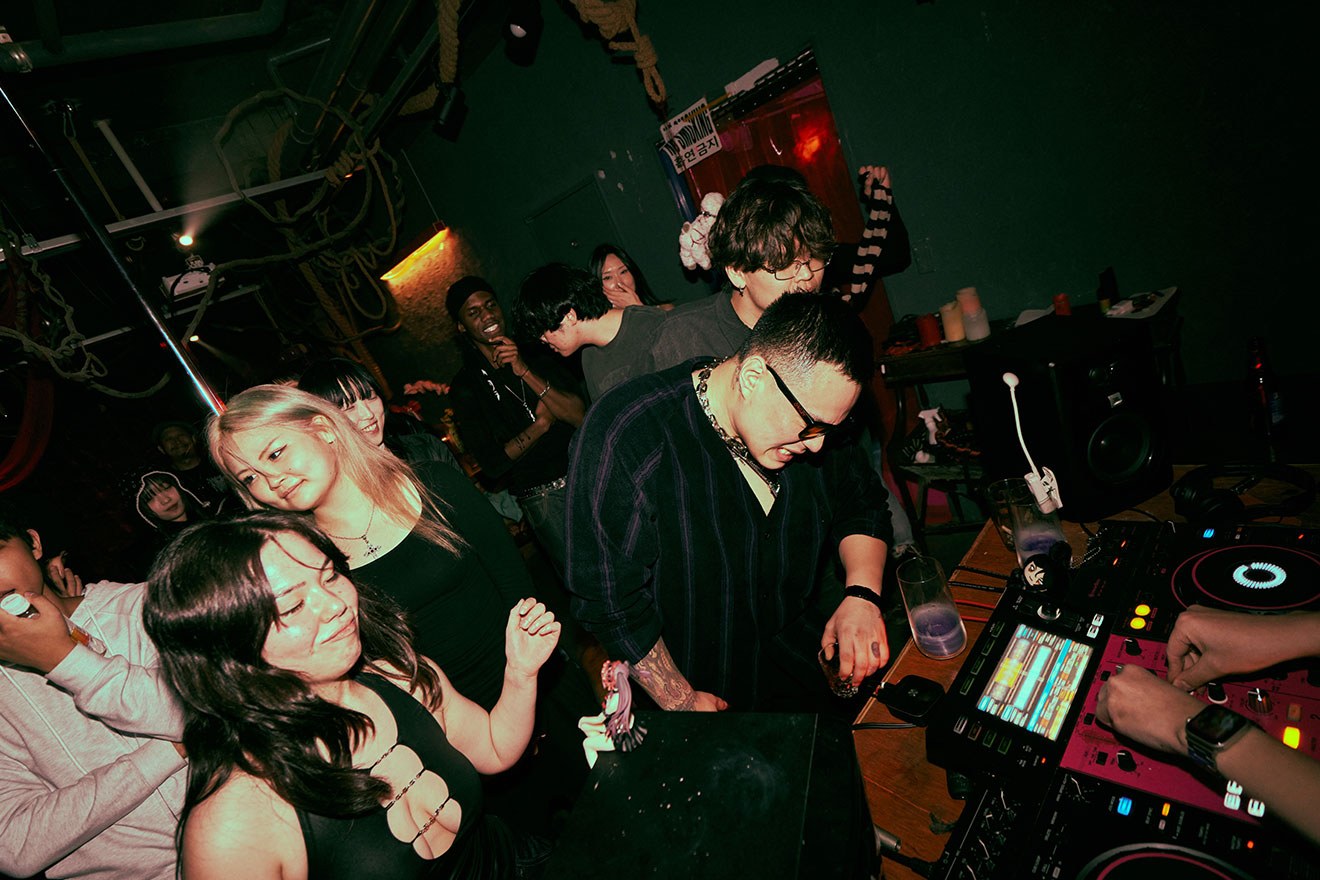
It’s a Thursday night in Itaewon and the basement is half full, but the energy is unmistakable. Behind the decks, a 22-year-old is mixing minimal house into a rolling techno cut; hands steady, eyes on the crowd. Not long ago, she was just learning to beatmatch in a practice room on a university campus. Tonight, the club has given her crew the night.
Ask how she got here, and the answer doesn’t begin in a club.
Where is the next generation of Seoul's dance music scene being made? Club residency systems, private DJ lessons, community radio, workshops, new-face programmes at clubs. There are multiple pathways for emerging DJs and promoters to enter the scene in Seoul. Here, we take a closer look at one in particular: the university DJ dongari.
Dongari are Korea's equivalent of university clubs or societies: student-run organisations within universities that cover nearly every interest imaginable, from photography and hiking to volunteering and band music. In South Korea, dongari are not mere extracurricular activities but a cornerstone of university culture.
To understand why, you need to know something about the Korean education system.
Middle schools and high schools are dominated by extreme academic competition, shaped by hagwon (private cram schools) and the suneung, a single high-stakes national college entrance exam that leaves little room for personal taste or cultural exploration. University entrance is, for many young Koreans, the first moment they can freely explore their own interests, and dongari serve as the first gateway to that freedom.
In the 2010s, a new kind of group emerged on top of this dongari culture, such as SNAP, based at Korea University, along with EAT, Nuit, SNoL, VERITAS and MOCIT. Students with an interest in dance music at Seoul's major universities organically built their own DJ communities. Interestingly, despite originating at specific universities, most now operate as yeonhap dongari, meaning inter-university unions open to anyone, regardless of their school. In practice, members include students from other universities and even non-students, with some communities exceeding 100 active members.
Is this just a student hobby, or does it play a meaningful role in the ecosystem of Seoul's dance music scene? We spoke to local DJs spanning multiple generations, from the earliest dongari cohorts of the mid-2010s to those active in the 2020s. Their stories make more sense once you consider where most people in South Korea first encounter DJ culture.
Read this next: The Mixmag Asia Clubbing Guide: Seoul
In much of Europe and North America, there are plenty of ways for minors to access DJ culture; all-ages events, outdoor festivals, house parties, local record shops, community radio, and so on. It’s not uncommon to find DJs who stood in front of a soundsystem as teenagers.
In South Korea, the situation seems to be a bit different. In a society still shaped by Confucian values, club and DJ culture has yet to gain mainstream acceptance. For the older generation, clubs are generally seen as dangerous or unwholesome places, and minors are legally prohibited from entering. For middle and high school students, YouTube videos and SoundCloud mixes are about the only way to encounter club culture; a world that exists only on the other side of a screen.
Things tend to change by the time one enters university, which effectively marks the transition to adulthood, and from that point you can finally get into a club.
Students who choose a DJ dongari from among the dozens of available circles gain the chance to visit a club for the first time alongside peers their own age. The CDJs they had only seen on YouTube are suddenly right in front of them, and the club door they never would have dared push through alone becomes a different proposition when you have friends by your side.
DJ dongari transform the club from a fearful unknown into a familiar space where you can share your taste in music and hang out with friends.
Ask about motivations for joining and you get a range of answers. For a student who moved to Seoul from the countryside, knowing nobody and unable to afford DJ lessons, a dongari was practically the only way in. For another who fought through the entrance exam wars only to find themselves surrounded by mainstream tastes, it became the moment they discovered people with a similar sensibility.
Read this next: Watch: ‘Enter the K-Bass’ panel puts Seoul’s scene in focus at SXSW London
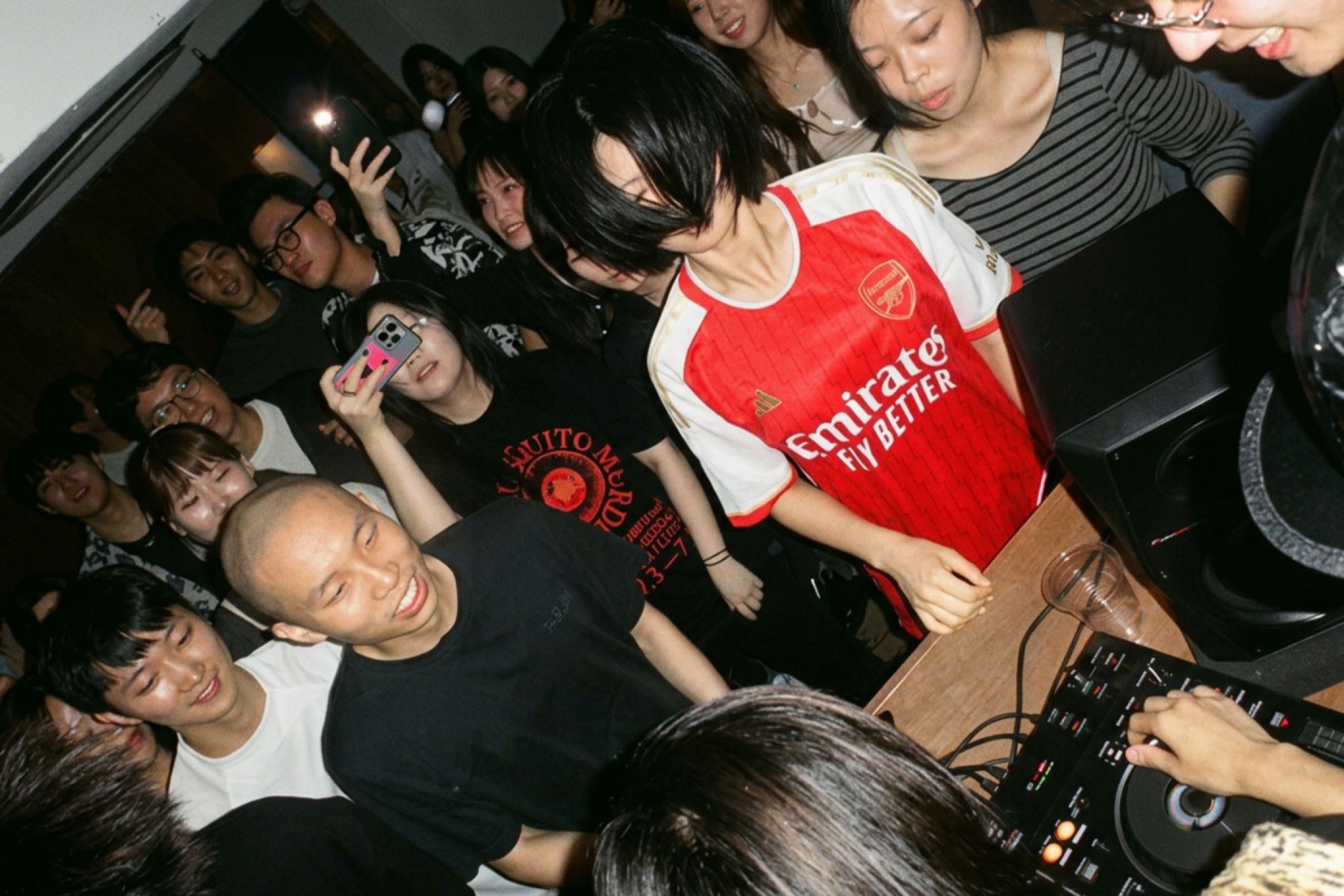
Whatever the motivation, what a dongari provides is ultimately the same: a physical space called a dongari-bang, a dedicated clubroom equipped with gear, a peer community and companions to step into the unknown world of clubbing together.
Tabris, an active DJ who has been involved with Korea University's SNAP for four years, holds to a principle as one of its organisers. "I want to make sure that people entering the scene for the first time, with no one to rely on, don't feel alone," she mentions. That single line sums up the essential role of a dongari rather precisely.


The most practical function of a dongari is education. The dongari-bang is, above all, a classroom. A student who had only watched YouTube mixes and imagined the experience gets to turn a CDJ jog wheel for the first time, cueing up the next track through headphones. This is something you simply cannot learn through a screen.
The two most common ways to learn DJing are private lessons from a professional DJ or attending a DJ academy. Both cost money. Some learn on the job as apprentices at clubs, picking things up by watching over someone's shoulder, which costs nothing but offers limited opportunities. Dongari provide a different structure altogether.
Take Korea University's SNAP as an example. It runs a structured mentor-mentee system. New members select their preferred genre and mentor, and roughly 15 senior members teach juniors for free every two weeks each semester. The curriculum covers everything from beatmatching to EQ technique and the flow of track selection. All of it free, all of it peer-led. Some dongari also invite professional DJs and producers to run workshops, giving members direct exposure to working artists outside the university bubble.
Read this next: Tune In: Must-know community radios from Asia
Another advantage of this structure is cross-pollination of genres. Because members come from different backgrounds and tastes, you naturally encounter genres outside your own interests. Someone who only listens to house discovers techno; a drum’n’bass head falls into ambient; a K-pop listener finds themselves deep in Jersey club edits. Doberman, a promoter and DJ from Nuit at Hankuk University of Foreign Studies, likens it to a "melting pot".
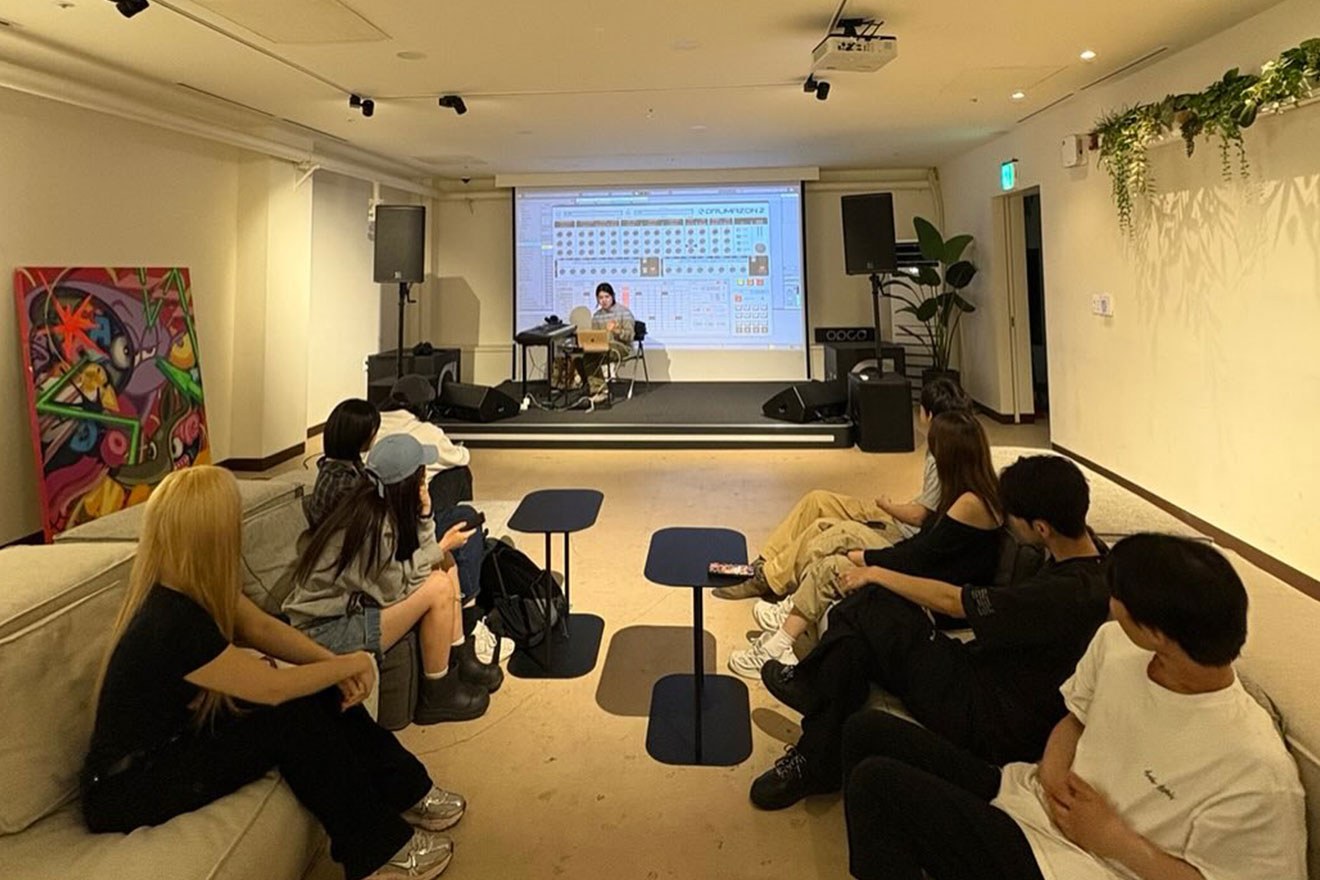
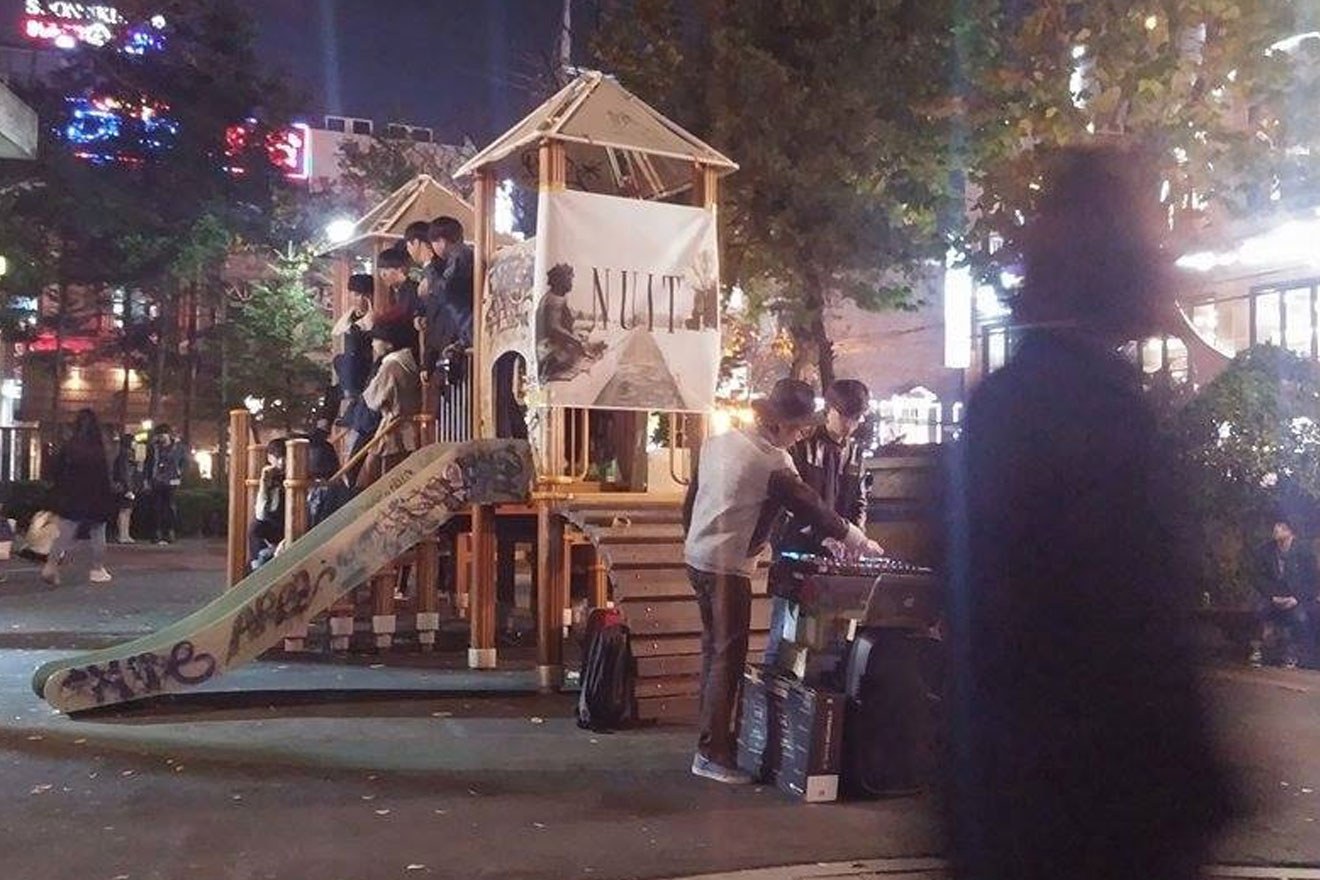
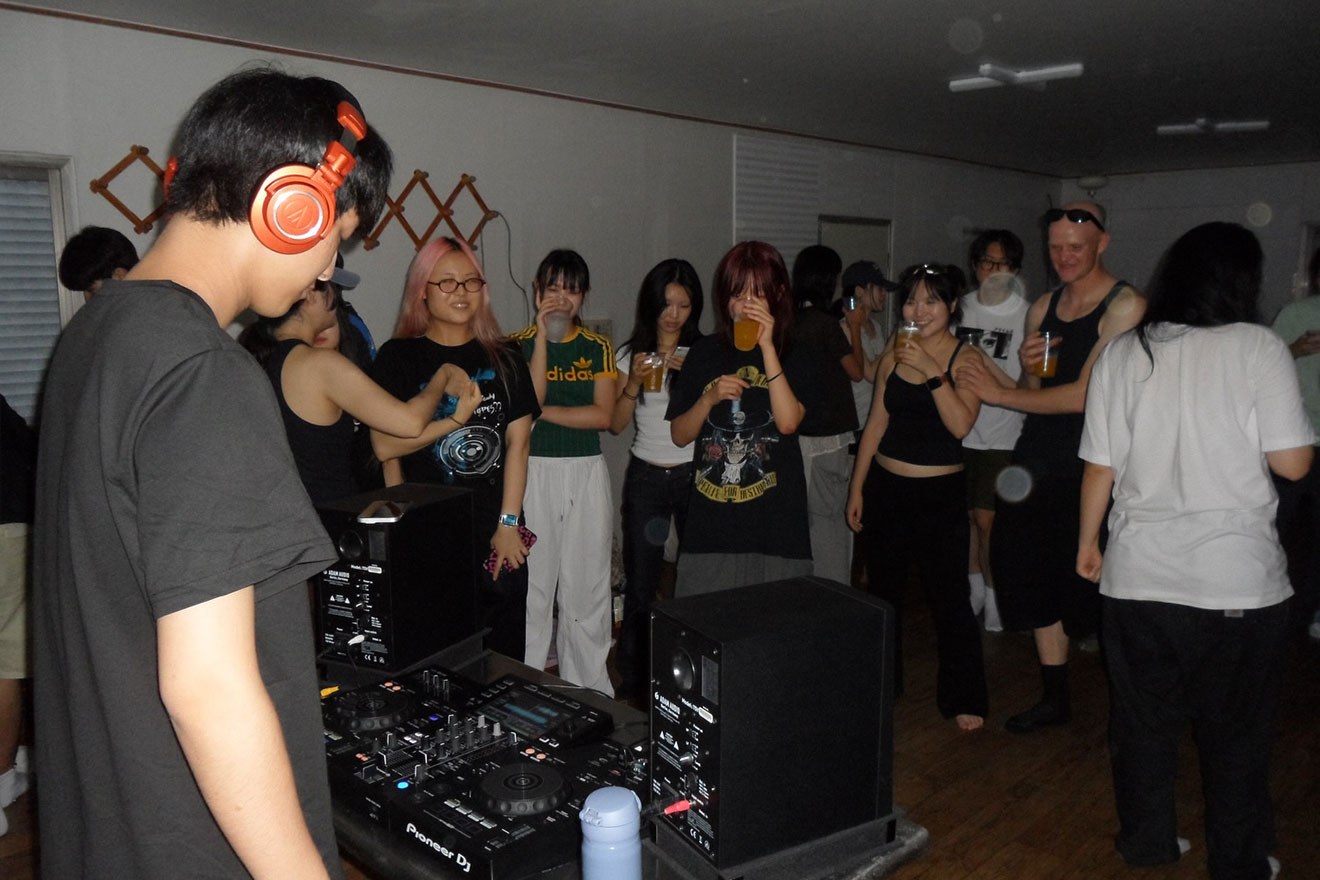
Beyond education, dongari also create stages where members can DJ in front of an audience for the first time. University festival booths, self-organised showcases, open-air DJ sets on campus; these are safe spaces that reduce the cost of failure before stepping onto a professional stage. Unlike a real club, the audience is made up of friends and peers, so there’s less pressure to not make mistakes; a performance experience unique to dongari.
Yet this safe space also became a vulnerability in the professional scene. In a society where club culture itself carries a negative image, having learned to DJ through a university circle was a credential easily dismissed, even within the scene.
From the mid-2010s to the early 2020s, the professional scene's attitude towards DJs who came up through dongari was fairly cold.
Read this next: New report highlights Asia’s growing role in global nightlife economy
In Korean, there’s an expression, jjachinda, which means something is out of place, amateurish, or below standard. When a dongari-bred DJ showed up at a professional venue, the word followed. The criticism was that having only performed in front of supportive dongari crowds, they weren’t able to read the flow of a real club floor. Because dongari parties leaned towards more mainstream content, they struggled to be taken seriously in the underground. To put it in perspective, it was like a college-league player stepping onto an NBA-level floor.
One dongari member who was part of the early generation remembers advice from a senior: "Go in, then get out." The dongari was seen as a way to get a foot in the scene, but you weren’t advised to stay there. The understanding that it was a passage to move through, not a permanent home, felt natural at the time.

This perception had real consequences. Tabris hid her dongari affiliation on the professional scene until 2023. She would not even follow the dongari's Instagram account. It was an era when being taken seriously as a working DJ meant shedding the student label.
But in the 2020s, things began to shift.
Some of that stigma still lingers in the professional DJ scene, yet dongari started hosting parties under their own names at underground clubs in Itaewon. They typically booked Thursdays or Sundays, when venues are relatively quiet, forming mutually beneficial relationships with the clubs.
Read this next: Mixmag Asia’s 2026 Essential Listening
Going a step further, dongari alumni have been forming their own event brands and hosting regular parties at major underground clubs. Club owners have started spotting promising DJs at dongari events and recruiting them as residents. An identity that once had to be concealed is being re-established as a legitimate career path.
"Once all of your peers in the scene turned out to be dongari alumni, there was no longer any reason to hide it," Tabris says. Many of the young DJs currently active came through the dongari system. Considering that in the 2010s you could count dongari-bred professional DJs on one hand, a great deal has changed in a short amount of time.
That shift in perception, though, does not settle a bigger question: what exactly can a dongari do, and where does its usefulness end?
Though it clearly lowers the barrier to entry and supplies new faces to the scene, a dongari is not a direct pipeline to a professional career. There is a distinct gap between having fun and gaining experience in a college-level setting on one hand, and building content, forging your own identity and surviving in the professional scene on the other. Doberman draws a football analogy: "Think of it like the university league and the professional league. The dongari is the university league, a place where you can enjoy DJing for what it is. The ones who are ready move up from there."
That pathway, meanwhile, is no longer the only one. The routes into the scene have been diversifying beyond dongari.
Reels content as a self-promotion tool, group workshops, YouTube radio stations; the new means of entry are multiplying, and the landscape looks quite different from even a few years ago. Dongari remain a valid pathway, but now they are one option among many.
Read this next: "Moved by networks": how Hahoe Festival is reflourishing Korean culture
The COVID-19 pandemic played a part in reshaping this landscape. Having gone through a period where offline gathering was shut down, subsequent generations developed a stronger thirst for community, and structured entry points like dongari and workshops became more normalised. Club owners and promoters in their late 30s and 40s are also recognising the need to cultivate the next generation, widening the door for newcomers.

Dongari are one incubator among a growing number in Seoul's dance music scene. But this peer community turns DJ culture from something that exists only on the other side of a screen into a tangible reality, and transforms the club from a daunting unknown into a world of shared taste you can enjoy with friends.
It becomes hard to deny that dongari play a significant part in the scene. Right now, somewhere in a dongari-bang at a Seoul university, someone is practising their first mix on the CDJs. Some will end up in the booth in Itaewon. Some will build their own parties. Most will simply remain people who love good music…and that alone is enough.
