


 Features
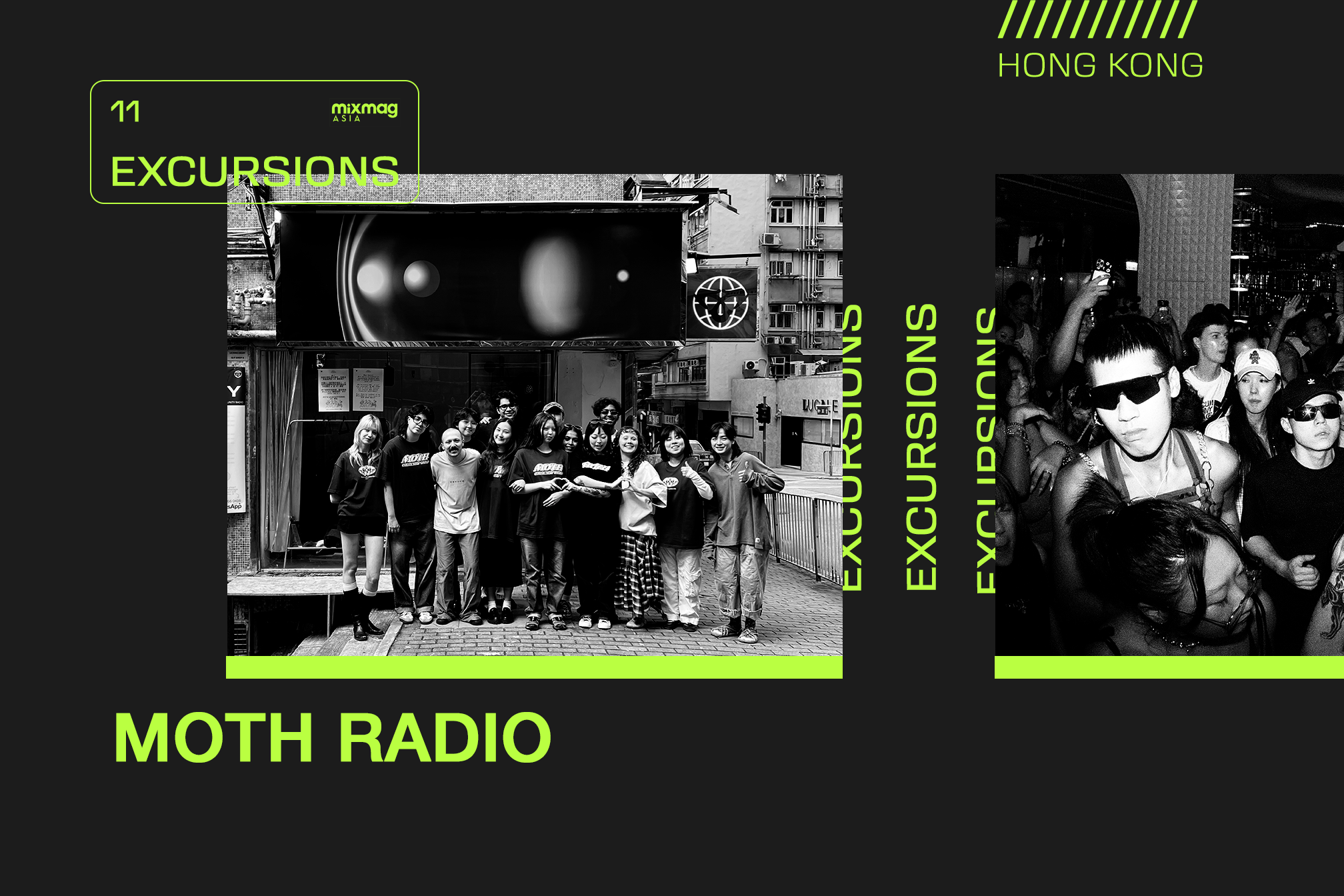
Excursions: MÖTH RADIO is Hong Kong’s here-and-now, win-win platform
Operating as both event host & DJ learning hub, the collective connects foundational training, community outreach & livestreaming for manifestly inclusive underground music culture
What happens if you take politics to the dancefloor? That’s what founder Ahura Mazda hopes to do with MÖTH RADIO, a hub for up-and-coming DJs to work on their craft and serve the community.
An evolution of MÖTH AGENCY (previously, a DJ collective and organiser of underground raves in Hong Kong for queer and femme folk alike), Mazda has turned MÖTH RADIO into a stepping stone for local and international talent to showcase and practice the form on a livestream.
In addition to platforming underground music, MÖTH RADIO emphasises social justice through an equitable access pledge for their parties and educational outreach programme. They just want to give space to people who need it, to revel in good electronic music as a listener or a DJ.
The only caveat, which is really just another ingenious feature of their programme, is an alignment with their humanitarian values: radically visible queerness, anti-apartheid, and free from harassment of any kind. For the community, this space isn’t policed but fostered, in an environment of joy without pretension.
Artists like WILDERÍCH, ANGELFR0MAB0VE, AntiSocialPrincess have all graced their YouTube livestream, which comprises most of the radio’s event programming. The rest is dedicated to their non-profit activities, providing classes on demand and to marginalised communities. Their volunteer programme has also grown substantially, and all who volunteer have access to these classes; and even a set on the radio, if they want it.
MÖTH RADIO’s new space in Hong Kong’s hip Sai Ying Pun neighbourhood signals a desire to put down roots, uniting their network of DJs and electronic music lovers at a physical centre. We caught up with founder Ahura Mazda to talk about his ambitions with community-driven music events and the challenges of the not-for-profit space amid increasing social tensions and technological demands.
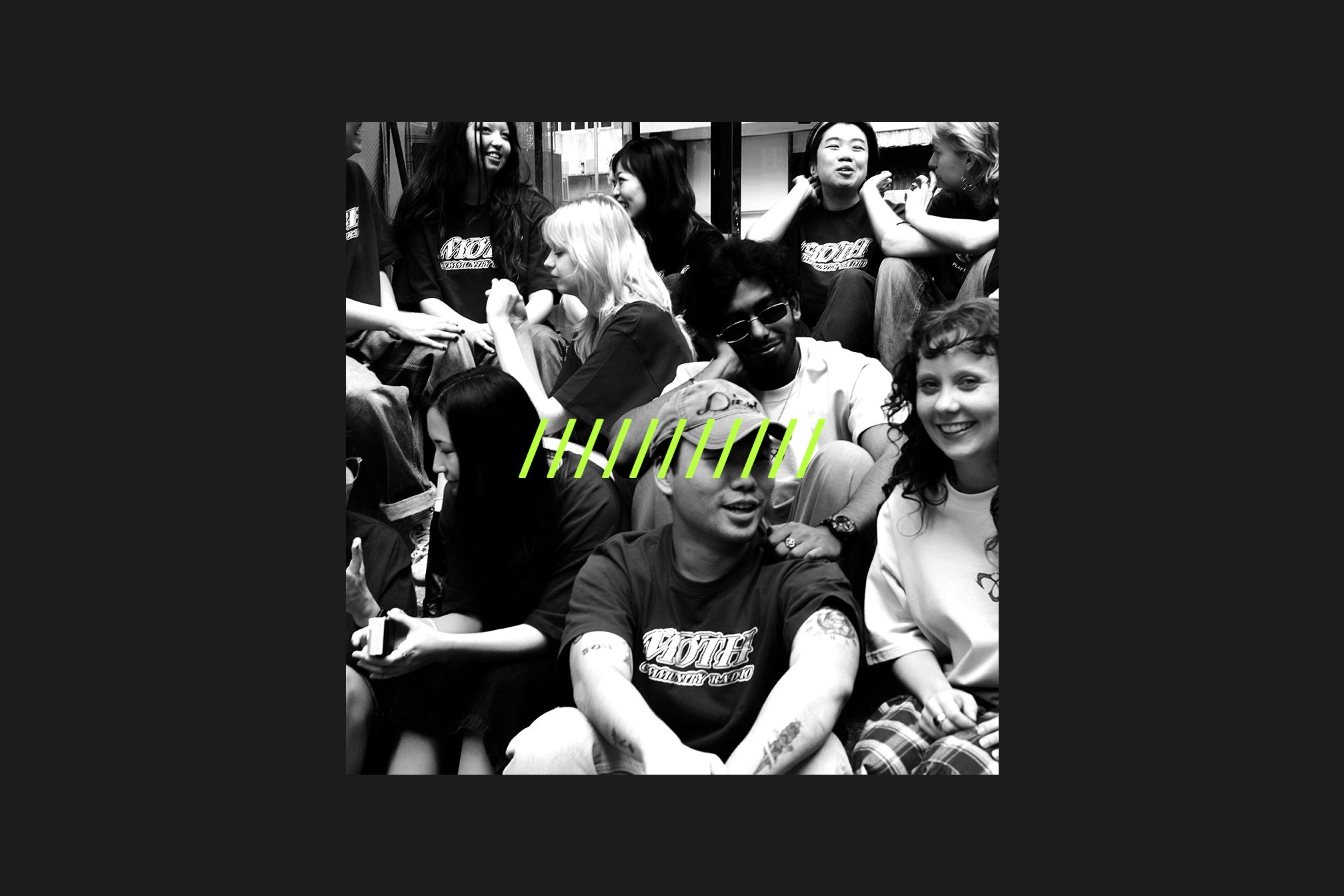
What was the catalyst for MÖTH RADIO? What inspired the name?
We would see a lot of queer people and femmes in rave circles, but we didn't feel like we had a party that would cater to that audience. We wanted a name that reflected that diversity.
Moths are almost like an alternative version of butterflies, but they're extremely misunderstood: they're equally as beautiful and different, and they spread pollen and help nurture ecosystems, which we think is what DJs do when they spread music.
Moths are nighttime creatures, just like DJs and ravers. We almost imagine a light source and these moths dancing around it. A rave is just a center of energy, and it's everyone else who is celebrating.
What makes a MÖTH RADIO event? What does the ideal MÖTH RADIO event look like?
We think that it's important to practice goodness, kindness, and giving, and to create a sense of community for people who feel alone.
Our project is very dynamic, and lots of folks come in and out. The people that align with us end up staying.
The friends who ended up staying at MÖTH RADIO are the ones that want to have a good fucking time and not take ourselves too seriously. MÖTH RADIO events in general are centred around joy, but also wisdom. We are in constant discussion about the best ways that we can create a sense of belonging for people. We are serious about the quality of the work that we do, but we don't take ourselves too seriously.
Which artists typify the MÖTH RADIO vibe?
People can sense that we don't give a fuck. People can sense that we also go around clowning. Really, we try to bring joy into everyday life in one way or another.
Firstly, we have so much more queer and femme representation on our radio than the radios in Hong Kong before us.
We also give safe space to beginners, since they often take themselves too seriously. But we believe our joy emanates through them, so if they come to us and they say, “We fucked up the set. Can you please remove it?” We’d say, “Oh, sure, we can take it down. It's fine, just come another time, do a better set. Come and practice.”
We nurture this unseriousness in the practice of DJing and in music, because, honey, we are all on a floating rock in the middle of butt-nowhere. Who knows if we're even real? Who knows why we're even alive? I think this kind of approach really relaxes them.
Read this next: Tune In: Must-know community radios from Asia
How is a MÖTH RADIO event, set, and space curated?
We see ourselves as an open, public community platform. When you curate too much, it starts becoming a friend of a friend's thing. So, in the past year and a half until now, unless we do a launch event, we've never asked DJs to play with us. Instead, we have an open-access, intuitive sign-up process, so it means that anybody can play with us.
This open platform benefits not only upcoming DJs, but also experienced DJs, [because] we're a practice ground for them. They're like, “Hey, I want to perfect my craft. I'm going to book myself in every month and come and practice.”
They only have to agree to certain basic humanitarian values we have, like an artist against apartheid agreement, for example. You can't be on if you are a person that we know has openly harassed people in the past, either. We have to have a conversation; you make a vow not to engage in the behaviour moving forward, or you just don't play with us.
What was one moment at a MÖTH RADIO event that is particularly memorable?
We have a friend named Jenn, she studies and works in New York, and she comes back to Hong Kong from time to time. She just found [MÖTH RADIO] online and signed up to play with us. I really loved her set, and I feel like she's now just a friend that's in our group chat. And she's like, “Hey, girlies, I'm coming over.” We would have never met Jenn had we not been this open, easy-access platform.
How does MÖTH RADIO uplift the local community and serve the underground music scene?
When you use [the word ‘underground’], it comes with a responsibility. There are a lot of institutions that say they're community-based as a marketing strategy. And for us, it's really important that it goes deeper than that, into how we feel. We really believe, from the bottom of our hearts, that support can and should be institutionalised, just as division and individuality and separation are institutionalised. We try to put concrete systems that will genuinely help people.
An example of this is that ever since we started our first rave, we've always had equitable access, so, for people who cannot afford to come to our raves, we say, “You, just sign up in the form. We trust you. Come.”
Another way is through our volunteer programme. We give all our volunteers free access to education, broadcasting, and resources. For example, if they want to learn how to code, we're going to sit down with them and teach them how to code. When they volunteer, we give them a free audio engineering education, a skill that they can use anywhere.
Starting this month (March), we're going to have five or six education events every month, completely free. We ask for a deposit of HKD200 that you can get back when you finish the class. But because we feel that it's our responsibility to support people, if there's someone who doesn't even have money for a deposit, we add an option in our form that says, “If you don't have the money for a deposit, it's okay, don't pay it. Just come.”
Read this next: Raves as Rituals: The Rise of the Bantuwing and the decolonisation of a Manila dancefloor
Of course, we have our programmes coming up. Also starting this month, we’ll have our Sundays of Joy, where we work with the domestic worker community and teach them DJing. They're obviously very overlooked [and underpaid] in terms of their talents and abilities. I want these aunties to show these bro-y, individualistic men in the city how DJ-ing and community is really done!
We're even finalising some work with refugee centers. Refugees do not get enough money for entertainment, so they have these free refugee events. I don't want them to feel like the only spaces that they're welcome are these dedicated refugee places. If you're a refugee, you can come in and learn DJing with us. We’ll even pay for the transport, because we know that they don't have enough money for the transport. That's why we're fundraising.
We have many systems that support people institutionally. Everything that we do is centered around community. First, we could easily get sponsored for our venue since we are getting so much social media traction at the moment, but that's simply not something we value. We value real social change. Social media attention that cannot be converted into goodness and beauty for our people is useless. We do not want this kind of empty attention. We didn't expect our launch campaign to be so popular; we feel very grateful, but at the same time, we need to sit down and convert all this attention into donations.
In terms of launching our academy, in ten days 51 students signed up. This is a big responsibility. We want to make sure that the people who take our programme come out with a kind heart and understanding of what community means, and what it takes to sacrifice yourself and your needs sometimes for the greater good.
Why are volunteers central to your mission at MÖTH RADIO?
Our volunteer system brings so much beauty. We don't want unpaid volunteers to do all this work for us. They need to be compensated. And if we don't have the means to financially compensate them, then we'd better compensate them in any other way that we can.
So one of the strategies is that volunteers only need to volunteer with us one day a month. We're not making them do silly tasks that they don't need to do and don't want to do, and we tell them, “If you can't make it that month, it's okay, just let us know.”
Every day, we encounter the problem where “Hey, we made the system a little exploitative, maybe we need to change it.” That's the beauty of being funded grassroots. We don't have this rich investor who's telling us what to do. When the system needs to change, we change with the system. It's very easy.
Read this next: South Korea’s university DJ dongari: the hidden incubator of Seoul's dance music scene
How has MÖTH RADIO adapted underground music culture in Hong Kong to the demands and opportunities of digital media such as streaming, social media, etc.?
In terms of learning, we are never shy of trying and learning something new. Fear is super fun, and success is rare, but you can at least try. When we started our radio, girl, we did not know how broadcasting worked. We didn't know how a camera worked. We really went through it, but it was only possible for us to learn these things because we have people around us who are understanding and patient. We make mistakes. We learn from them. We move on.
In another sense, we are actually very aware of the implications of social media platforms. We don't like social media platforms. We don't think they're built for the well-being of people, but we are trying to find a balance on how to use these platforms and kind of hack them to do good. So we're always mind-mapping how we can bring people out of this world into the real world.
That's why we try to engage people in person. That's why we got a physical space, because we want people to eventually come off of these platforms.
Actually, really proudly, we're trying so hard (and it's so difficult) to come off of Google, and the only way that we can do that is by building our own server. But we're actually working on it. We occupy a corner of [social media] to spread goodness, and invite people to come off of it, to connect in person, to have a better sense of reality and the fact that we're all way more connected than we think we are, and we're not divided as it seems on social media.
What challenges have you faced setting up this hub?
We've gotten banned [on Instagram]. We got banned again; this time, not only did they ban our MÖTH AGENCY account, they banned my personal account, my personal WhatsApp, and the MÖTH RADIO account. So we've been censored many times, and we've been taken down many times.
Our response to it has been to make a WhatsApp group. Of course, it's a Meta platform still, but we actually have a private account now on Instagram, so we usually allow people to come in who have already gotten tickets, or if we've met them in our events. We have been banned many times. But you know what? We come back.
Read this next: Kraftwerk’s electronic architecture, reconstructed live in Asia
How has Hong Kong influenced your particular organisation, in terms of mission, operations, and culture?
The injustices that are happening in our world are way more interconnected than we think. The systems of power that oppress here are the same systems of power that oppress people across the world.
Hong Kong is a rich city. It has a lot of amenities. It has public spaces. It does have a lot of resources. However, people are spiritually deprived, and they think in a purely individualistic sense. People are in a fight or flight mode. And I think the way that we adapt to that culture is, first of all, having empathy for those people. But also recognise that there is so much beauty and togetherness in sharing resources and giving to people who are not yourself.
In a way, we feel it is our duty to create a space for people who have been taught to be selfish to then heal from that. We don't judge selfish people, because we think that these are the people who need the most help to come out of that prison of ‘me’, of self. So in this way, we've adapted to Hong Kong culture, because I don't believe in people not changing. We want to create a healing path for people.
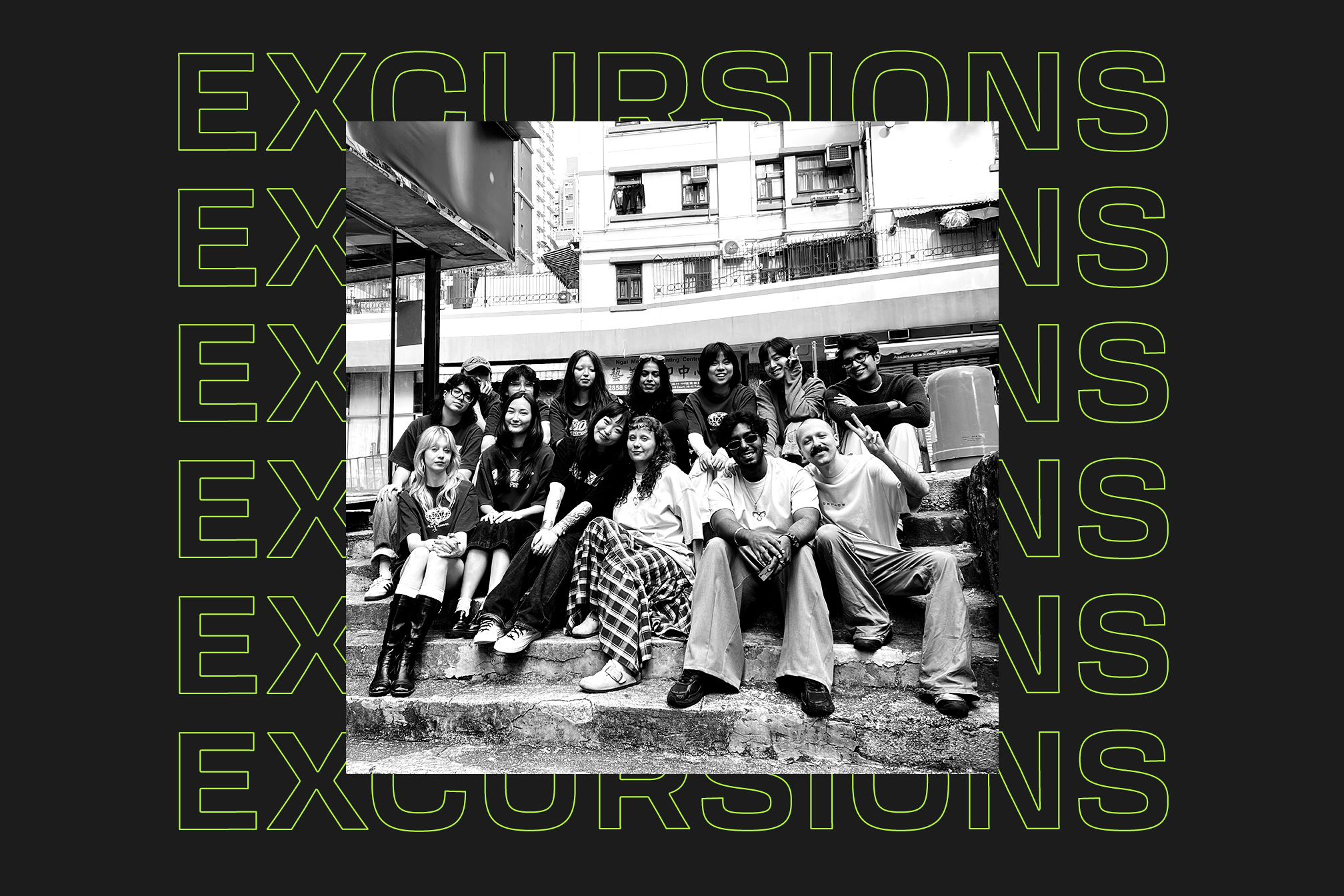
We've had cases like when we had someone who came to us to volunteer a year and a half ago, when we first started. We got a hint from another volunteer that, actually, when this person was in high school, they were transphobic.
And we heard this (of course, it's unacceptable) but to me, people who are transphobic are in pain. People who are homophobic are in pain. People who are racist are in pain. They're in a prison of their mind. They have hatred in their hearts, and it makes their lives miserable more than anyone else's. Of course, it's unacceptable, but instead, we take a conversational approach.
In Hong Kong, there’s so much ignorance and hatred that you need to leave room for change. There has to be, otherwise, you would say “Everyone’s ignorant and fuck everyone”. And we don't want to live in that world. We want to live in a world where we create space for change. So instead, I spoke to this person, and I was like, “Hey, man, let's have a chat”. And at first, they took it very personally.
They were very defensive, which is what the ego does, and they actually stopped volunteering. But now they've come back after a year and a half, and I can admire and appreciate that this person has changed a lot, and you can feel it. Now their life is full of joy; they're a musician, and they're one of the DJs that play with us more often. They found a good community.
Describe your ideal night out in Hong Kong.
My ideal night out is when I don't want to leave. But my friends say to me, “Girl, get your ass out. We're gonna shake ass tonight”. We're fully conscious of the suffering of the world. But we say, “Fuck that”. Tonight, we dance, we protest through joy, and we appreciate the people around us, the music, and just have a great time, and then leave at 6am destroyed.
Besides your community and education events, what else about MÖTH RADIO would you like to push?
Our mission is to invite people into a space where they can practice goodness with other people. When you practice goodness every day, you create beauty for yourself in the world. You can, for a moment, step outside of your own mind and spread joy to others. And I think part of that is the donation scheme we really want people to contribute to, even if they contribute 50 Hong Kong dollars or 200 Hong Kong dollars per month.
But they don't have to donate to us. Donate to whoever they want. Just donate to something outside of yourself. Go do social service. Do something that is not for you. Do something that is for others.
Miko Badiola Borje is a freelance writer for Mixmag Asia, follow them on Instagram here.
