


 Features
CTRL+Print Vol. 3 / Vintage Mixmag Covers
From club walls to phone screens, here’s your guided tour through the visuals & creatives designing the aesthetic of dance music culture in Asia & beyond
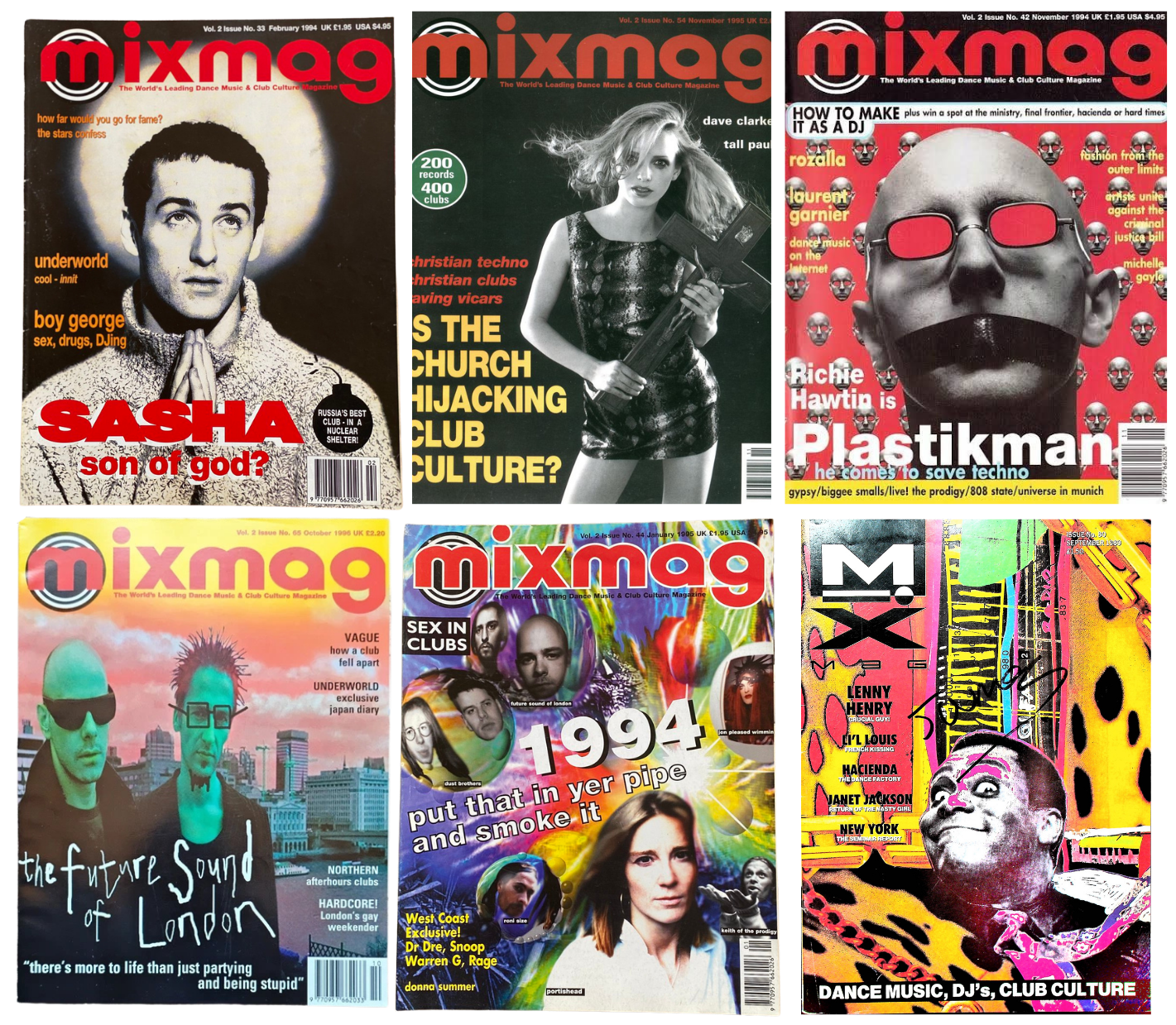
Today, we are diving deep into the Mixmag print archive, charting the visual evolution from the 1980s til 2009. As the music changed, the typography warped, the colors shifted, and the layout completely transformed.
Here is how three decades of print covers documented the global dance music explosion.
The 1980s: Straight from the Underground
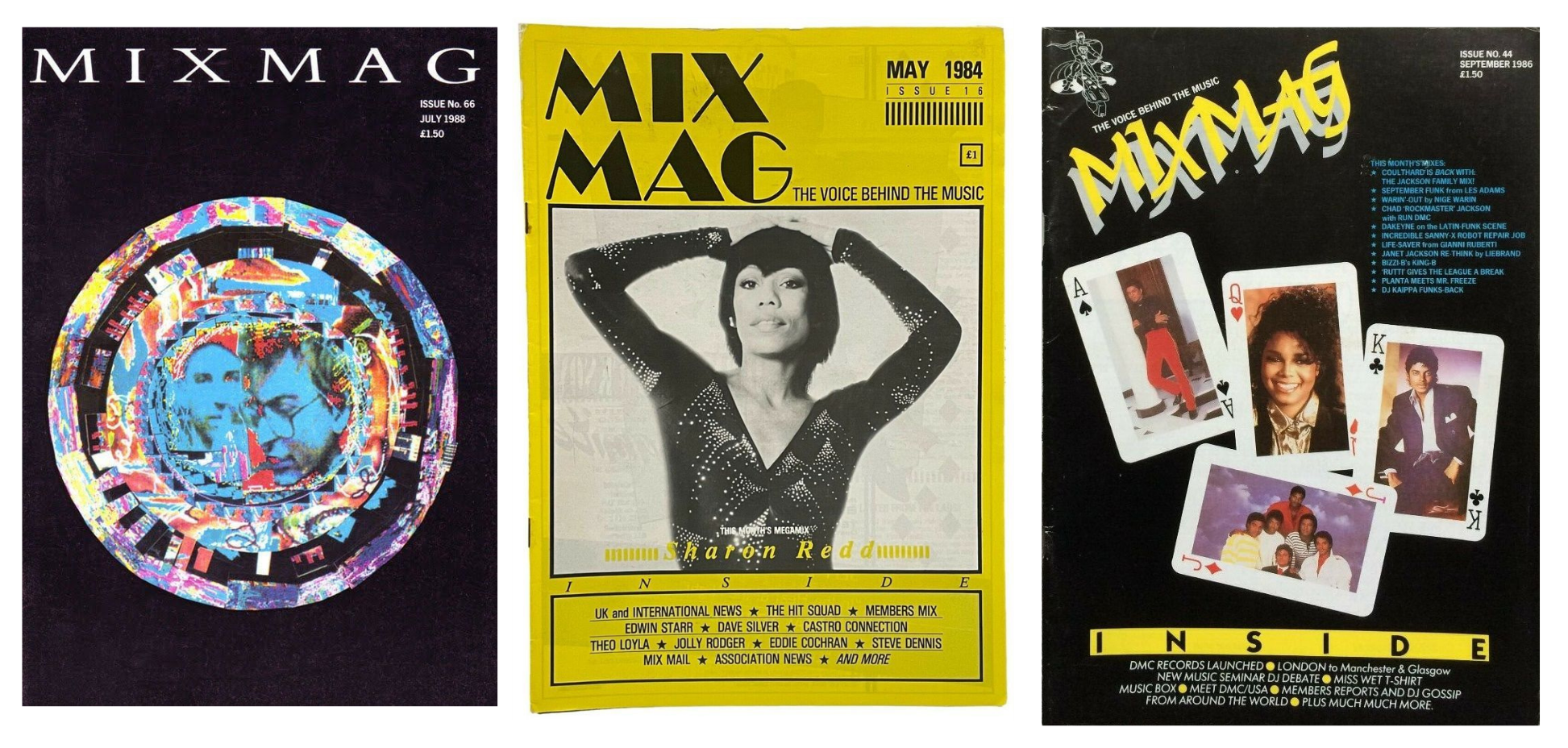
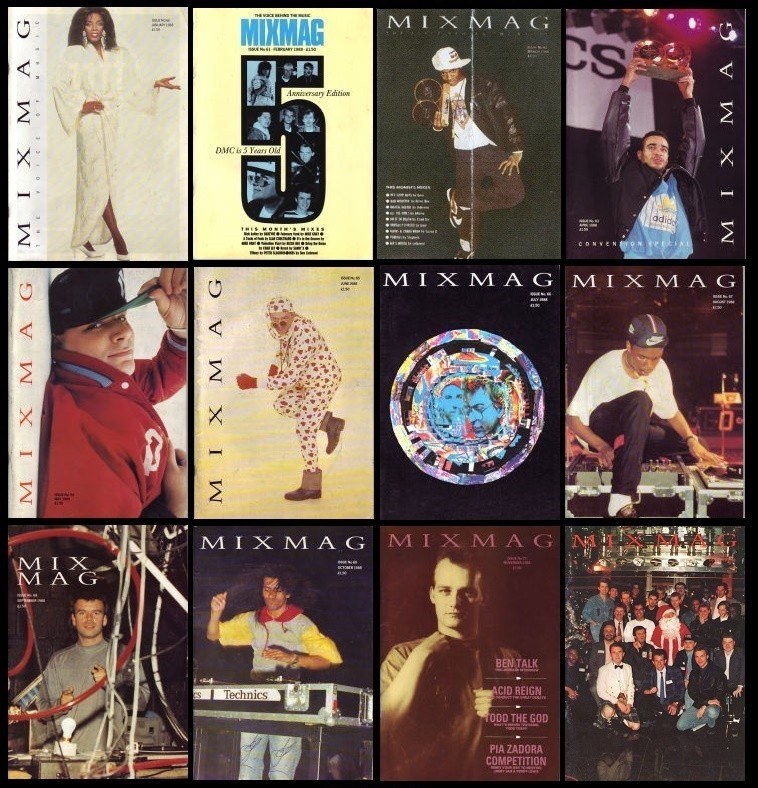
Before it was a glossy, international subcultural bible, Mixmag started as a humble subscription fanzine. It was mostly black-and-white, functional, and explicitly made for mobile DJs rather than casual clubbers.
The covers from this era are far from the polished, airbrushed media formats that came later. Pre-dating the massive acid house rave explosion in the UK, the design language here was raw and strictly editorial. It was utilitarian, underground print media at its finest: simplistic layouts, dense text, and photography that cared more about tracklists and hardware than global celebrity status.
The 1990s: The Rave Explosion
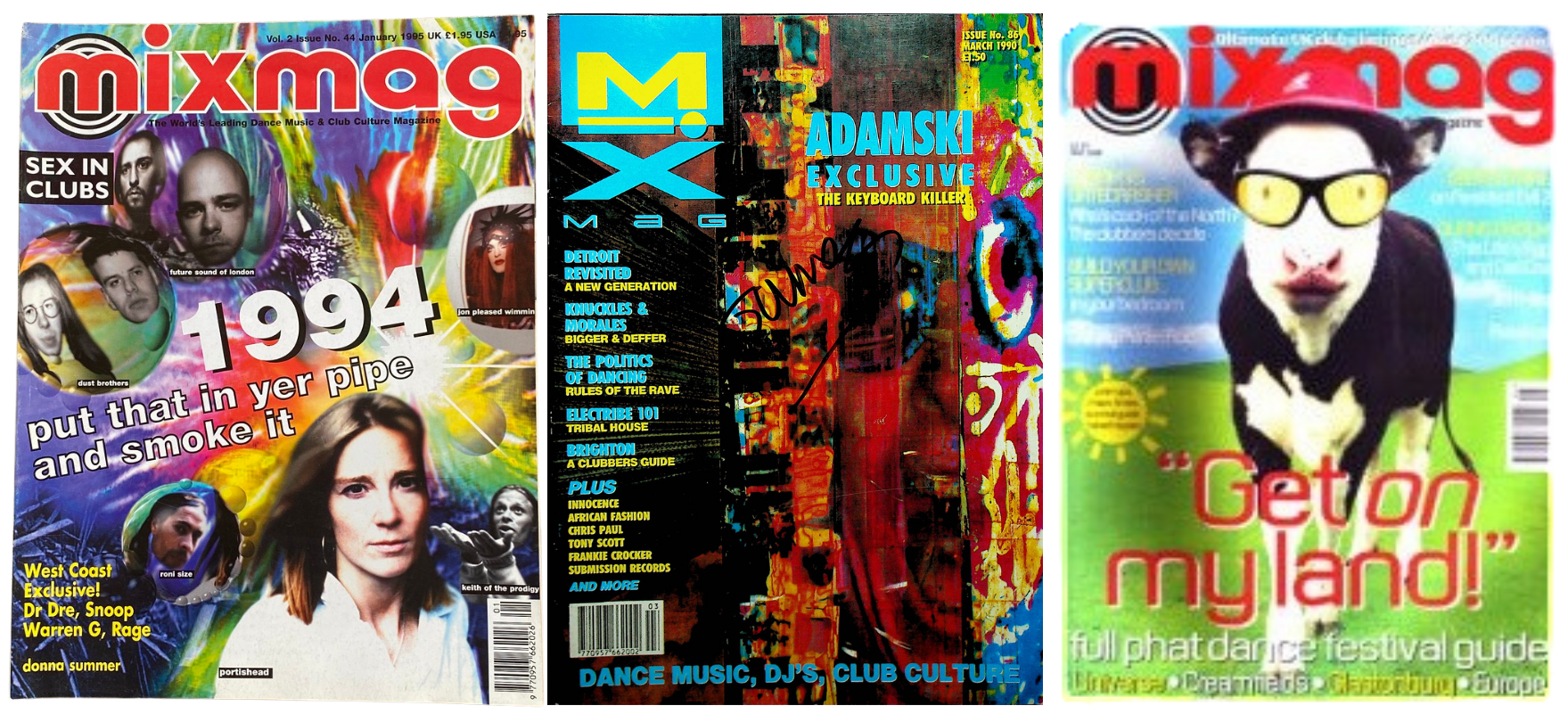
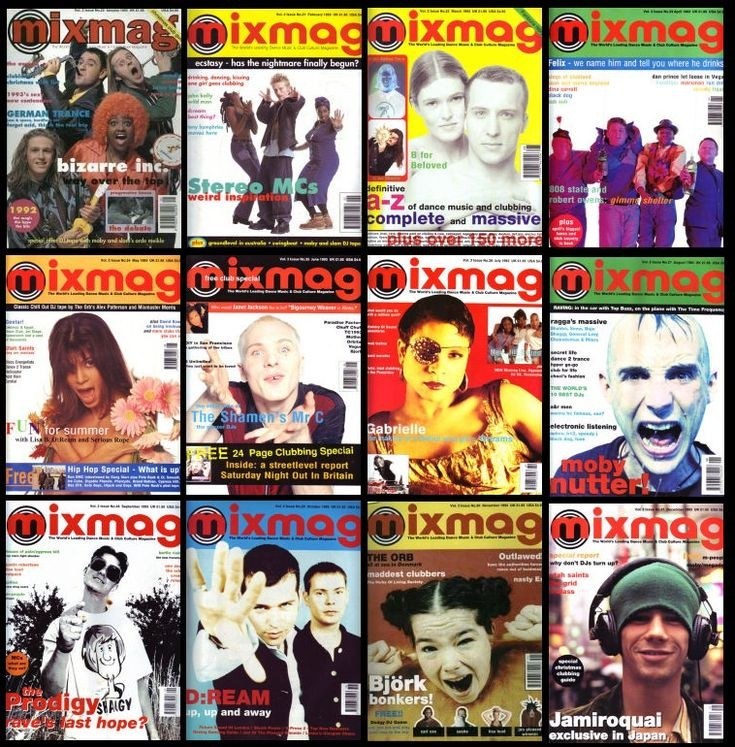
Then came the late '80s and early '90s, and the culture completely ruptured. As acid house swept across the UK and gave birth to mass rave culture, Mixmag underwent a radical evolution. It transitioned from a niche DJ newsletter into a vibrant, living document of house, techno, and rave genres for the everyday music and club enthusiast.
Visually, the '90s covers were pure, unadulterated energy. The design desk weaponised neon colour palettes, warped and bleeding acid typefaces, and experimental layouts. It wasn’t just about the resident DJ anymore; the covers began centering boundary-pushing pop and electronic icons like Björk, Jamiroquai, and Moby. The aesthetic was loud, slightly overwhelming, and perfectly captured the sensory overload of a 1992 free warehouse party.
The Early 2000s: The Era of the Superstar DJ
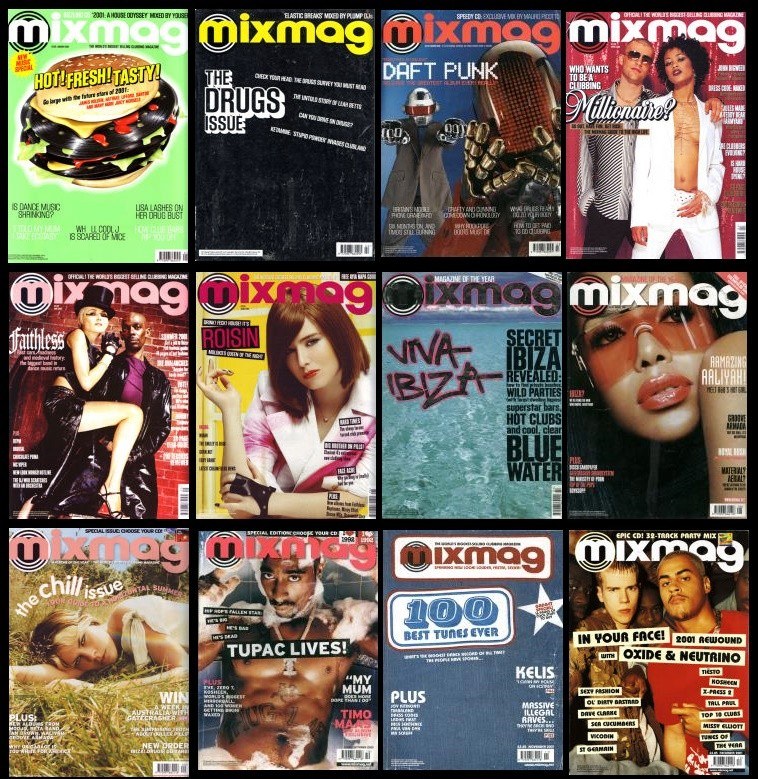
As the new millennium rolled in, electronic music went corporate, moving from muddy fields into multi-room superclubs. This was the era where DJs became superstars.
Dom Phillips, who was the editor of the magazine from 1993 to 1997, later chronicled this massive cultural shift in his 2009 book, Superstar DJs Here We Go! The covers from the 2000s reflected this exact energy, treating headlining DJs with the same airbrushed, larger-than-life glamour usually reserved for Hollywood and pop stars.
During this decade, design was hyper-focused on the individual: the "headliner." Mainstream club-goers buying these issues off the rack had no idea that their analogue hedonism was about to go digital. Smartphones, YouTube, and social media were waiting in the wings, ready to change the pace, safety, and exclusivity of parties forever.
The 2020s: Mixmag’s Digital Transformation
Today, Mixmag operates in a purely digital space. While event listings, party photos, and artist news are instantly sourced through social media networks, the publication still stands tall on its immense credibility and heritage. It remains one of the definitive thought leaders of modern club culture.
Even without a physical newsstand, Mixmag holds its authority as an elite curator, selecting just 12 artists a year for its highly coveted digital covers.
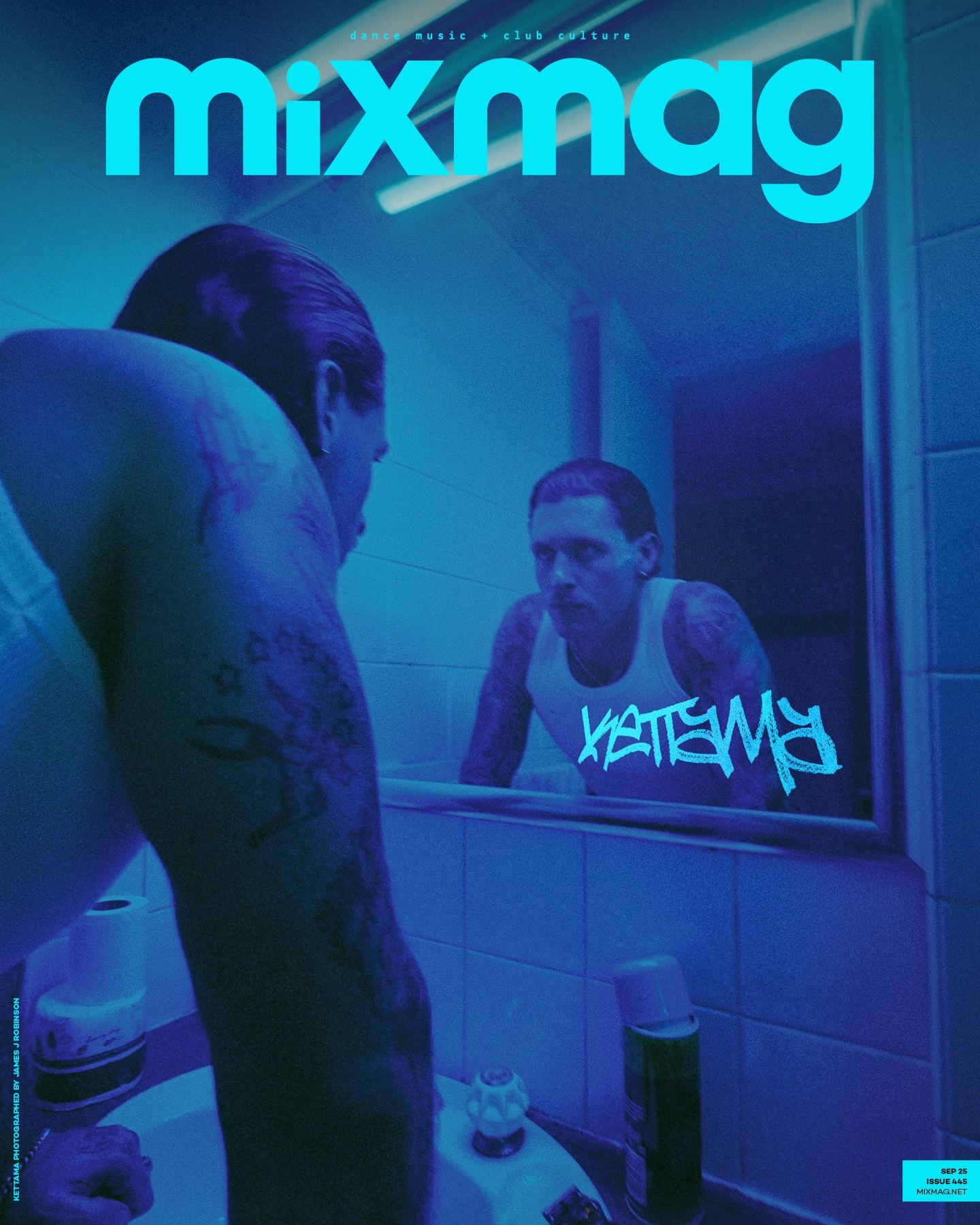
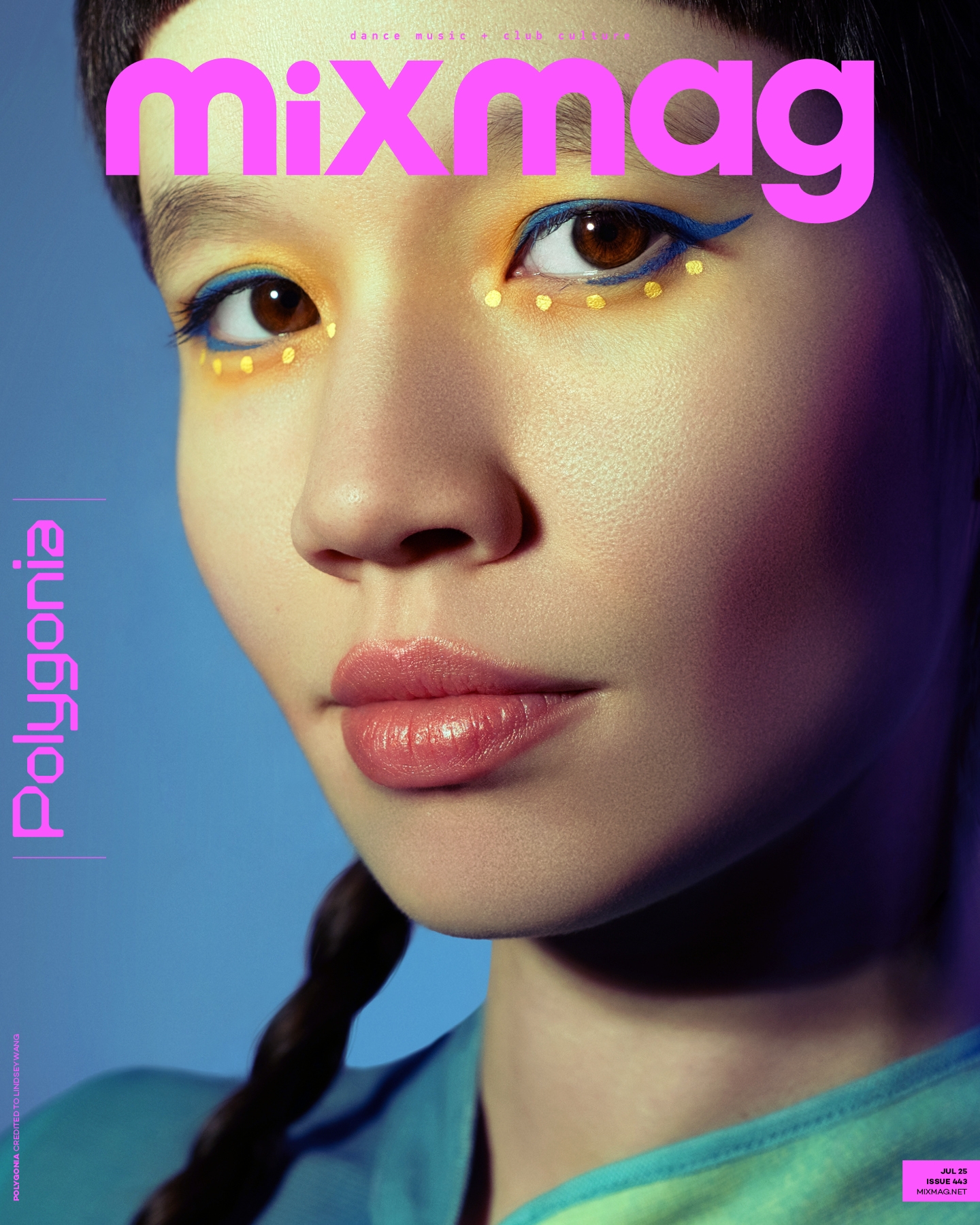
The mediums change, but the mission remains. Mixmag’s visual history tells the ultimate story of an underground community expanding into a global phenomenon; continuing to design, document, and curate the visual narratives of our collective dancefloor experiences.
Want to be featured on CTRL+Print? Send some eye candy to [email protected].
Farhana is Mixmag Asia’s Visual Designer, follow her on Instagram here.
Never miss a beat. Subscribe to our Scene Report newsletter or follow us on Instagram.
