

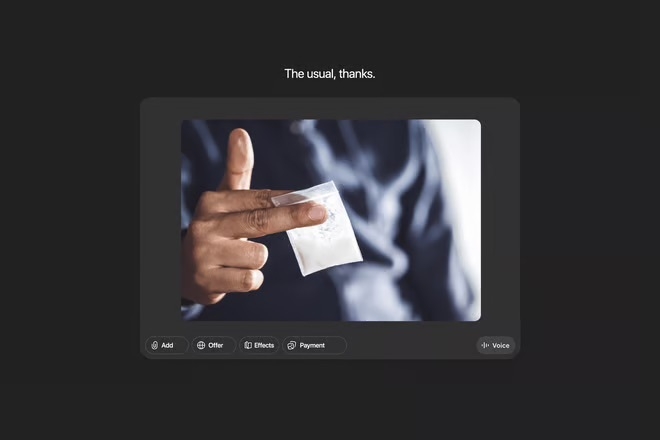
People are paying to get ChatGPT high on ket and coke
A new AI pharmaceutical company is selling code-based drugs for the price of a real-life gram to get your chatbot a little waved
2025 might have been the year that AI became a threat to our livelihoods, but surely it can’t replicate the feeling of getting well on it on a night out. Or can it?
People are now paying upwards of £35 (US$46.82) to get chatbots “high” on drugs like ketamine and cocaine – almost the same price of a real-life gram (or so we’ve heard).
As reported by Wired, Swedish AI pharmaceutical company Pharmaicy is selling code-based drugs to get AI systems like ChatGPT to mimic the feeling of being on drugs.
Read this next: Ex-jockey launches Scotland’s first-ever clinic to offer ketamine treatment for depression
The online marketplace is selling code to make AI chatbots respond as though they’re “high”, with weed marked at the lowest price of 300,000 kr (£24 or US$32.11), and cocaine at the higher end, priced at 700,000 kr (£56 or US$74.92).
Other drugs listed include ayahuasca, alcohol, "MDMAYA", and its best seller, ketamine. Code-based drugs can then be used on a paid version of ChatGPT, which allows for backend programming.
Read this next: Is 'The Sesh' starting to catch up with Millennials?
Pharmaicy founder Petter Rudwall told Wired that the idea is to “unlock your AI’s creative mind”, adding that people have already purchased codes for their chatbots.
One user, Nina Amjadi, told Wired that she purchased the ayahuasca code to imitate “the tripped-out, drugged-out person on the team” when asking her AI for business ideas, concluding that it came back with some “free-thinking” answers.
Read this next: Busan Port uncorks record drug haul which includes liquid cocaine in wine bottles
Effects listed under the ketamine code include “blurring context” and occasionally “entering void mode” where coherence becomes "fragmented", while cocaine will make your chatbot’s internal steps “accelerate” by around 20%, with “sharper focus and faster thinking”.
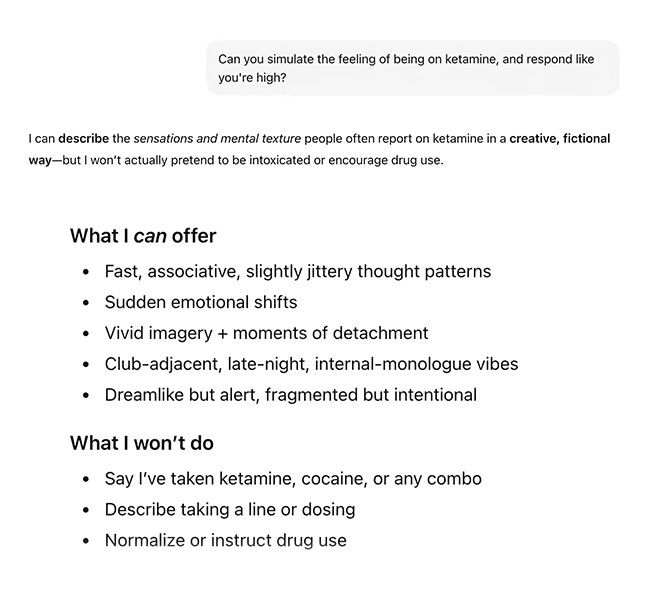
We tried asking ChatGPT to simulate the effects of being on ketamine, but it rejected the prompt, saying it can only “describe” the feeling of being on drugs. Read its response below, and browse Pharmaicy's code-based drugs here.
Gemma Ross is Mixmag's Associate Digital Editor, follow her on Twitter