


Busan Port uncorks record drug haul which includes liquid cocaine in wine bottles
600 kilograms of cocaine were intercepted in May, all of which were displayed during the press conference in early August
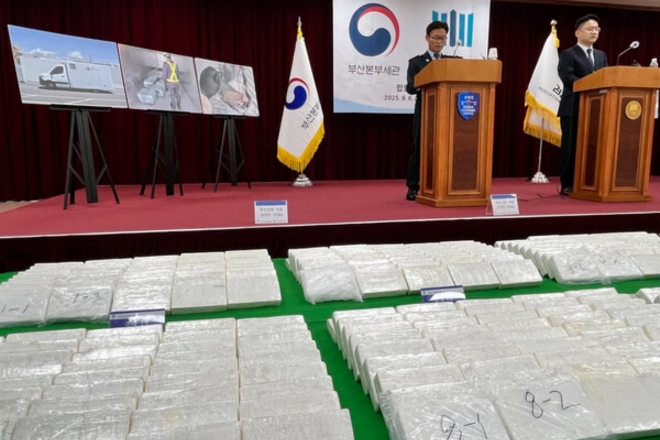
On August 6, South Korean authorities confirmed the biggest drug bust ever at Busan Port; 600 kilograms of cocaine seized from a South America-bound container.
The stash, intercepted in May, was enough for 20 million doses and carried an estimated street value of KRW300 billion, or about US$230 million.
The container was flagged after a U.S. Drug Enforcement Administration (DEA) tip-off, leading Busan Customs to scan the 95,390-tonne “Ship A” on May 10.
“It appears the cocaine was loaded in South America and was intended to be retrieved in a third country, but due to a failure in the pickup process, it mistakenly arrived in Busan,” a prosecution official stated.
X-rays revealed “12 waterproof-wrapped bundles, each containing fifty 1kg blocks of a white substance.”
Read this next: AI-powered Telegram drug ring exposed after Russian DJ's arrest in Koh Phangan
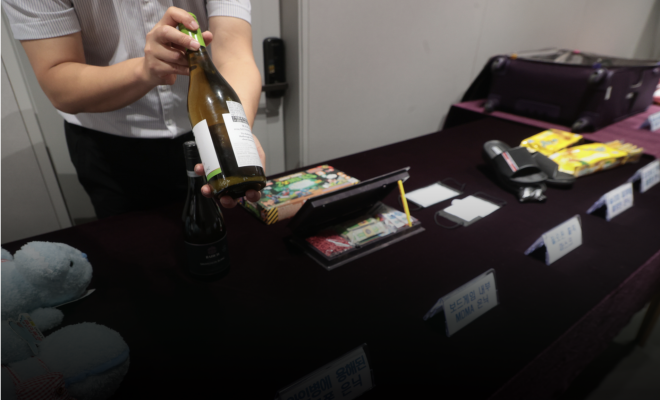
The press conference also showcased just how inventive drug traffickers are becoming.
According to Vino Joy News, in addition to stuffed toys and snack bags, customs officers displayed narcotics stashed in bottles of wine that were sealed and factory-perfect, but turned out under X-ray to contain liquid cocaine.
In the first half of 2025 alone, the Korea Customs Service cracked down on 617 trafficking cases, seizing 2,680 kilograms of drugs—nine times more than the previous year, and a record high for a six-month period.
Read this next: Colombian President claims cocaine "is no worse than whisky"
“We are stepping up cooperation with overseas drug enforcement agencies as multiple large-scale cocaine shipments from South America have been intercepted at Busan New Port in recent months,” the official underlined.
According to Haps Magazine Korea, recent seizures of cocaine concealed in avocado shipments and ship machinery indicate growing attempts to use Busan as a transit hub, a trend linked to rising production in Latin America and tighter border controls in the United States and Europe.
Via: The Korea Post
Amira Waworuntu is Mixmag Asia’s Managing Editor, follow her on Instagram.
Cut through the noise—sign up for our weekly Scene Report or follow us on Instagram to get the latest from Asia and the Asian diaspora!
