


Busan venue Ovantgarde receives two-month suspension for letting people dance
The case has renewed attention on rules that prohibit dancing at live music venues, with an online petition calling for change
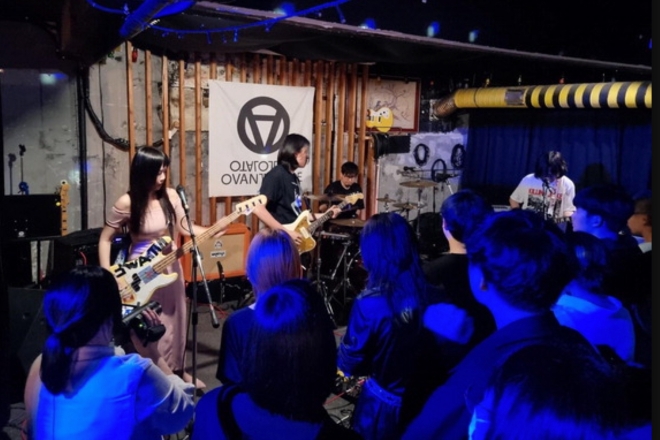
South Korea has been operating live music venues under strict grey-area regulations since the late 1990s, which prohibit people from dancing even when live bands and music are being played.
On August 25, the Busan live music venue Ovantgarde announced it was subjected to a two-month suspension due to prohibited dancing in the establishment.
Other establishments across the country have also reported to have experienced a similar scenario.
In a post on Instagram, electronic artist Byul.org mentioned: “The two months that Ovantgarde has to endure could determine whether a space survives or closes permanently. Even while there is no income at all, rent, electricity bills, and equipment installment payments continue to accumulate. We also wanted to offer even a little practical help to the two operators who have kept the place going for so long.”
Read this next: German government to reclassify threatened nightclubs as cultural and artistic venues
Under South Korea’s Food Sanitation Act, food-service businesses are divided into several categories, including general restaurants, which are allowed to serve food and alcoholic beverages.
Live music venues such as Ovantgarde can operate under this category, but it does not permit customers to dance. The category that permits customers to sing or dance is instead classified separately as an entertainment bar.
These regulations are said to have their roots in social norms aimed at maintaining morality; “People didn’t want that kind of bar near their home and especially near schools. It’s more of a moral thing, not for safety,” states Park Ji-hong, owner of the live music venue Strange Fruit located near Hongik University in western Seoul.
Read this next: Thailand’s ambiguous alcohol laws spark confusion among stakeholders
Historically, performances by two or more musicians were prohibited in restaurants, meaning live music performances remained illegal until the late 1990s.
In 1999, this was amended, allowing music venues to register as general restaurants. This meant that live music venues would still be registered as restaurants.
More than two decades later, further regulatory changes have been introduced, but no separate legal category exists for live music venues, leaving many DJ and electronic music venues in regulatory limbo.
Read this next: Amsterdam Dance Event partners with VibeLab on first-ever Nighttime Culture Index
Following Ovantgarde’s suspension, an online petition calling for a revision of the regulations has also been circulated on Instagram, gathering support from people within the local music scene.
Ovantgarde is one of several cases in which the outcome can depend on local jurisdiction.
For this reason, in an act of solidarity, musicians beyond the electronic scene have prepared a compilation of unreleased tracks from Maalib, DJ Bojvck, Kirara and Dguru to support the venue.
Daniela Solano is a freelance writer for Mixmag Asia, follow her on Instagram here.
Never miss a beat. Subscribe to our Scene Report newsletter or follow us on Instagram.
