


“I too am a Cockroach”: India’s Gen Z protests voter-roll removals
Students & first-time protesters have pushed past barricades since early October to demand equal voting rights, as a Delhi dance night raises funds & London’s diaspora rallies in support
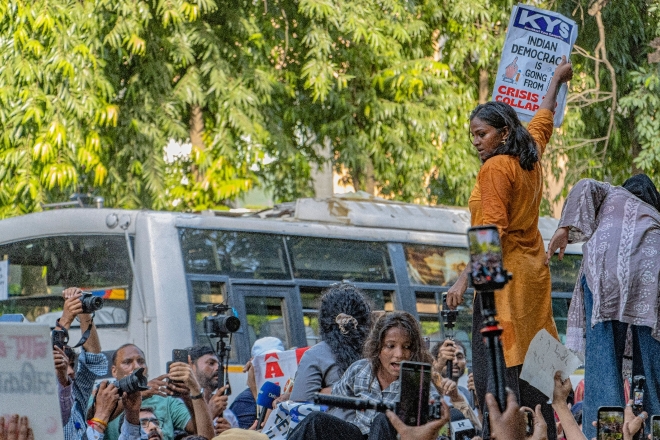
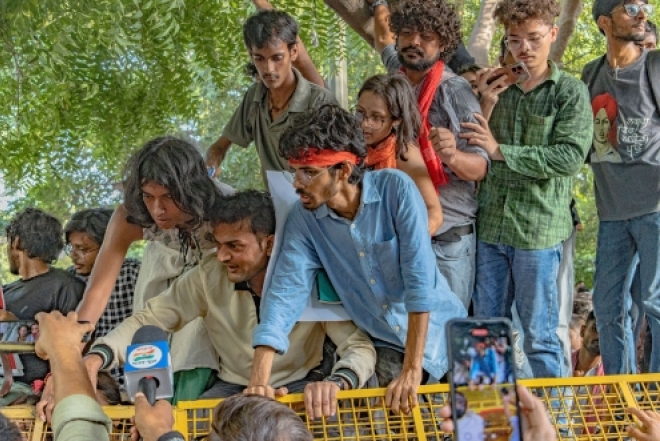
Young Indians, joined by opposition parties, have taken to the streets repeatedly since October 2, demanding that Gyanesh Kumar, head of India’s Election Commission, resign over a Special Intensive Revision of voter lists that has removed more than 130 million names.
People aged 18 to 29 make up more than a fifth of India’s electors, and the education minister resigned in July after weeks of youth-led protests.
The youth’s discontent has put pressure on Indian Prime Minister Modi in a rare challenge in his 12 years in power. Public anger continues to build against the SIR process even as millions of people appeal the name deletions.
An Indian Express report found that two election commissioners objected on record at least 14 times in 10 months to decisions on the revision. The Election Commission of India denies wrongdoing, saying the names removed include dead, duplicate and migrated voters.
It also rejected 'vote chori' (vote theft) allegations, while opposition parties alleged that the roll revision exercise has disenfranchised millions, especially Muslims.
In the state of Maharashtra, an Indian Express analysis found that nearly 30% of voters in 38 Assembly constituencies, where Muslims make up more than a fifth of the population, were left off the draft rolls.
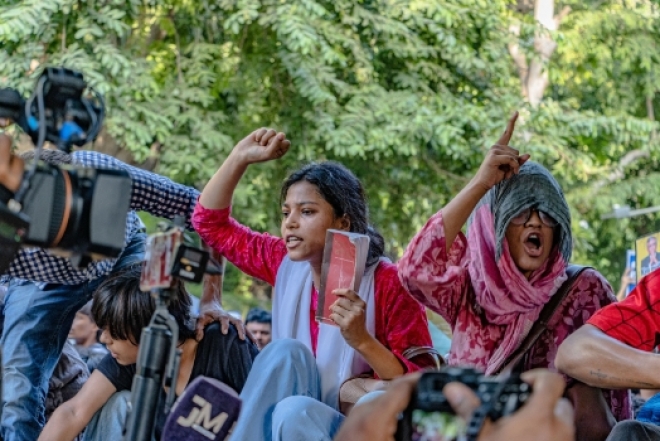
Youth and student groups carry much of the street work. They include the Cockroach Janta Party, a satirical youth movement founded by Abhijeet Dipke after Chief Justice Surya Kant said in court in May that some jobless youngsters were “like cockroaches”. He later said he was misquoted.
The movement overtook India’s biggest political parties on Instagram within a week, and supporters use the hashtag: #MainBhiCockroach or “I too am a cockroach”.
Older left-wing unions like the All India Students’ Association (AISA) have been on Delhi’s streets from September 25. Its president, Neha Bora, a doctoral student who traced her path from theatre to politics, has been repeatedly detained and has become one of the faces of the movement.
Read this next: “The system constantly undermines us”: protests in Jakarta expose anger over parliament pay, labour rights & police violence
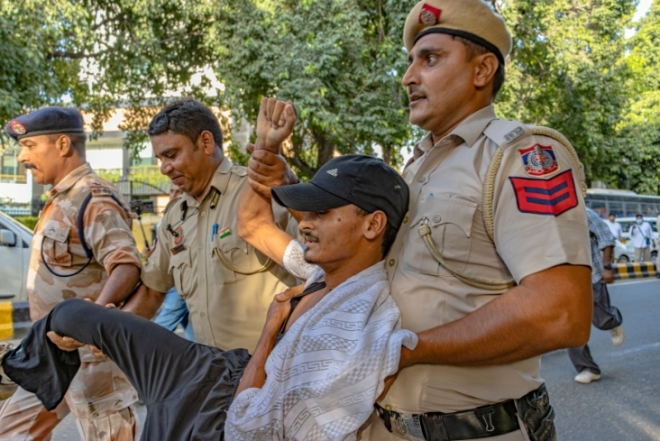
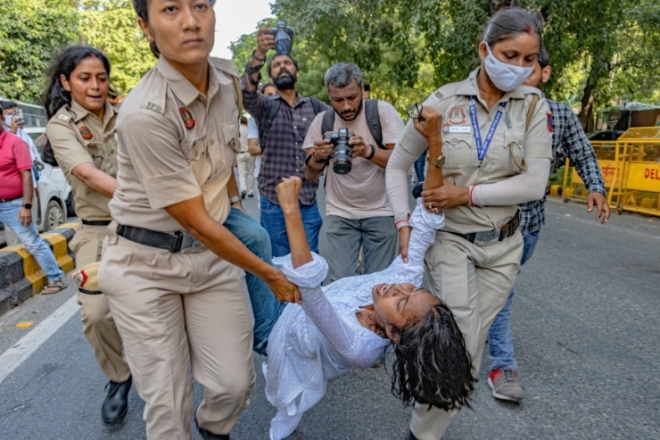
On October 10, authorities suspended mobile internet in parts of central Delhi, and a home ministry official told Reuters more than 2,000 people had been detained.
Three days later, Cockroach Janta Party leaders Ashutosh Ranka and Saurav Das were arrested after climbing barricades into Jantar Mantar, a historic Delhi protest site that police had just stopped listing as an approved venue. A court jailed them for five days, extended that by two days, and a magistrate released them on October 21.
On October 15, the Supreme Court asked the Election Commission and Kumar to respond to opposition petitions challenging the revision. Delhi Police detained more than 100 protesters on October 23 as farmers’ unions, trade unions and student groups marched towards the Election Commission’s office, and protests have also reached cities such as Bengaluru and Chennai.
In New Delhi, mool, an art collective, and nobody knows, a dance music initiative run by artists who met through the space, held a mutual aid night with sliding-scale tickets one weekend in response to what was unfolding across the city. They previously held a fundraiser for the July protests.
“Indulging in a sort of escapism on a Saturday night with a regular gig just felt like a privilege that we can’t afford without giving back to the community in some way,” said Aarohan, founder of the space who also performed at the fundraiser event as mool_radio.
The money buys first-aid kits for frontline protesters and legal defence for detained students, with emergency transport for women, queer and working-class activists.
Read this next: “To be politically aware in this climate is important”: Filipinos join Trillion Peso March to demand an end to corruption
Mool opened about two and a half years ago to give radical art collectives and workers’ organisations a space of their own. Aarohan says nightlife in the city “is concentrating surplus capital and urban youth energy”, and the night was built to point both at the protests.
Bkm, a New Delhi producer whose sound runs from dub techno and acid to electro and leftfield club, says the night answers a gap in the city’s venues.
“Most venues only book safe, commercially viable names,” Bkm says, continuing to explain that “Dance music is inherently political; and we aim to pay our respects to the marginalised history of it in a local context.”
In London, the UK branch of the Students’ Federation of India protested outside the Indian High Commission on October 16, where Modi supporters held a counter-protest. The next day, protesters gathered at the Gandhi statue in Parliament Square for Jantar Mantar Is Everywhere – Global Day of Action. Organisers claim more than a thousand attended.
London-based producer Noni-Mouse, who recently moved from Mumbai, followed the protests from a distance and says that has shaped how she uses her platform. “If there is enough discussion happening, that discussion within people is also just as important as showing up for a protest, at least in my opinion,” she says.
Read this next: "A tool for protest": DJs from the Global South are fighting oppression with music
She calls amplifying protesters’ voices online “the first step” and wants London’s South Asian artists to join on-the-ground projects. “I think these artists sitting in London have access to a very wide network of opportunities simply by being here,” she says, adding that they could act as “a mediator between sincere projects and efforts” in India and connect them “to opportunities on their side of the world.”
She points to visa and immigration barriers and a lack of funding as the reasons many artists in India stay out of Western industry spaces: “A lot has been done to keep us out of these spaces. This is where the diaspora can really come in and help us be included.”
Police brutality against women at the protests is what she finds hardest to watch, she says: “It’s just so ironic that it’s a protest that is talking about women’s safety [and] isn’t safe for women.”
She wants to “create safer spaces for women”. Sound of Women, a project on female folk performers that she works on, has had “great support from people here”, she says, which she puts down to being in London herself.
Aditi Dharmadhikari is a freelance writer for Mixmag Asia. Follow her on Instagram here.
Never miss a beat. Subscribe to our Scene Report newsletter or follow us on Instagram.
