


“To be politically aware in this climate is important”: Filipinos join Trillion Peso March to demand an end to corruption
Tens of thousands marched in Manila from Luneta to Mendiola, condemning the plunder of the archipelago & demanding accountability for billions lost to ghost flood control projects
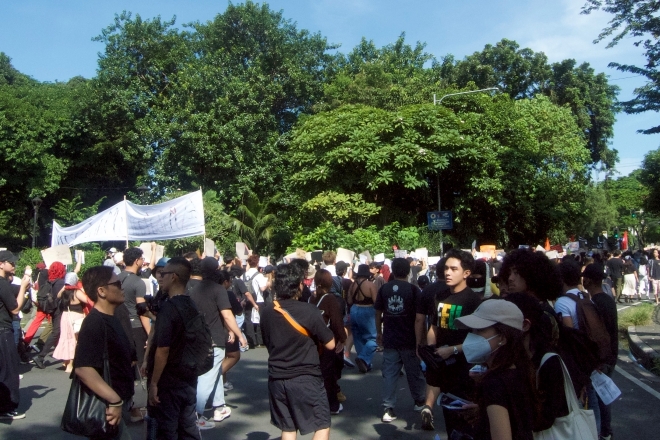
53 years ago on September 21, 1972, then-President Ferdinand Marcos declared martial law in the Philippines, granting the government broad powers that were used to manage public and environmental resources.
Corruption and oppression went largely unchecked, and the effects of these plundering policies continue to be felt throughout the archipelago today.
Between July 2022 and May 2025, the Philippine government allocated over PHP545 billion (roughly USD30 million) for flood control projects. However, the Philippine Center for Investigative Journalism (PCIJ) reported that a significant number of these projects were either never completed or poorly executed.
The Department of Public Works and Highways (DPWH) uncovered that 421 out of the 8,000 projects inspected were found to be non-existent or inadequately carried out, with 20% of the total budget (approximately PHP100 billion or USD5.4 million) directed to just 15 contractors.
Adding to public frustration, many of these contractors’ children or these so-called “nepo babies” openly displayed their inherited wealth, sparking widespread outrage.
Meanwhile, while the accused officials live in comfort, many Filipino citizens continue to face the consequences of ongoing floods and poorly managed infrastructure that the government was expected to provide.
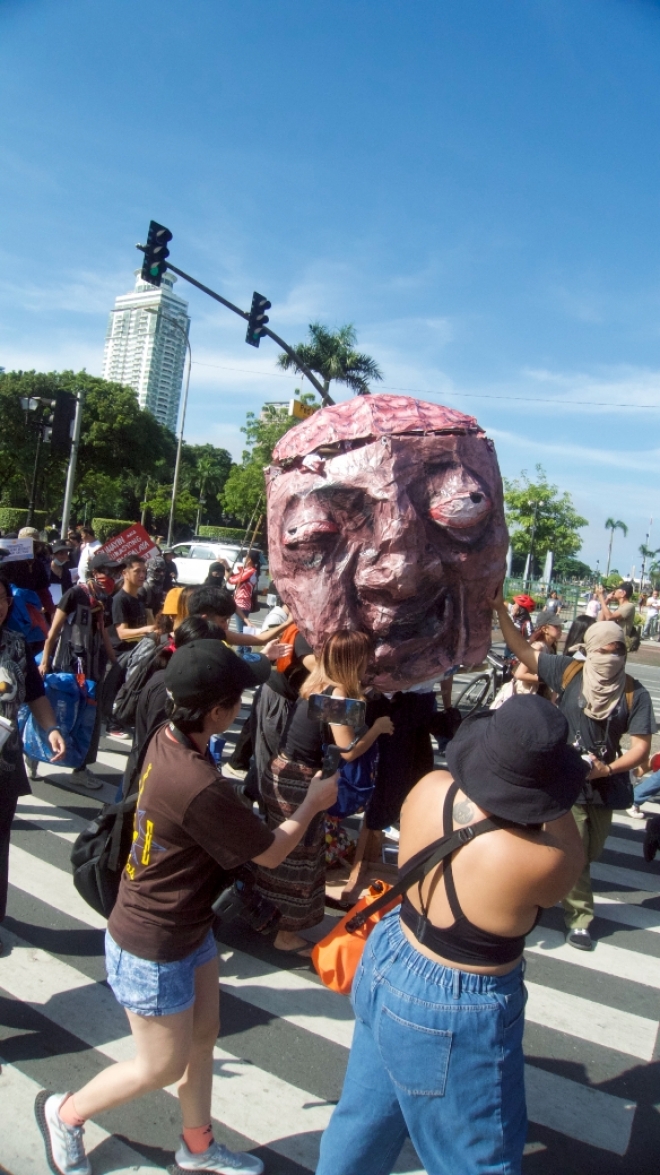
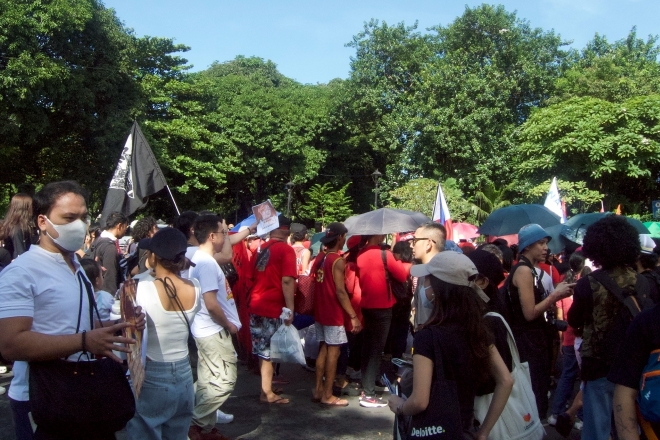
To commemorate the act first set in motion by the father of the Philippines’ most prominent "nepo baby", Bongbong Marcos, people took to the streets to protest against alleged corruption involving figures such as Cezarah “Sarah” and Pacifico “Curlee” Discaya, Jinggoy Estrada, Zaldy Co, and Martin Romualdez.
Collectively known as the Trillion Peso March, on September 21, 2025, tens of thousands of Filipinos—including students, church groups, labour unions, and civil society organsations—gathered across Manila, from Luneta to EDSA to Mendiola, to express their frustration over the plundering of the nation’s resources.
Read this next: “This moment will pave the way for a peaceful election”: Nepal’s Gen Z picks interim Prime Minister on Discord
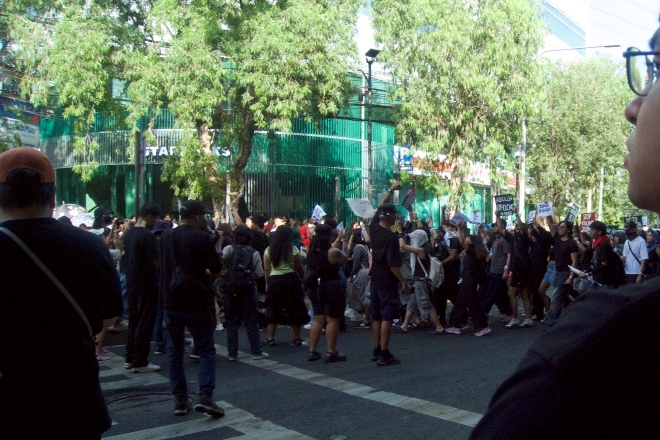
The demonstrations began peacefully with music, chants, and performances, but tensions rose under heavy police presence and movement restrictions, eventually leading to chaotic clashes. Amid the turmoil in Mendiola, 109 minors were detained—some sustaining injuries—even though most were allegedly not involved in the clashes; all minors have since been released.
The incident highlights concerns about the government’s priorities, particularly the perception of protecting wrongdoers over ensuring public safety.
Read this next: “The system constantly undermines us”: protests in Jakarta expose anger over parliament pay, labour rights & police violence
In addition to the floods, earthquakes and storms have also rattled parts of the archipelago, highlighting the fragile state of infrastructure and disaster preparedness.
Buildings and roads intended to protect communities were damaged or destroyed, highlighting ongoing challenges in infrastructure and the distribution of public safety funds.
Despite these setbacks, communities continue to recover and maintain hope for the future.
Inspired by other regional movements, such as Nepal’s Gen-Z revolution and Jakarta’s parliament protests, the Philippines’ Trillion Peso March could signal the beginning—or serve as a precursor—of broader societal changes.
Read this next: “It’s a movement being shaped in real time”: Bass Crawl sets the tone for Filipino bass identity
Investigations have uncovered widespread corruption connected to overconsumption and historical colonial structures, issues that communities often address through collective organisation and cultural practices, including music.
Manila-based underground rapper and artist Pette Shabu expresses that believing in a broken system to change is essentially self-destructive: “As a child of the working class in the Philippines, everything is a bite-the-bullet moment, due to our inevitable fear of having little to no social security when problems suddenly arise. Climate change will truly affect people, and it will destroy families. How absurd that we beg mercy from mortal elites who play gods with our lives.
Shabu continues: “To be politically aware in this climate is important, but articulating your empathy for this country is far harder, because hope is fragile. Encouraging political awareness teaches people how to navigate the system safely, without risking their lives.”
Read this next: "A tool for protest": DJs from the Global South are fighting oppression with music
Gian Ferrer, co-founder of Let Them Cook, a platform for emerging local Manila DJs, shares: “I know I’m more privileged than most—and some in nightlife have it even easier—but if my situation stresses me out, I can only imagine how much harder it is for others.” He recalls how his home was flooded for the second time—just days after celebrating a year of nurturing Manila’s underground DJs. “Honestly, I don’t think I’ll ever be able to live properly just from being an organiser or talent in the scene. Higher minimum wages, proper unemployment support, and enforced environmental laws would make life so much easier.”
DJ, producer and organiser T33G33 has been a constant inspiration educating the underground community through her protest posts and even releasing an ambient/drone-folk album, with most of its proceeds donated to flood victims.
“As much as this LP is a new release, it’s also an archive of my gentlest yet darkest songs. The music affirms that despite the choice to be soft, one can still fight and find strength and ferocity in the deepest abysses of our souls—which is where we gather when we are loving and liberating ourselves,” the artist shares.
Jacob Mendoza is a freelance writer for Mixmag Asia, follow him on Instagram.
Cut through the noise—sign up for our weekly Scene Report or follow us on Instagram to get the latest from Asia and the Asian diaspora!
