


Hong Kong media tycoon Jimmy Lai convicted to life in prison
The sentencing of the Apple Daily founder has intensified global concern over press freedom & political dissent
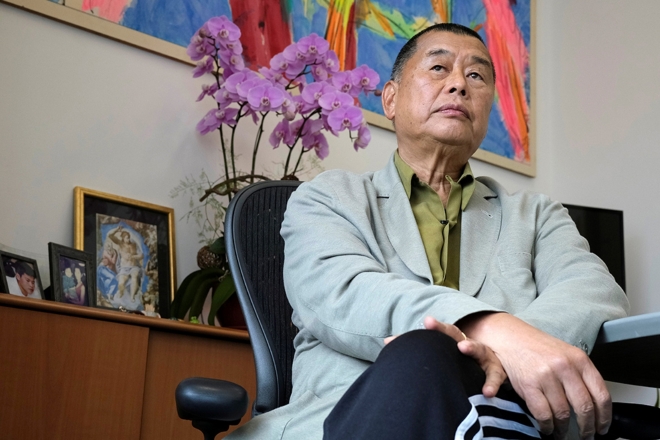
Jimmy Lai, a Hong Kong media tycoon and a prominent pro-democracy figure, has been convicted on charges of conspiracy to collude with foreign forces and of publishing seditious materials through his newspaper, Apple Daily.
He faces a potential sentence of life imprisonment, and the case has renewed discussion around press freedom in Hong Kong.
According to the Hong Kong Journalists Association’s (HKJA) Press Freedom Index of 2025, eight of the ten indicators used to measure press freedom showed some level of improvement compared with the previous year.
Despite these gains, “media self-censorship” remains the lowest-scoring category in the index, with a score of 1.8 points. The HKJA notes that self-censorship has been a persistent concern since the survey began in 2013, consistently ranking among the weakest areas and continuing to shape the broader media environment in Hong Kong.
The introduction of the Hong Kong National Security Law in 2020 has further intensified these concerns.
Read this next: Repression continues as Myanmar rapper Byu Har arrested by junta
In response to the case, the Commissioner’s Office of China’s Foreign Ministry in the Hong Kong S.A.R. issued a statement asserting that “His case has nothing to do with press freedom” and that “The crux of his charges was his collusion with foreign forces to endanger national security.”
The office further stated that “The trial process of the Jimmy Lai case was open and transparent”, noting that “a large number of members of the public, media representatives, and foreign consular officials in Hong Kong attended the hearings. Any objective and fair-minded person would recognise the impartiality and professionalism of the Hong Kong courts.”
According to the Guardian and Amnesty International, Lai’s conviction is based on activities that include meetings with U.S. politicians, interviews with overseas media outlets, posts on his Twitter account, and opinion articles.
Hong Kong’s chief executive claimed these actions “damaged the country’s interests and the welfare of Hong Kongers”.
The verdict has drawn criticism because Lai was convicted under the 2020 National Security Law, legislation that was enacted after the alleged activities had taken place.
Read this next: “This moment will pave the way for a peaceful election”: Nepal’s Gen Z picks interim Prime Minister on Discord
Lai pleaded not guilty to all charges, stating that he never called for sanctions after the National Security Law came into effect, as doing so would have been “suicidal”.
Despite holding UK citizenship, the 78-year-old has been denied bail and barred from international legal representation during his trial. The case has been repeatedly delayed and has now stretched on for nearly five years.
Read this next: Ravers in China speak out on freedom, pressure & the underground scene
Lai was first detained in 2020 and has since spent approximately 1,800 days in prison.
UK Prime Minister Keir Starmer has personally called for Lai’s release; Starmer is expected to visit Beijing in January, while a final ruling in the case is anticipated in early 2026.
Update: The Commissioner’s Office of China’s Foreign Ministry in the Hong Kong S.A.R. has summoned US and UK consulate representatives to protest what it called foreign interference following critical remarks on Lai's conviction.
Daniela Solano is a freelance writer for Mixmag Asia, follow her on Instagram here.
Cut through the noise—sign up for our weekly Scene Report or follow us on Instagram to get the latest from Asia and the Asian diaspora!
