


 Features
Building bridges with bass: Low End Therapy is starting a dubstep revolution in Mumbai
Dishing out rapid-fire dubstep for their city's lower-caste communities, Low End Therapy isn't just about "drops and bouncing". We spoke to founder Tushar Adhav to find out more about the core tenants of this burgeoning movement
Functions is our interview series profiling parties from across the world. This time we meet: Low End Therapy
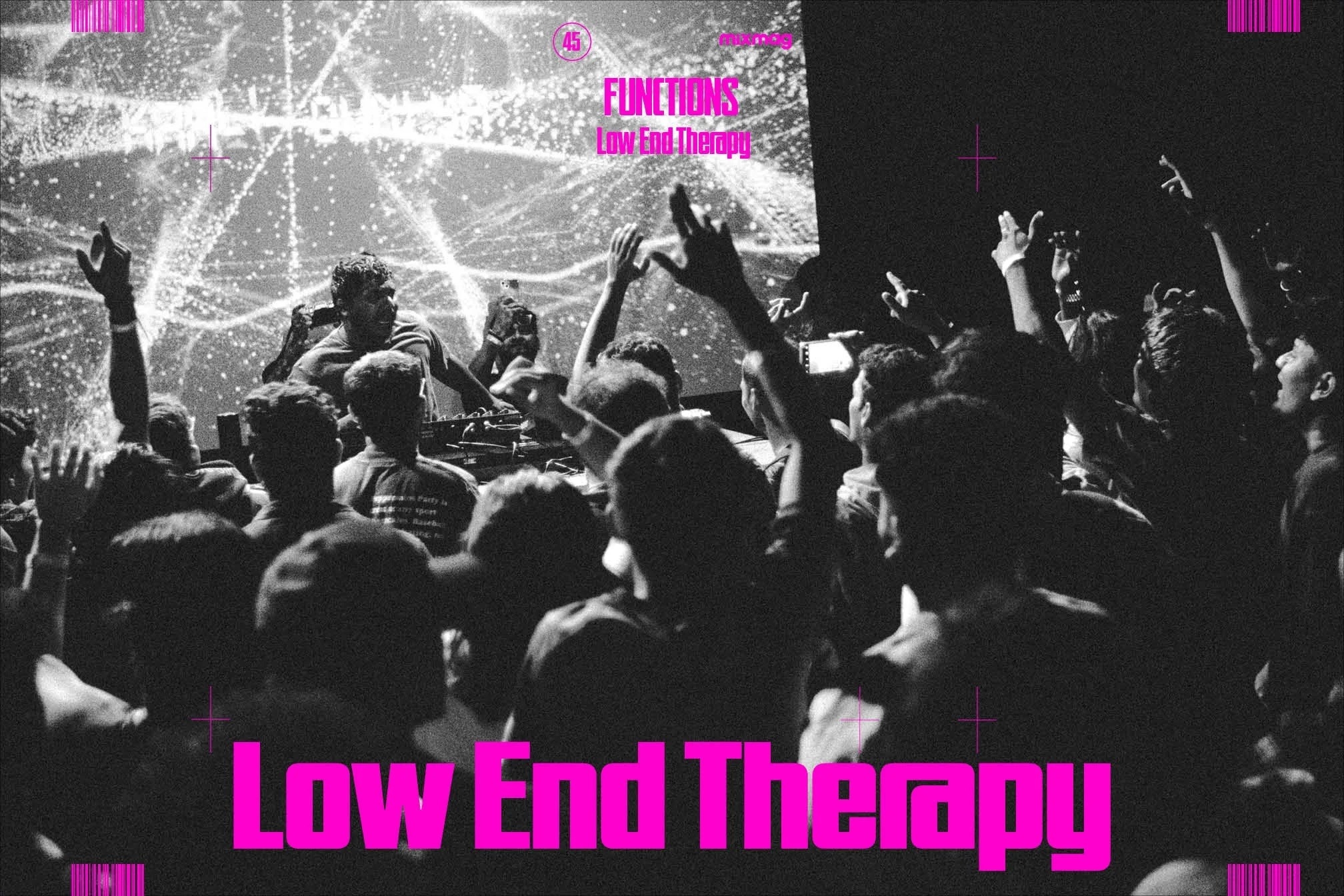
Some club nights respond to their local scene, others try to re-shape it entirely. Mumbai's Low End Therapy falls into the latter category. Established by hip hop collective Swadesi in an effort to platform burgeoning dubstep and bass MCs and producers, Low End Therapy also creates a space for people from lower-caste communities to both discover these genres and invite them to have a part in building a new scene, and in doing so, question the status quo that rules their everyday lives.
While the music may be rapid-fire, with clips shared across social media showcasing an energetic and rowdy dancefloor, Low End Therapy isn't just about "drops and bouncing," explains Swadesi's Tushar Adhav, who also goes by the monikers BamBoy (for hip hop/grime productions) and Kaali Duniya (for dubstep). "With the samples we use, it hits people differently. When they leave, they leave with a question mark. Is whatever I believe the truth? Or is it just an image that is portrayed to me via social media, by my parents, or whatever?"
Read this next: Excursions: The Dekadenz trio is celebrating a decade of controlled noise & uncompromised vision
Billed as a dancefloor "for every class of our society," there are several key pillars Low End Therapy incorporates in order to get their message across. The line-up consists of local acts only, and each night is priced in connection with the BPM which will be played. "So at our recent dubstep night, we sold tickets for 140 rupees (UA$1.47)," Adhav explains. "The audience gets an affordable price, but also they learn about the music being played."
"There are so many people who have never been to clubs, and they come along because the tickets are cheap - they don't even know what dubstep is. They don't even care what ruff sound is," he adds. "But once there's something for them to connect to, they start wanting to do their research and find out more about the sound. So I've seen people who have been for the first session, who still come for all of our sessions."
Ahead of its eighth edition - or session - earlier in April, we spoke to Low End Therapy founder Tushar Adhav about the ways in which the party carved out a unique identity within Mumbai's rigid club scene, the challenges of throwing an event that caters to a lower-caste crowd, and how Diwali set the scene for the most memorable edition. Check it out below.
What is the mission statement behind Low End Therapy?
Basically, the main motto of Low End Therapy is to create an output that is equal for every part of society. In India, there’s a very complex social structure known as the caste system. It exists across all fields. The main idea is to create something that is for everyone, every class, every gender, because caste is everywhere and you can’t really "de-caste" yourself. Caste is very prominent, especially in the music industry. Clubs are owned by upper-caste people, and curators and programmers are often privileged. So the goal is to annihilate caste from the space, and by doing that, you also address class differences. So the main goal is to create something that is for everyone, across all classes and genders, because caste is deeply embedded in every space. Work, culture, everything.
Where did you see a gap in the market for Low End Therapy?
We start with ourselves; we, as musicians, weren’t being catered to. If we don’t have space, how do we create? Sadawesi were always looking for a space to be creative and get our message across, but it felt like it wasn’t really there. Even though drum ‘n’ bass/jungle have existed in Mumbai since the late ‘90s, local MCs were not part of it. What is a jungle scene without an MC? It’s hollow, right? Everything was very elite and posh. Because of caste differences, we were not really able to build a bridge where a real, authentic culture can grow in a way. So we started Low End Therapy to create that space. It’s also more producer-oriented than most parties. Mumbai is heavily-dominated by DJs who play producer’s music, but the producers never get booked on festival line-ups, etc. So we’re doing the opposite.
How did you come up with the name?
It was kind of random. It’s wordplay - the music is very low-end heavy, but it’s also about people from the "lower-end" of society giving the therapy.
Can you tell us about the first party?
The first party was around three years ago, and the club was packed. It got noticed by GRM Daily, which gave me hope that something could grow, not just in a short period of time but in the long run too, and we can give space to other people as well and try to create a culture out of it. We also learned a lot as we did more and more sessions; there are a few drawbacks here and there. I’m comfortable talking about it, because people should know there are drawbacks — too often people just see cool pictures and think: 'Wow, there’s something cool happening in India', but there are problems we’ve faced since the first sessions as well. Overall, the first party was a big success.
Do you think keeping it less frequent has helped maintain its authenticity?
The community makes Low End Therapy what it is. Everyone always asks us, “When are you doing the next session?”, but we can’t do them too often. For a lot of reasons, I like to do a dry day dance. Dry days are days in India where the sale of alcohol is prohibited, but when we approach a venue to do an event on those days, it becomes hard for them to understand – they don’t want to give us a budget to throw an event. They're like: "Oh, we need people who drink alcohol, and we need bar sales." That makes it difficult, because I’m also not a marketing expert, I’m just an artist trying to do something for my people. I try to find whatever common ground there is between me and the venue, which tends to be the only time I get to do it. I’ve tried to do the party in 10 different spaces, but not having financial support from the venue always sends us a step backwards. But I know the nine-month gap (ish) must be strange for the people who come to Low End Therapy, I feel they want us to organise the dance at least every two to three months.
What is the ethos behind bookings for Low End Therapy?
We always book local acts. I’ve never booked an international act, also because we cant afford them. We don’t do a "multi-city" thing, we’re just focused on Mumbai. We also make sure everyone who plays is a producer, you only feature on the line-up if you produced the sounds. There are so many events in Mumbai that offer opportunities for open-format DJs; at times, the artists I book from other states in India to perform at Low End Therapy have never played here before. My main aim is to push local acts and those who are producing the music. It’s also a very genre-centric event, not a multi-genre thing, and I think that helps. It keeps things specific and helps foster the scene. I want people to know where they can go to listen to dubstep in Mumbai.
Do you have a favourite moment from running the party?
The first session was probably my favourite. I was not expecting so many people to turn up. I closed the night, and the energy was so loud at that moment, I could feel we had done something right. I’m sort of an over-thinker, and I like to think things over again and again. Before we did the first event, I sat on it for like two years, so coming together was incredible. Then another special one was the fifth session, all of my crew mates were performing — we are three producers in our crew, and for the first time we were all on the bill. But it was Diwali, and in India, on Diwali, not many go out to party. It’s a big no. People will not turn up. We usually receive dates from the venue where no one is going to come, and people have still turned up – but still, I was convinced that wouldn’t be the case; everyone wouldn’t want to come to the club in their Diwali outfits. But the venue was packed, and everyone was dressed normally. No bling. It was shocking, because Diwali is such a big day for everyone in Mumbai, especially for the following Hindu traditions. They won’t miss it at any cost. The people coming to Low End Therapy that day really meant something to me.
What do you think brings people, even on Diwali, to Low End Therapy?
We’ve been doing hip hop for over a decade now, so we brought that audience into grime and soundsystem culture. Also, we include strong social and political messages: Anti-caste, anti-authority themes. People leave with questions, not just memories. Even people who’ve never been to clubs come because the tickets are cheap. Then they start exploring the music more deeply.
Do you have a favourite set you’ve played?
Yes, at a venue called G5A. It was a black box space, so no alcohol, nothing. It’s a very artsy space. I played an original set of my music only, all 140 BPM stuff and not necessarily traditional dubstep. That was really special, like people listening to one hour of me playing my original music and dancing to it to the end. It was crazy, and also that place is very… posh. The people coming there, they were like, 'bro, there is nothing, it's just a black box'. So, that was really nice.
Any advice for someone starting a similar night?
My advice would be to push the local acts, because they are going to bring people in. They'll bring their friends in, they’ll give back, and that’s how a community will build. You don’t have to be booking international acts, they aren’t cheap, and many local people haven’t heard of them — booking international acts and paying their heavy fees while underpaying local acts will not help the community to grow in the long run. So yeah, I guess my advice is to push local people, push producers, and push your sound.
What are the biggest challenges you face with Low End Therapy?
We struggle to get a good gender balance on our dancefloors due to our position as a community dance for people from the margins. Most of the women from the lower castes are either married or have children by the time they are 27, and they are not exposed to this whole culture of going to venues, whereas queer people might not ever come out at all. There are three types of clubs in Mumbai: Clubs that play Bollywood music, clubs that play house and techno, and “cultural venues”. But all three are dominated by rich and upper-caste people, and then there's this certain caste group who go there, so you often won’t be exposed to it as a young woman from a lower caste, you won’t even know these events are happening.
So, unfortunately, our dancefloors aren’t 50% men and 50% women/queer people. The number is increasing, but the problem is that women and queer people tend to come from the upper-castes, and often report not feeling safe. Our dancefloor is very sweaty and the language we use is different, people are pushing each other, etc — and they’ve never seen such madness, so maybe it’s natural for them not to feel safe in that environment. But it's frustrating that we don’t have many women or queer people from lower-castes attending our dance, because we want to be able to open that dialogue around caste and patriarchy — we’re trying our best sonically to make a difference, but something needs to be done to improve who has access to these spaces.
Do you have plans to expand Low End Therapy any time soon?
We’re experimenting with different venues, clubs, art spaces, and even warehouses. However, funding is a constant issue. We have to rely on ticket sales to pay artists, and venues don’t always support us. I have considered throwing events in other cities close to Mumbai, particularly Pune, which is around three hours away, but it's about finding people who produce dubstep music there. Also, if I’m completely honest, I don’t understand the music event business. Venues have scammed us - we’ve found out that they have given budgets to all other parties apart from ours. So basically, everything we pay is based on tickets sold, even for paying artists. I think the most I’ve ever made from a Low End Therapy event is around 10,000 rupees (US$105). So I’m really hoping to find a venue that will appreciate us and give us budgets and help us offer more.
Follow Low End Therapy on Instagram.
Megan Townsend is Mixmag's Deputy Editor, follow her on X
