


 Mixes
Mixes
Mixmag Asia Radio 167: OIL Club 8-year anniversary with Sulk, yueming b2b NOSCOPE720 & Kaishandao
The owners of the iconic Shenzhen spot share on how they celebrated in style with 3 days, 3 stages & 72 artists
Across much of Asia, few clubs survive long enough to become true reference points or cultural landmarks. In Shenzhen, OIL has quietly done exactly that.
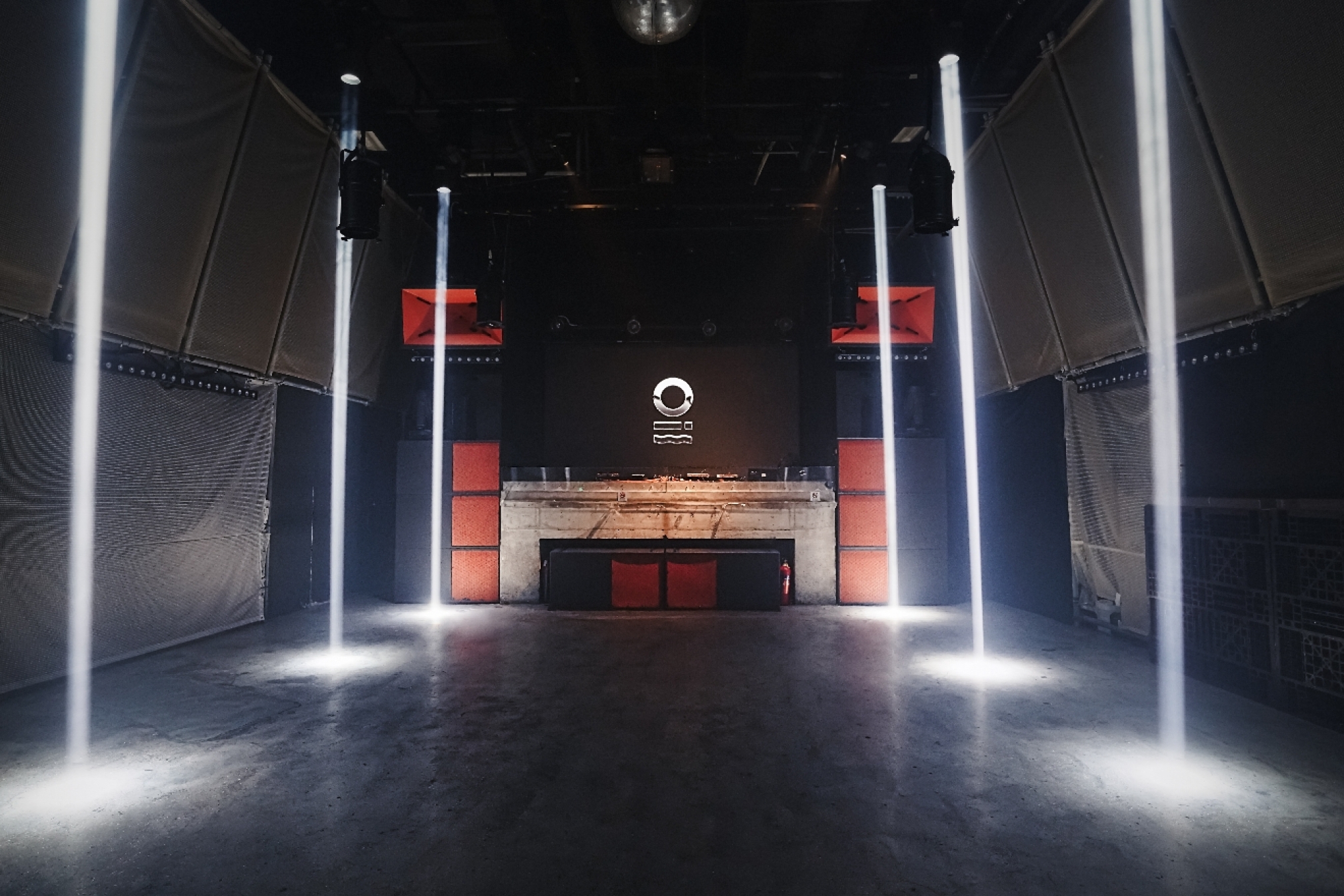
Now eight years in, the 300-capacity venue has grown from a local outlier into a vital connective hub for China’s underground. It’s a space where artists, promoters, and dancers have built something sustained, collective, and unmistakably their own without bowing to external pressures, jumping on trends and other pitfalls that clubs often have to fall into.
Be that the eye-catching artwork, impressive space and sound, or the forward-thinking styles that seldom are found outside of the club, over the years, it’s become one of Asia’s ‘IYKYK’ spots.
To mark the anniversary, OIL didn’t look outward. Instead, it turned inward, hosting a three-day, three-stage celebration with a fully China-based line-up with 72 (yes, seventy-two) artists, spanning pioneers from the ’90s through to the new wave shaping the country’s club sound today.
More than a well-deserved victory lap, the line-up felt like a snapshot of a scene still writing itself in the best possible way; looking back and forward simultaneously.
We spoke with Yangyang (founder), Sulk (booker and artist), DJ 86 (booker and stage manager) and Bella/Sixuan (advancing and hospitality), as well as artists yueming, NOSCOPE720 and Kaishandao.
As you read on about the past, present, and future of China’s club scene through the lens of OIL, listen to what Sulk, yueming b2b NOSCOPE720, and Kaishandao brought to the table for this landmark event.
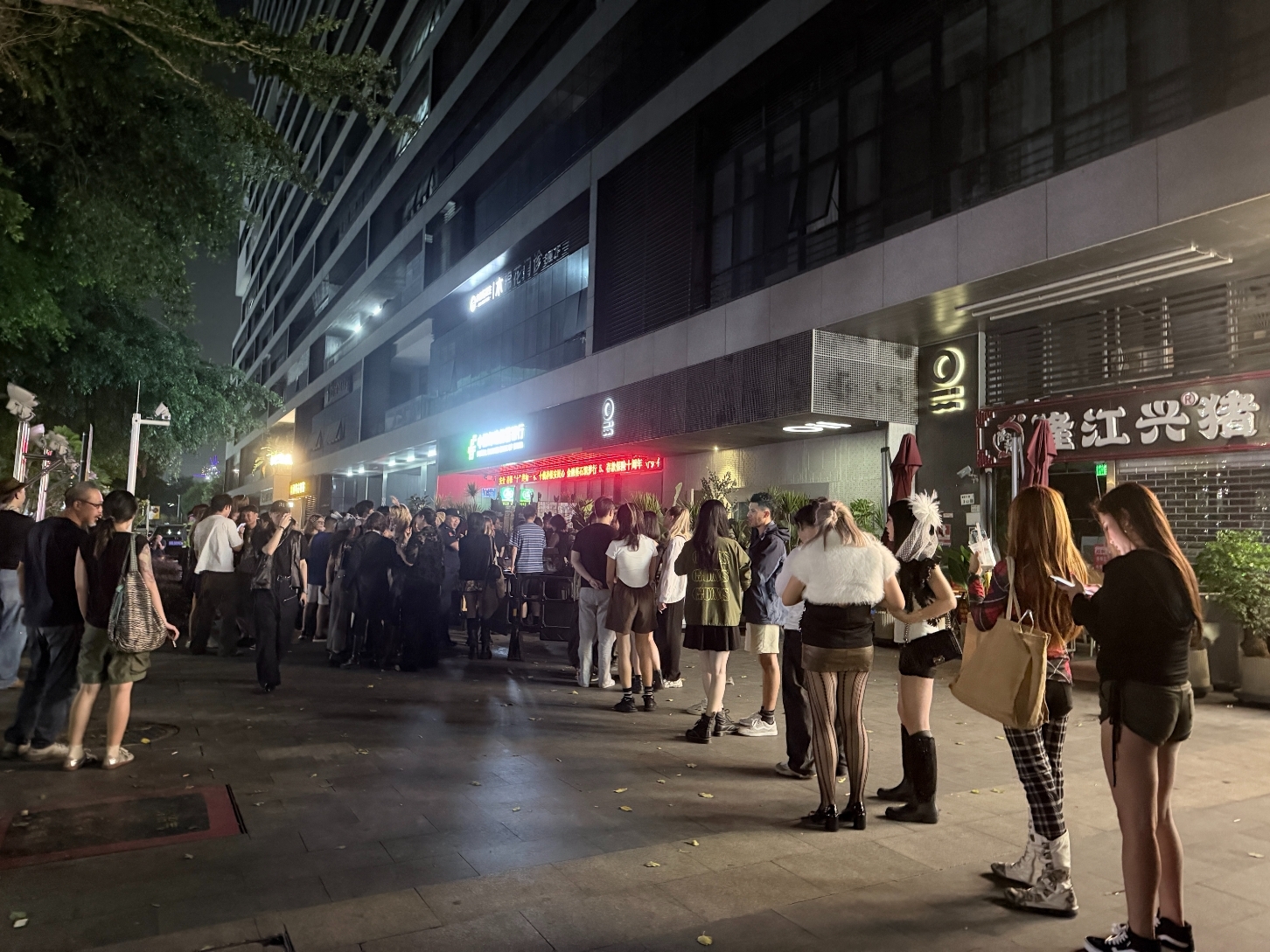
Firstly, how was the anniversary event?
Yangyang: While the global environment is currently not in a good place, we hosted a very precious gathering to hug our friends.
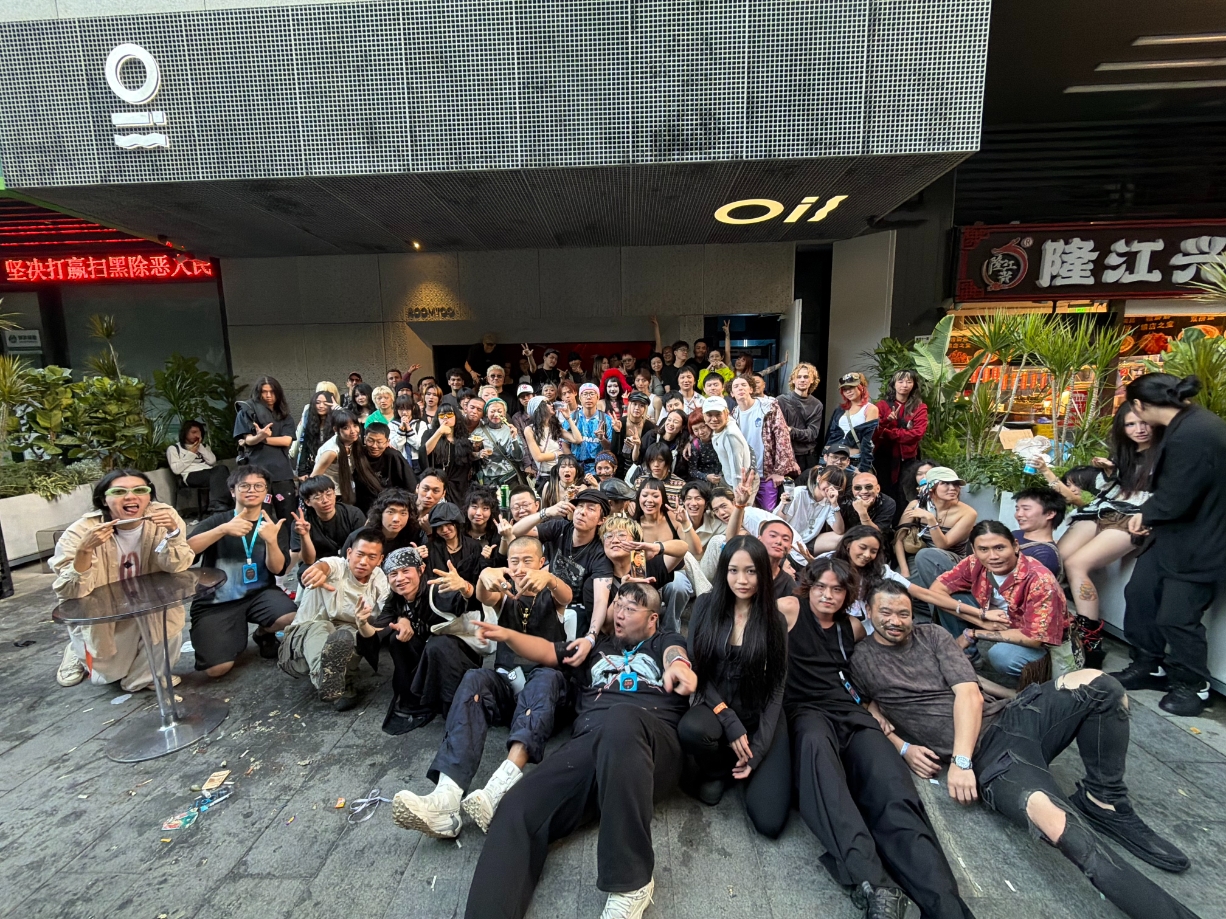
Sulk: It was amazing! A very precious moment for all the friends and people who work in the industry to gather together and have some experience exchanges, or just to have fun together. It was dramatic; had some happy tears in my eyes, haha.
Sixuan: We decided to shift our focus back to the domestic scene and use the anniversary as a chance to bring old friends together. For us, this is not just an event, but more of a rare opportunity to genuinely reconnect with fellow practitioners in the local community who have walked alongside us all this time.
We wanted to see something more relaxed and heartfelt during this anniversary, a gathering where everyone feels at ease, has fun, and enjoys being together. Seeing that kind of moment naturally reminds us how meaningful it is, simply, to reunite.
Kaishandao: The anniversary was amazing! I flew down from Chengdu to attend all three nights – it felt like a mini-festival. It was really fun to reunite with the OIL crew and friends from all around China, who had all flocked to Shenzhen for the party. So many legends on the line up who often work weekends at their own clubs around the country, so it was awesome to have everyone just let loose together for a weekend at OIL!
On another level, it was really grounding and encouraging to be part of it. The community surrounding the club are just top notch, and the staff are unparalleled in their professionalism and dedication. Danced my butt off. I really enjoyed the newly opened Room Too - love the window behind the booth and the cosy after-hours club vibes.
I played my live set on Day 3 after Sulk (who killed it) and feel really happy with how it went. I’ve just swapped my drum machine from Machinedrum to Digitakt II, and this was one of the first gigs I’ve played out with it. The stage sound is unparalleled, and the sound on the dancefloor was, well, goes without saying ELITE.
yueming: It was definitely a special one. With a full China-based line-up, it felt like what was described as a union of the whole Chinese electronic music scene. We only started listening to and playing electronic music in the last two years, so there were many faces we had never seen or didn't know, but we gained a lot of insight from listening throughout the days.
How have the OIL crowd and energy evolved since you first started playing there?
Sulk: Honestly the crowd has been changing since the beginning, but in my opinion, the plus side is OIL has been trying to create a scene that includes all kinds of dance music, so I'm really happy that the audience in Shenzhen are quite open minded to what we're trying to bring to them.
Kaishandao: The vibe and crowd at OIL have always been fantastic and really know how to go apeshit on the dancefloor.
yueming: Personally, I’m seeing a trend of opening up: different demographic crossovers, younger people stepping into the club, or people that don’t usually listen to the genre. But as always, even for the first-timers, people at OIL immerse fully in the music and show respect to others around them.
2_260213_054309.jpg)
What’s something people outside China often misunderstand about its underground scene?
DJ 86: We are not rich.
Yangyang: Actually, I don't really know how people outside of China view the underground electronic music scene in China. However, since electronic dance music and club culture entered China relatively late, especially the underground electronic music scene, the overall audience base in China is still quite niche.
For the most part, the audience of OIL still decides based on who the guest is that night. Some outstanding artists who are already well-known abroad, if they are not particularly popular outside their own circles, we need to put in a lot of effort in promoting and advertising when inviting them over. Even if their fees are reasonably matched, there is still a risk of loss in terms of ticket revenue.
Sixuan: Sometimes we hear visitors at the door who’ve just arrived in China, excitedly talking with their friends about discovering this club for the first time. We also meet practitioners from places where rave culture still feels quite scattered, who come up to us and say it's reassuring to see that similar things are happening here, too.
After years of scene exchanges and shared experiences, it feels like the misunderstandings people used to imagine aren’t really such a barrier anymore. For those who genuinely want to understand the scene, the information and the connections are already within reach.
Kaishandao: There’s a lot of misunderstanding about China in general. Many people are shocked to hear there is a music scene in China at all due to the internet and language barriers, as there’s often a disconnect between the activity happening within China and the audience that are able to access it from the outside.
yueming: The majority of people outside of the mainland hardly know about the scene, since it’s been very self-sustained and has only been opening up in recent years. This is why clubs and promoters play such a crucial role in China, not only to promote events locally, but also using worldwide social media to inform the outside world of what's happening.
Do you approach a set differently when you’re playing at OIL versus elsewhere in Asia or internationally?
Sulk: I think one special thing about the scene in China is that people are usually pretty sober, and in the South especially, they don’t seem to drink as much. Because of that, I sometimes try to be a bit more direct in my sets and take slightly fewer risks with my selection and mixing.
At the same time, doing a strong warm-up or closing set that keeps the crowd on the dancefloor can give the headliner space to be more edgy or experimental than what the audience usually expects from them. That also allows us to take risks when booking artists whose music doesn’t follow a traditional dance music direction.
Kaishandao: When playing at OIL I definitely lean towards my more bass-heavy tracks to lean into the soundsystem, but also enjoy experimenting with new tracks I’m working on because the monitoring is so good and I feel so at ease in the booth. The crowds are super supportive and receptive and will catch a vibe off whatever you’re doing. It’s the best of both worlds.
yueming: To be honest, I still haven’t found the best way to prepare a set for OIL. Every time the mood is slightly different, whether hosting an event there or playing as a guest. We have definitely been in a comfort zone playing in Hong Kong, so playing at OIL is a bit different. Hopefully, with more experience playing there, I can deliver a set that immerses the whole room.

What kinds of records only work in a room like OIL?
Sulk: We have a good soundsystem that works well with everything (I guess?), hehe.
DJ 86: Honestly, I feel like OIL is always open towards every music style, which means that any style of music can be played there. I’ve been thinking about this for a bit and at this point I’m convinced there’s just no definitive answer.
Yangyang: Shenzhen is a young city, and the audience of OIL is also young. They usually like music with strong dopamine. Being adjacent to Hong Kong, it has been influenced by Hong Kong culture over the past 30 to 40 years. Tracks that evoke shared public experiences also work well at OIL. Most records that are successful in clubs in other Chinese cities also perform well at OIL. Overall, Shenzhen’s audience has a high level of openness to different music styles and genres.
Kaishandao: Basically, everything works at OIL. (I’m a live performer, not DJ).
Yueming: I would drop the filthiest bass or dubstep track and feel the whole earth vibrate with me.
What challenges do DJs in China face that aren’t always visible from the outside?
DJ 86: Because of the system, it hasn’t been that easy for people who are interested in this kind of music, so bringing new blood into the scene is pretty hard. There’s often a big gap between DJs and audiences, which affects track choices. And that also makes it really hard for DJs to feel confident with the dancefloor. But things are getting better with the new internet era. The new generation is becoming more open to different music.
Yangyang: Compared to audiences in places with a long club history, the audience here is less experienced in club scenes, has a less profound and extensive understanding of music, and is less patient on the dancefloor.
How do you see China’s underground scene different from the rest of Asia? What makes it tick?
Yangyang: The uniqueness of Chinese electronic music and club scenes lies in their ability to gradually form a highly contextualised resistance aesthetics through cultural blending and diverse spatial forms, within the gaps between local policies and markets.
Compared to other regions in Asia, it is more deeply rooted in the local social changes, while leveraging digital technology to transcend geographical limitations and maintaining a somewhat distant dialogue with the global underground network. This "semi-underground" state, seemingly imposing certain restrictions, actually shapes a unique development.
In China, the club scenes in different cities also show differences, which are closely related to the cultural background of each city.
Beijing has the longest underground music history in China and is not limited to the electronic dance music field; Shanghai, with its internationalisation and diversity, has given birth to numerous distinctive spaces, not just in the form of clubs; Chengdu, as the representative of the scenes in the southwestern region, its atmosphere echoes the leisurely and vibrant regional character of Sichuan; Shenzhen, as one of the youngest cities in the world and adjacent to Hong Kong, was influenced by it in the early days and later had a long period of club absence.
With the emergence of OIL in recent years, things have changed; more young people have entered this field, and there are more other spaces and organisers. Overall, the development paths of the scenes in each city are different, jointly forming the diverse appearance of China's underground electronic music ecosystem.
The labels (such as SVBKVLT, Genome) and musicians (such as 33EMYBW) emerging from this environment have deconstructed different music genres and incorporated local cultural symbols, gradually forming a unique expression that is distinct from the Western electronic music system. It can be said that the club scene is a melting pot for the collision of Chinese youth culture, a carrier for the younger generation to resist mainstream consumerism, and an ark that carries their creativity, curiosity and exploratory spirit.
NOSCOPE720: It’s very “scientific”. Because of work culture and traditional values, many Chinese people are highly work-oriented. This makes every weekend extra precious for ravers. They have a unique dance philosophy. Most of the time their body movement is just about a little bit of stepping back and forth, probably because daytime work has already consumed certain energy. As a result, they usually save their energy for the craziest part. When that moment comes, they would go with 200% of their strength.

What do you hope the Chinese underground scene looks like five years from now?
Sixuan: Hopefully everyone's love for the dancefloor and the scene never really fades, and the music still means something to them. And for those who’ve chosen to fully commit to this life, the returns can get better over time; not just financially, but in being seen and respected.
Yangyang: It is hoped that more young people will join this scene, whether as producers, DJs, promoters, visual artists, or simply as audiences who are passionate about it. No matter what their identities are. The more people participate, the more fun and interesting it will be, and the more promising it will be.
Name one DJ you’d love to play back-to-back with.
DJ 86: Bobby Beethoven or with Evian Christ at Trance Party.
Sulk: It changes everyday, but for today, probably Lena Willikens.
Bella: For now it’s ISOxo.
NOSCOPE720: Fold. His releases and mixes remind me of early 00s party scenes, chill, groovy, and casual. Playing with him would probably feel stress-free; more like vibing with the crowd than performing in front of them.
Are there any producers and DJs in Asia that have recently caught your attention?
DJ 86: jackzebra,61H,銀製品Agprod.
jackzebra already played at my label’s party in early January 2026. If I had to describe that night with one Chinese word, it would be “拽” — confident and bold. 61H is on his way to the next superstar, especially after his latest release ‘败家子’ on Genome 6.66mbp. 銀製品Agprod is one of my label artists, and we’re really proud to have them. We’re also working on a major release project currently, which will be coming out later this year.
Yangyang:For producers, I think 33EMYBW and Gooooose have to be mentioned, even though they’re already very well known. There’s a cliché saying, “What is native belongs to the world.” 33’s music production isn’t just something that’s obviously “Eastern”; it develops into something no one has experienced before. Gooooose’s music also makes me feel wise, lol.
As for DJs, my personal favourite is lv-zhiliang. He has a deep and wide-ranging collection, just like magic for your feet, haha.
Kaishandao: SHITTYHUNTER2, a live ghetto house duo from Osaka. I saw them play live for MIDISAI at Daphnia and it was insane. The bass, energy and theatrics…plus the fact they drank about 18 beers during a 60 minute set, really had me sold.
NOSCOPE720: phritz. His music contains a lot of Japanese vocals and trance elements, weirdly blended with house patterns. This combination creates an unusual harmony that sounds so fresh.
Your go-to closing track?
Sulk: Too many closing tracks have worked well with everyone swaying lovingly on the dancefloor at OIL, haha. Come, stay til the end, and find out which one you get!
DJ 86: jackzebra ‘你怎么知道’.
Bella: bk beats ‘不需要人陪我’(”Don't Need Anyone Else”) ft. Azelsgöattii.
Kaishandao: I often close with ‘To the East Coast’, which is the first track off my first EP ‘Homeland’. I like to have a little wind down emo guitar moment at the end and send people off on a cozy note.
NOSCOPE720: ‘Go Bang’ by SBTRKT. It feels like a grand ceremony. Every time I listen to it, it’s like sitting alone in a theatre watching an endless credit crawl after everyone has left.
Listen to Sulk, yueming b2b NOSCOPE720, and Kaishandao's sets from the OIL anniversary event on Mixmag Asia’s SoundCloud.
Henry Cooper is a Writer at Mixmag Asia. Follow him on Instagram.
Cut through the noise—sign up for our weekly Scene Report or follow us on Instagram to get the latest from Asia and the Asian diaspora!
