


 Interviews
Horseboyy on ‘Horsepowah’: “I wanted to slow it down a bit, explore new textures, and switch up the palette”
Jacob Mendoza interviews the artist about his four-piece debut house EP as he trots beyond his usual happy hardcore sound
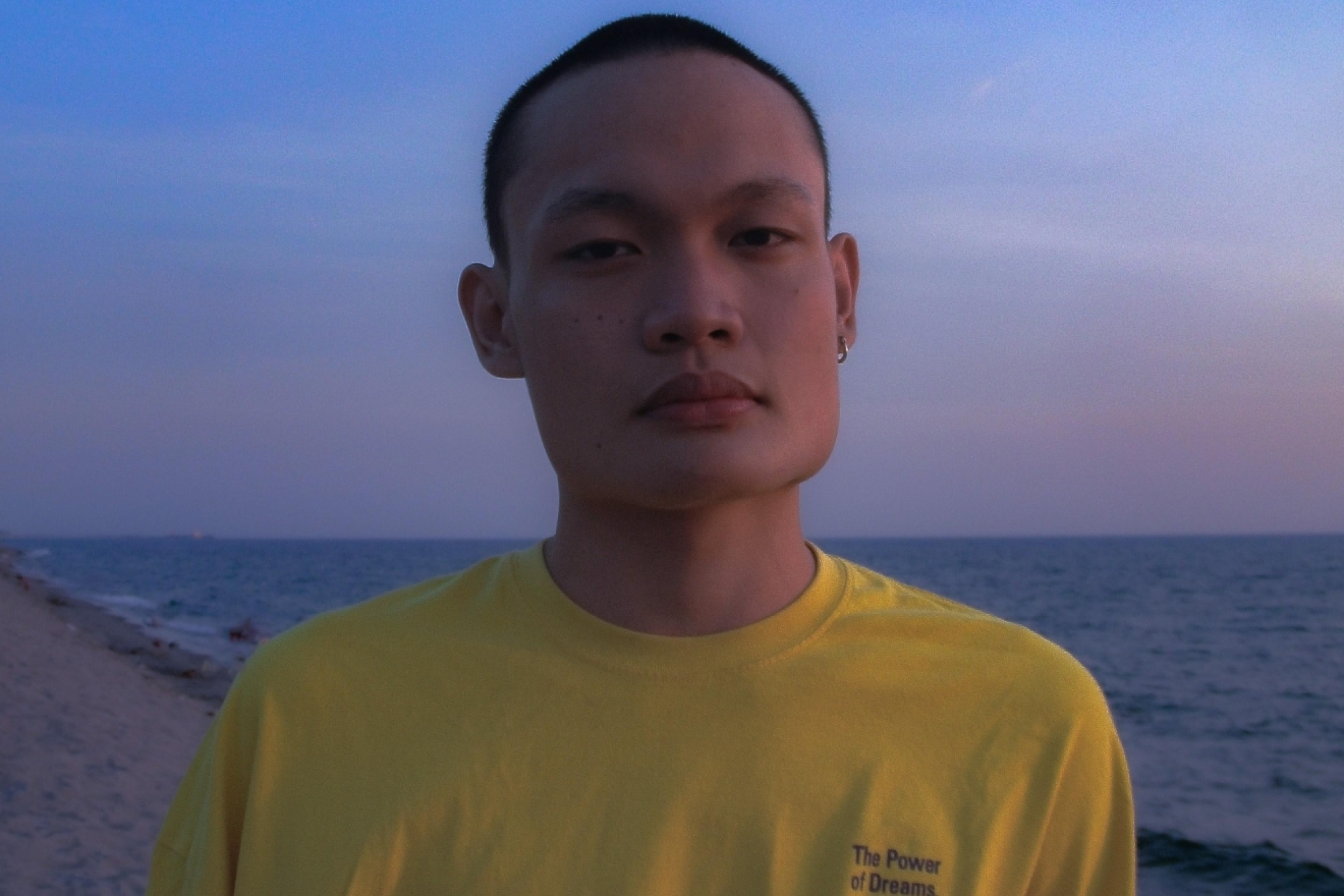
Just a few hours after birth, a mare’s foal can already walk—and even run. If you somehow compressed a year of Manila nightlife into a single horse’s hour (entirely possible in a chemical daze), the Horseboyy feels like the foal: already up and sprinting with an instant banger of a debut EP.
Released last month, ‘Horsepowah’ marks the debut of Manila-based DJ Horseboyy, known for his happy-hardcore sets. But ‘Horsepowah’, a four-track project, showcases a more house-leaning sound, but only a few gallops away from his happy hardcore foundation, just with a different kind of kick.
As Don Quintos states on the EP's liner notes: “On the A-side, ‘Third Base’ kicks off with big-room urgency, pulling the reins of the dancefloor. ‘Fujoshi’, an 808-driven banger, follows with deep grooves and a sensual pulse, weaving in Balearic-tinged textures and track energy that hint at something more playful beneath the race. The B-side opens with ‘Cheap Steam (Hold Me)’, a potential future classic—a slow, hazy burner laced with vocals from Gal Costa’s 1970s gem ‘Vapor Barato’. ‘Horsepowah’ closes with ‘K Talking’, a hypnotic beach anthem that melts classic ’90s house flair into a blissed-out two-step paradiso.”
Although this may be Horseboyy’s most formative work yet as a producer, it’s far from his first rodeo. He’s contributed fast-paced, high-energy tracks for Sounds Nais’ past two compilations and worked on many of the tracks for ‘SPRAK’, the debut album of hardcore rapper Pette Shabu.
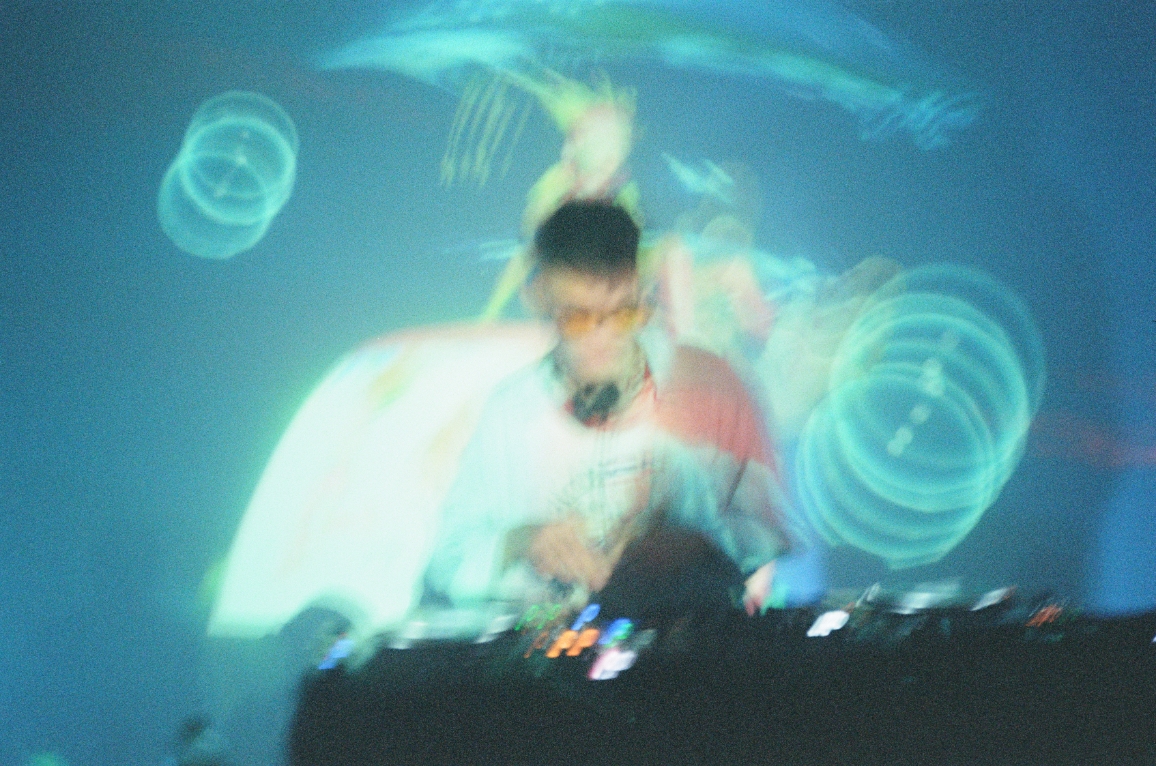
‘Horsepowah’ isn’t just a declaration of his creative fluidity–proof that he can make excellent house as well as banging happy hardcore–but also a snapshot and an ode to the music that will never get old. Since the release of the EP, he has opened for Jasphonica, a dreamy club night party focused on uplifting music, and has been preparing for an upcoming show with Minna-no-kimochi.
Before Horseboyy rides into another phase of life, we ask where he’s at, how he’s been, and what he did to create this EP and release it into the world.
Where did the moniker ‘Horseboyy’ come from?
This story’s funny—I didn’t want to use my first name, Juan, because it felt too generic. I actually started as “huwantwo”, but that felt too close to my name and, not gonna lie, sounded corny as hell. I was hesitant about “Horseboyy” because there’s already a HorsegiirL, but I don’t mind the association—sister for real. People always ask, “Why Horseboyy? Is it because of HorsegiirL?” And I’m always like, erm, actually!
I was born in 2002, and my Chinese zodiac is the horse, so it felt right to use it for what my “sound” began as. There’s also this specific memory from when I was a kid—I was running around the house butt-naked, waving my briefs, and my lola (grandma) was shouting, “Oohhh andiyan na yung kabayo!” (Here comes the horse!) That stuck with me. Memories!
Do you have a favourite horse yourself? Or animal?
I’m my own favourite horse. I’m actually fond of penguins.
How long have you been into music, and what’s your first memory of it?
If we’re talking firsts, it would be Barney and Disney princess movies. I love musicals! I also remember being obsessed with ‘My Heart Will Go On’ by Celine Dion. This was during the Limewire era—I’d just shuffle my mom’s laptop library full of 2000s music: Keane, Cranberries, Norah Jones-type senti songs.
Later, Adventure Time on Cartoon Network became my gateway to electronic music. The show’s composers, Casey James Basichis and Tim Kiefer, were doing bleep-bloop IDM that reminded me of Bogdan Raczynski—synthy, chiptune, autotuned goodness.
I started experimenting with Garageband, emulating AT’s sounds with sadboy vocals. I was into The Smiths and “Tumblr music” like Grimes at the time.
When did you start creating music? How did you learn?
I started in junior high, messing around with Garageband on my iPad Mini. It was mostly self-taught—figuring things out as I went. I wasn’t the kind of kid enrolled in piano classes or anything. What sounded good to me back then still does now, and that’s kind of my approach to music. If it sounds good, it sounds good.
Eventually, I got into DAWs. I had my phone, a dying Lenovo, and a dream. At first, it wasn’t serious—I started with songwriting. Most early tracks had lyrics I wrote and performed. Having access to better hardware helped, and now I mainly work on Ableton with a cheap secondhand MIDI controller.
Being part of the nightlife scene also helped me unlearn the “lone genius” mindset. I’ve met people I can nerd out with, and I’m still learning, still honing the craft.
Read this next: The Mixmag Asia Clubbing Guide: Manila
Tell us how you became enamoured with happy hardcore. What does it mean to you?
Between 2019 and the pandemic, I got into hyperpop and became obsessed with PC Music. My feed was flooded with fast, high-energy, DDR-style 90s Eurodance tracks. Danny Harle’s ‘Boing Beat' stood out. I didn’t know what happy hardcore was yet.
Later, I got close with my DJ mentors Wilson Ang and Christal, who were already into techno. They inspired me to dig deeper into the fast-paced sound I loved. That’s when I found ‘I Kiss Your Lips’ by Tokyo Ghetto Pussy—a 1995 happy hardcore banger. It was super formative. I found out it was a side project of legends Jam & Spoon, which led me into a happy hardcore/gabber/trance rabbit hole.
Happy hardcore, to me, is one of the purest, most intentional subgenres in dance music. Gabber is rage; happy hardcore is joy. The chords, melodies, vocals—they all scream, “Hey! There’s joy in this world, be free!”
And house music? They're two very different sounds; how did you fall in love with this genre?
I just did. Charot (just kidding). But seriously, Shanti Celeste and Peach’s b2b at Dekmantel 2023 rewired my brain. Around the same time, Wilson—who had started exploring deep house—inspired me to explore it, too. That connection really encouraged me to try something new while still being myself.
House has grooves and space that happy hardcore (at 160+ BPM) doesn’t. It brings out a more technical, focused side of me; finding those split-second euphoric moments in movement. There’s also room for play. I’ve recently been into more minimal house. Small details in the arrangement give me that kiliti (tickly) feeling; total ear candy.
Honestly, the main difference is tempo. Speed up a 127 BPM classic house track and you basically get happy hardcore.
Read this next: Making waves, digging for treasure & preserving music at Siargao’s Barbosa
What about house music captivates you?
I love surprises. The kind of house I like takes you somewhere unexpected mid-track, then brings you back. A good example is the second track on the EP (‘Fujoshi’)—it completely switches up halfway, then returns to the original groove. That contrast satisfies me.
I also love blissful 90s rave house—piano, vocal samples, breaks, a touch of 303, even violins. ‘High’ by Hyper Go Go is a favourite. It’s euphoric AF. In a way, the essence of happy hardcore is still there; I’m still that guy.
Why did you make a house EP first, not happy hardcore?
Good question! I do plan to make a happy hardcore EP at some point. But after that Peach set, I had a “house itch.” I wanted that “yeahhhh” moment when the open hat hits—and you can hear a lot of that on the EP.
It was a personal challenge, too. My earlier work leaned into maximalist, experimental hard dance—this time I wanted to slow it down a bit, explore new textures, and switch up the palette.
Also, I just didn’t want to be boxed in by genre. I wanted to prove I could make a four-track, sub-130 BPM house EP and still sound like me.
What was the ethos for this debut EP, if any?
The ethos of ‘Horsepowah’ was simple: release your music into the world. I was tired of hoarding demos. I wanted to contribute something to the local scene.
Anything unique from the production or creative process?
Each track was kind of a diary entry—processing internal and external stuff from my personal life. While it’s not unique to draw from personal experience, it felt meaningful to me to translate that into dance music. Four tracks, four little diary entries.
Read this next: Women’s month spotlight: Electronic Filipino women & queer DJs who are fighting the fundamental lack
Who’s the most underrated DJ in Asia, in your opinion?
Caretaking, aka Wilson Ang.
Take us on a typical night out in Manila—where do we start, and where (and when) do we end?
We start with angkas (motorbike ride) pre-game tunes—what we listen to depends on the vibe: who’s playing, what’s the venue, what’s the mood?
First order of business: yosi (cigarette) outside the venue. Crucial for catching up and figuring out the night. Then we party. If the night’s looking a bit stale, we either:
A) Go home,
B) Chill at someone’s designated afters (I love a good afters!), or
C) Linger in the smoking area until things magically turn fun (which they usually do).
The night ends with a wholesome, uplifting angkas ride back home.
What are your hopes for Manila, the nightlife, and the world?
I’m very hopeful for the future and expansion of Manila’s nightlife, but I hope we never forget why we’re doing what we’re doing. I wish for a rich and expansive ecosystem that can support and understand each other, despite all our differences.
I also hope we reach a point where funding isn’t such a major issue—especially for younger artists. There’s still a lot to be done and many conversations to be had about how we can support one another. Honestly, even I don’t know where to begin with that—but I do hope we get there.
And I hope music continues to be a form of both release and resistance for everyone, everywhere. I think we’re globally heading into darker times, and I hope we don’t forget the one thing that has always brought us together: music. Let’s stay united through that.
Any closing remarks?
I want to thank all the key music movers in the scene right now. Without your efforts to keep things going, younger ones like me wouldn’t have the inspiration or space to do what we do.
A special thank you to you, Jacob, for being such a supportive friend throughout all this; our talks really helped me shape this EP.
And again, to Wilson—for believing in me and my music. I honestly wouldn’t have released ‘Horsepowah’ (or anything at all) without him. I probably wouldn’t even be DJing or making music. So much of “Horseboyy” is because of him, and I hope his memory lives on forever through the thing he loved most: music.
Jacob Mendoza is a freelance writer for Mixmag Asia, follow him on Instagram.
Cut through the noise—sign up for our weekly Scene Report or follow us on Instagram to get the latest from Asia and the Asian diaspora!
