


 Features
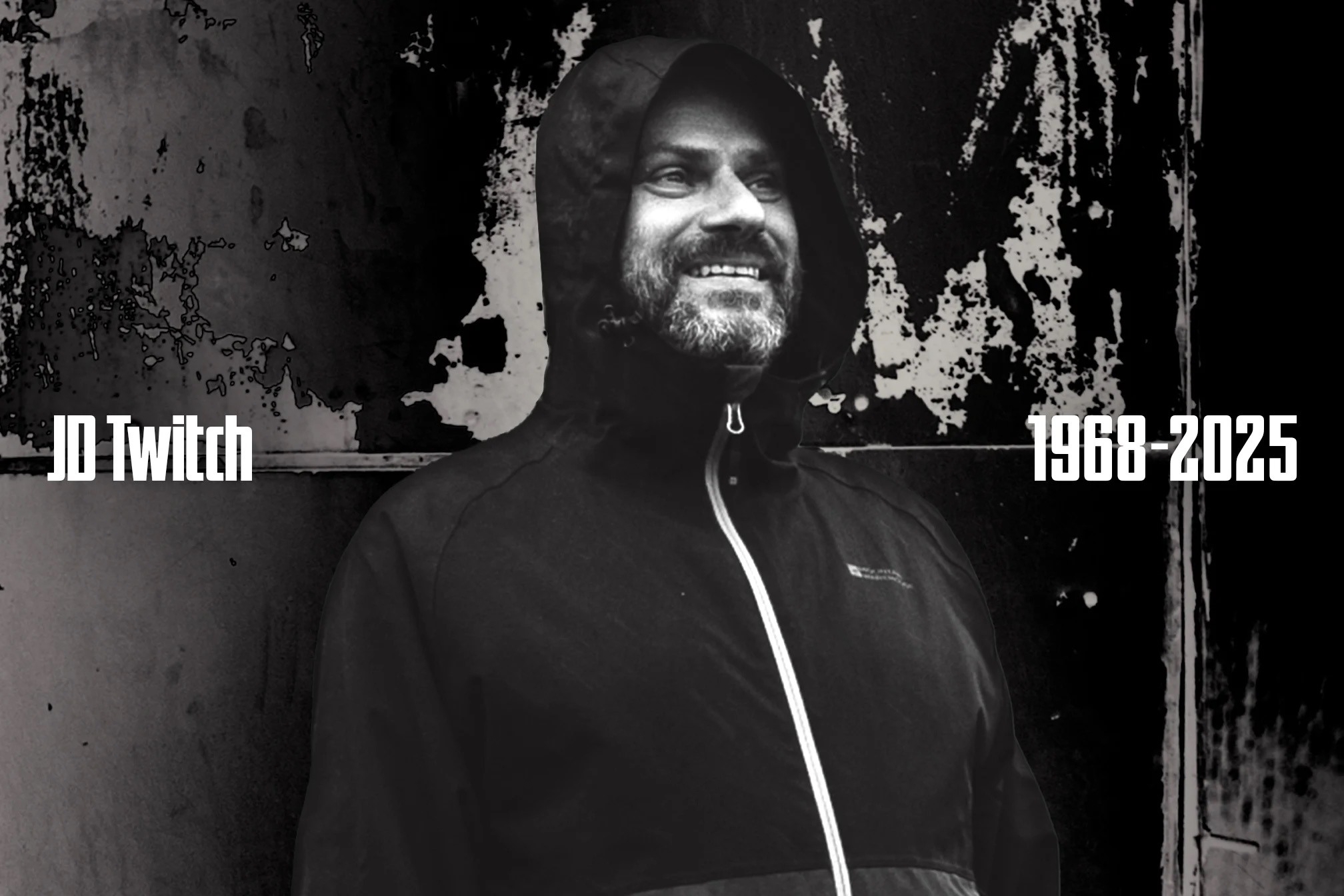
RIP Optimo’s JD Twitch: The dancefloor revolutionary who reshaped the sound of nightclubs
With an affinity for music styles across the spectrum and a fearless approach to DJing, JD Twitch tore down barriers and diversified what we now hear on dancefloors. David Pollock pays tribute
Clubbing has lost one of its most significant, transformative and widely loved figures with the death of Scottish DJ Keith McIvor, who as JD Twitch co-founded seminal Glasgow club Optimo (Espacio) alongside his DJing partner Jonnie ‘JG’ Wilkes. Blending their tastes for house, techno, disco, reggae, rock, post-punk and much more, the legendarily debauched, diverse and welcoming Sunday-nighter ran at Glasgow’s famous Sub Club from 1997 until 2010.
As well as Keith’s importance as a DJ and promoter – particularly in its early years, when Optimo helped tear down the fiercely-protected genre barriers of the 1990s – he was a label boss, producer, enthusiastic advocate of new and forgotten artists alike, and a warm friend and mentor to many DJs and musicians. Optimo charged full rate for big shows, but worked out cheap deals for young promoters trying something new.
Fiercely hard-working and devoted to their craft, but also quietly modest, Twitch and Wilkes were selective with interviews and rarely shouted about their achievements, so it falls to the rest of us to pay Keith his deserved due. To say he was one of the key players in the history and evolution of dance music in Britain is no understatement. He was the David Bowie of the dancefloor; he didn’t invent his medium, but he fucked it up and made it new like few before or since.
Born in Edinburgh and raised in suburban Balerno, Keith moved to Glasgow for university when he was 18, toying with unsuccessful nights in both cities. His first success was the Edinburgh club night Pure, which began in 1990 when he was 23. A successor to his and co-founder Andrew ‘Brainstorm’ Watson’s short-lived UFO, which was shut down by the police after Hearts and Hibs casuals started a dancefloor brawl, Pure was rebooted as a members-only party.
Pure predominantly played techno alongside house, rave and hardcore, and welcomed students, artists, day-trippers from Glasgow and the same casuals who’d torn the place up before, once they’d discovered ecstasy. When Irvine Welsh wrote in Trainspotting of violent, heroin-riddled 1980s Edinburgh softening up via the ‘90s’ clubbing wave, Pure was a big part of that.
The seeds of Optimo’s diversity were already being sown. Keith sent hundreds of faxes to record labels requesting live artists, giving Jeff Mills his European debut under his own name and Richie Hawtin his first UK gig. “We were really desperate to be the first people to put anything on, we were just obsessed with this music,” he told the Glasgow Clubbing Podcast earlier this year. “We had everyone from Chicago you can think of, everyone from Detroit. The list of people who played is insane.”
These DJs fed his hunger for something new. At Pure he heard Derrick May play Liquid Liquid’s ‘Optimo’, which gave his most famous night its name, and a David Holmes set inspired his later no-boundaries approach. By 1997 Pure’s popularity was waning, so he took over the Sunday night dead zone at the Sub Club, drafting in Northern Irishman Wilkes, who ran techno nights at Glasgow’s Art School.
For a club run by ‘serious’ promoters, Optimo’s diversity at first turned off many house and techno heads. Keith often referenced playing Joy Division at an early Optimo – not such a revolutionary act now, but to purists in ’97 it was like serving up a Sunday roast smothered in custard instead of gravy.
Adding live bands further cemented Optimo’s appeal to open-minded outsiders. Local heroes Franz Ferdinand played, while Peaches, Grace Jones, The Rapture and many others appeared at Optimo events. James Murphy was famously touring sound tech at The Rapture's gig, where he befriended Twitch and Wilkes, who later booked one of LCD Soundsystem’s first UK gigs at Optimo.
“They were just really good, solid dudes,” recounted Murphy when I interviewed him in 2010. “Grumpy and funny and a lot like my friends from home. It just became a really good relationship really quickly.” Optimo influenced the DFA label and parties in New York, and when Keith became ill Murphy had a limited run of ‘No DFA Without Optimo’ T-shirts printed up as a fundraiser.
Optimo survived the fire which destroyed the Sub Club in 1999, transferring to Planet Peach and Mas, then returning to their spiritual home in 2002 when it reopened. Their seemingly endless highlights were blessed with a mythical quality even at the time; the Hogmanay parties at The Art School; the wildly inventive Espookio Halloween parties; Apocalypse Optimo! in 2007, in a Sub Club filled with foliage begged from the local parks department and actors dressed as ‘Nam vets, explosions ringing out between the songs; the epic afterparties, causing many Monday morning sick notes.
“I went to Trash in London a couple of times and it was pretty good, but it was a very different crowd,” Keith told me in 2020. “Scotland and Ireland have the craziest crowds in the world, not Berlin or New York, and Glasgow is one of the craziest. It wouldn’t have worked in a different city, and our unique, diverse audience was crucial. We had more women than men, a huge gay element, a lot of people from bands.”
Optimo refuted the electroclash label they were sometimes boxed into, playing those records out before the scene even existed, and Keith hated the ‘eclectic’ description. Instead, he just liked music for dancing to. In the early 2000s he began mixing with Ableton Live alongside vinyl, giving his sets a personalised, live-edited touch, enhancing his ability to find beats and breakdowns in the least likely of places (most audaciously, I once heard him destroy a dancefloor in Edinburgh with the looped guitar intro to Rachel Stevens’ ‘Sweet Dreams My LA Ex’ slung over a big, dirty beat).
The 2004 mix album 'How to Kill the DJ (Part Two)' brought the duo’s style – and staple Optimo artists like Loose Joints, the Joubert Singers, Gang of Four and Basic Channel – to a new, international audience. This kick-started a global DJing career and yet more first-rate mix records bearing the aesthetic and integrity of artist albums in their own right, including 'Psyche Out' (2005), 'Walkabout' (2006), 'Sleepwalk' (2008) and 'fabric 52' (2010).
After approximately 570 editions, Optimo’s Sunday night edition went out on a high in 2010. Twitch and Wilkes still played regularly around Glasgow and abroad, while Keith focused on his beloved Optimo Music label, founded in 2009, and causes close to his heart. He regularly organised fundraisers for local foodbanks and anti-racism campaigns, and one of his imprint’s sub-labels was named Against Fascism Trax, making his politics clear.
The announcement in early July of Keith’s diagnosis with an untreatable brain tumour at the age of just 57 took everyone by surprise. A Crowdfunder was set up to move him into a private hospice, and the funding target was quickly met. To date it’s raised nearly £150,000, a symbol of the sense of solidarity Keith inspired in everything he did. The surplus will go to charities dear to his heart.
“Keith felt all the love that surrounded him, right to the very end,” said his wife Marissa in a social media post. “His kindness, creativity, and joy touched so many lives, and his music and spirit will live on.”
“Keith’s intensity and passion for life, for music, for creativity and for positive change simply never let up,” said Wilkes in his own tribute. “He was formidable. His belief in people and the idea that standing together, that our collective strength is powerful, was unwavering. I loved him for that.”
Wilkes will continue to DJ as Optimo, in line with Keith’s wishes, while a wealth of live sets, mix albums and remixes under the name await your discovery online. Optimo isn’t over. Its spirit lives on in multiple generations who experienced any dancefloor Twitch played for around the world.
Glasgow had his heart, though. “I can’t express how much we didn’t give a fuck,” he told me in 2020, with a typically boyish, enthusiastic laugh that belied his and Wilkes’ ‘bouncers at the gates of hell’ image. “When you had a regular, fanatical audience who would come every week and you knew you weren’t going to lose them, you knew you could do the most outrageous things possible. That made it easy to be brave.”
- Keith McIvor AKA JD Twitch, March 2, 1968 to September 19, 2025.
