


 Interviews
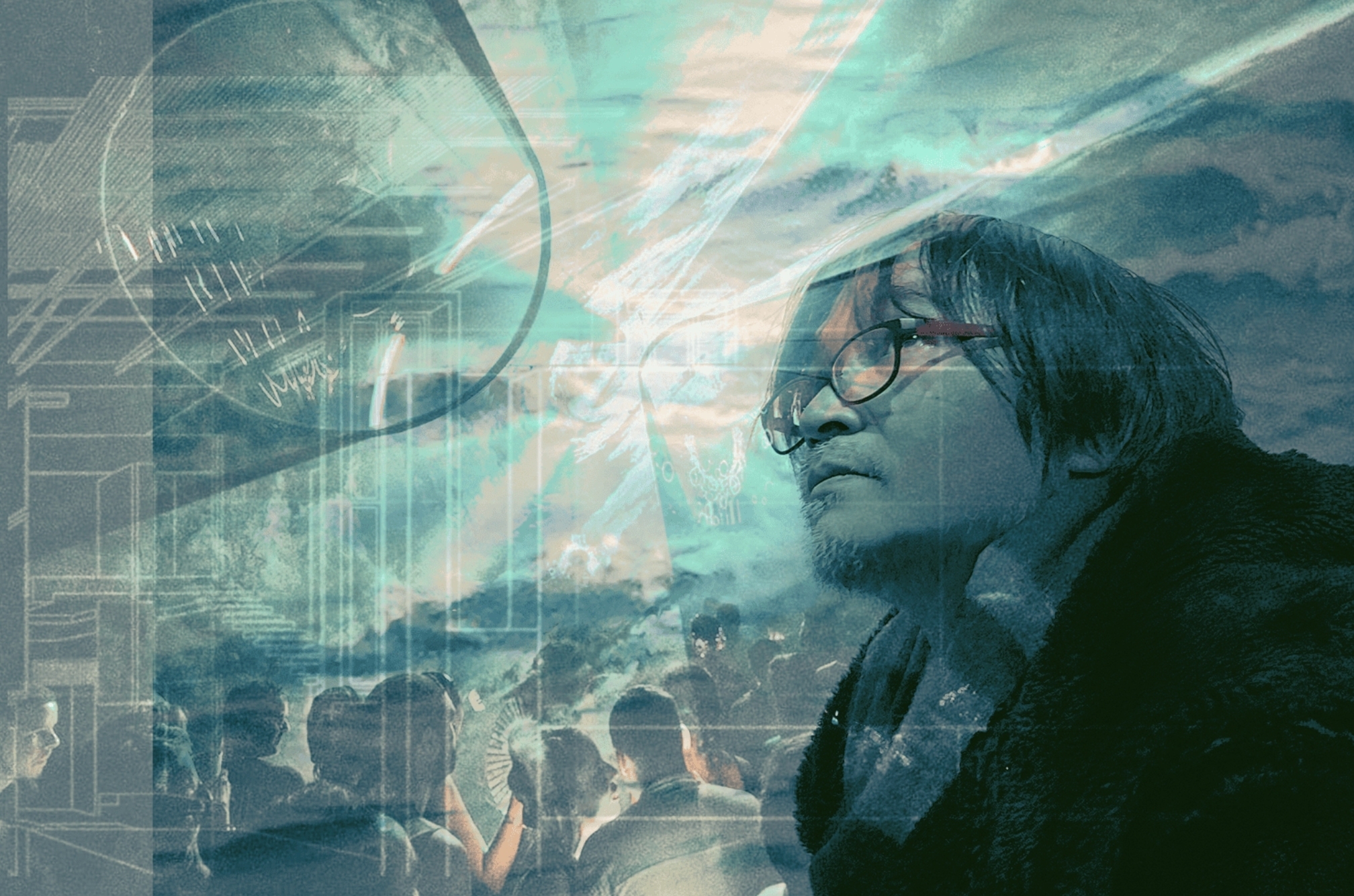
Jiro Endo is the man who bends the dancefloor with light & sound
The free-spirited architect approaches festivals with a critical eye, challenging standards to create spaces that deliberately blur the line between precision & chaos
Most will already know the feeling. You’re stepping inside the dark of The Quarry at Wonderfruit, and as the music begins to blanket you, you notice above those otherworldly spheres that hover like a system of private moons. The wooden dancefloor seems to curve in on itself, and you’re taken inside a field of sound.
That spatial sleight of hand belongs to Jiro Endo; architect, lighting designer, and the mind behind SOIHOUSE.
Trained in architecture and shaped by years in the Netherlands, Sri Lanka, Thailand and Tokyo, Endo approaches festivals less as events and more as living environments. Architecture, for him, is not a style but a way of thinking: a habit of questioning standards, of testing how space behaves once bodies, frequencies and weather move through it.
At The Quarry, originally schematically designed by Ab Rogers, Endo was tasked with developing the stage through space, light, visuals and sound. Since then, Endo and his team have refined it year by year. The circles remain, but the experience keeps shifting.
Sound leads every decision. Endo talks about decibel levels, acoustic images and dancefloor behaviour with clarity and focus. Music demands intensity, yet it seems that he is just as concerned with how people move, speak and feel within that volume. His team “jams” with the music using light and visuals, treating the entire space as an instrument.
Elsewhere, his experimental works quietly reconfigure the relationship between artist and audience, playing with proximity, elevation and the physics of listening itself.
Decades into his career, the seemingly restless creator is still chasing new forms of resonance, still resistant to neat routines or perfectly balanced lives.
In this conversation, he opens up about control and freedom, risk and intuition, and the long road from an emergency lighting console in 2003 to shaping some of Asia’s most distinctive dancefloors today.
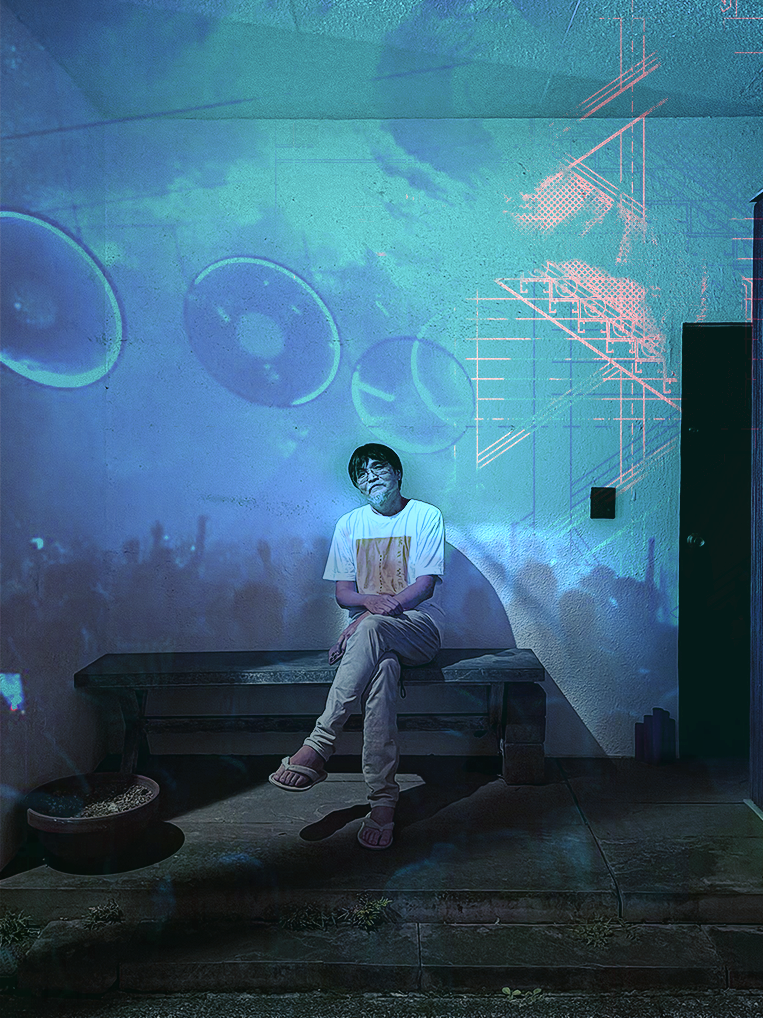
You mentioned that you have a background in architecture. Are there any elements from that discipline that you always carry forward into your creations?
Not only specific elements, but especially the way of thinking as an architect. It gives me a critical view toward standards and definitions in any industry, and it pushes me to always question them.
Your work sits at this fascinating crossroads between music, atmosphere, and nature. What do these three elements mean to you?
Do you experience them as separate conversations in your mind, or do they feel like parts of a single, unified language?
I try to design the atmosphere. It is a liminal space where you meet the world and nature. Music is sound that vibrates through the air in that atmosphere. These elements are both distinct and unified at the same time, and they are constantly shifting in ratio, scale, and resolution.
Nature is almost a collaborator in your work; the trees, the landscape, the time of day. It seems to play a fundamental role. How do you design with nature rather than just designing in nature? Or is there no difference for you?
Architectural design must respond to the site-specific context, both physically and phenomenologically. So nature, even artificial environments, is a real context that ignites the design process.
Read this next: The Mixmag Asia Music Guide: Japan
How does the sound design and artist line-up influence your stage design concept?
Sound design is the highest priority in stage design. It is developed in parallel with spatial design. Recently, underground dance and bass music have been central to my work. It requires over 100dB, yet people should still be able to talk on the floor without damaging their ears. The entire dancefloor experience must engage perfectly with these sound waves.
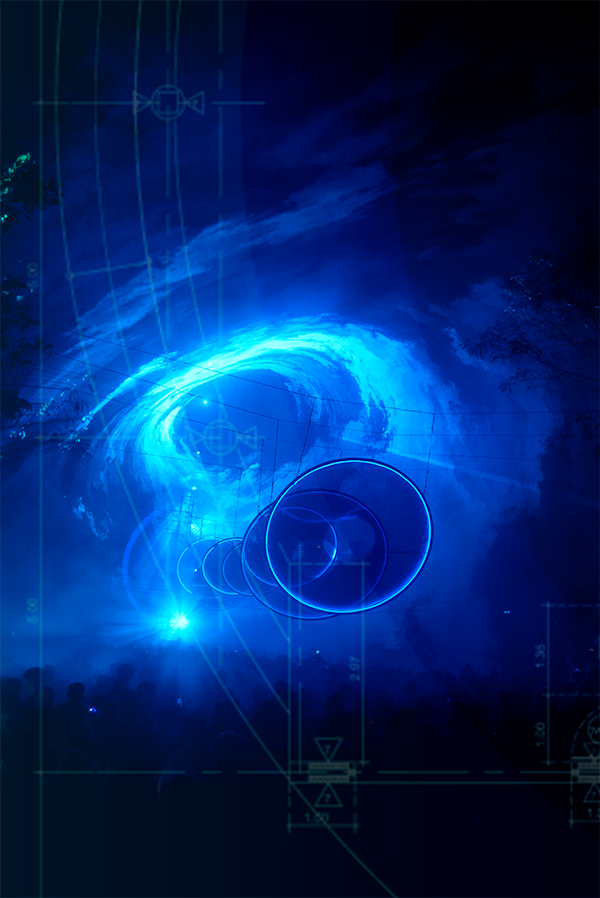
There's something supernatural about the moments you create. I can evidently say that it can make one feel completely cocooned, like they're inside the music rather than just watching it, in an unassumingly intimate way. How intentional is that? What's the secret?
First of all, my entire operator team must feel inside the music. We jam with it like a session band; except instead of instruments, we use lights and visuals.
You've been doing this for decades. Has your approach to creating immersive spaces fundamentally changed over time, or are you still chasing the same feeling you were going after in the beginning?
My fundamental sense has not changed. However, I am always searching for unknown approaches and methods to reach new resonance and create fresh experiences.
Read this next: Festivals in Asia to look forward to in 2026
You’ve presented installations for numerous festivals all over the world, but we’re most familiar with your work at Wonderfruit’s The Quarry stage. Can you talk us through what was your thought process of transforming a space like that into such an immersive experience? What do the halos represent and how do they tie into the technical aspect of your design?
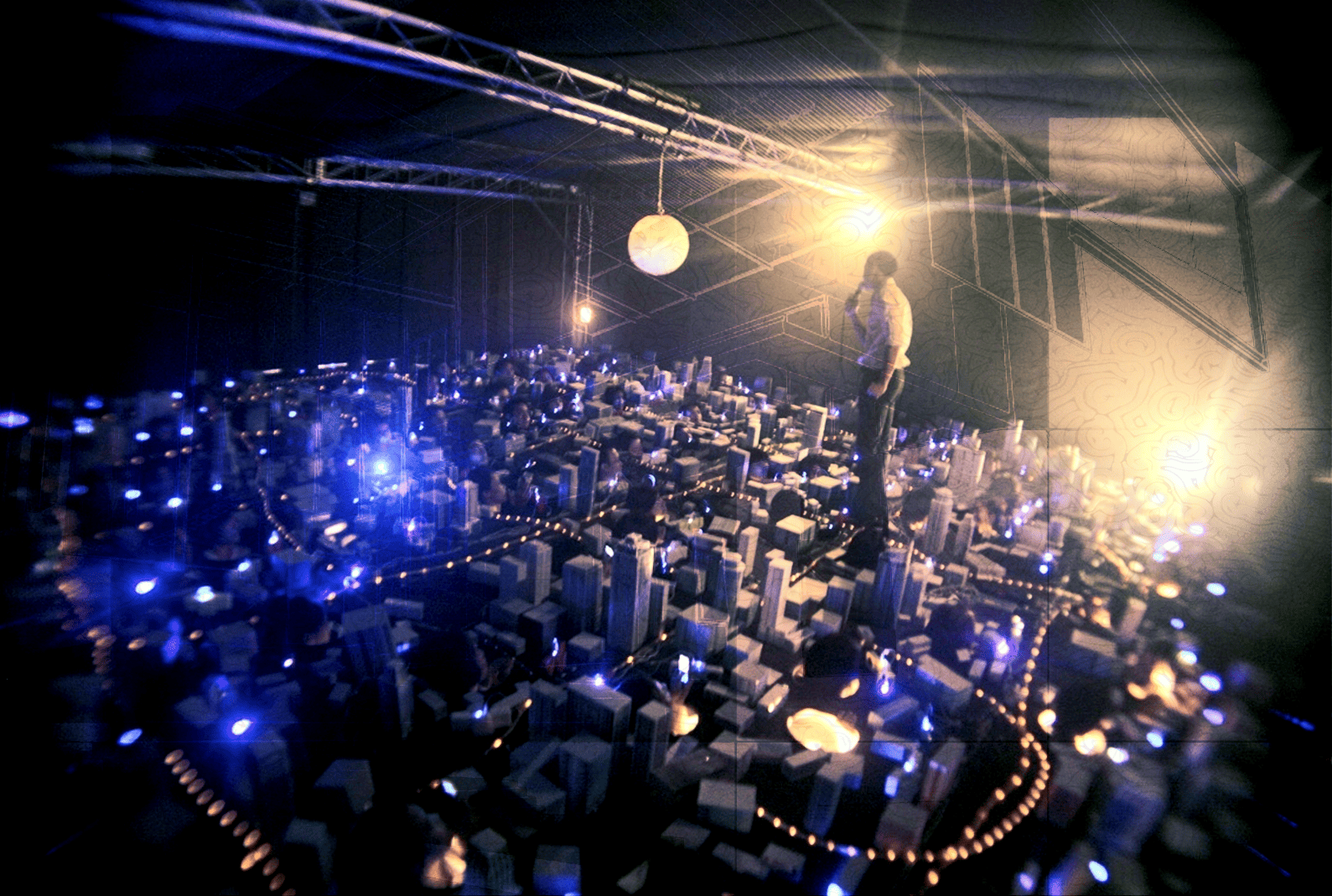
The first schematic design four years ago was issued by the architect Ab Rogers, who designed many pavilions at the Wonderfruit site. He (and I as well) love circular forms, which you can see there. I was assigned to develop, expand, and realise the stage through the design and operation of lights, visuals, and sound as “The Quarry”. This was already a strong site-specific context, as I mentioned before. Each year, we have worked to push it to the next level as a new version. The basic direction has been to amplify the depth of the space, weaving together the boundaries of the dancefloor, stage, and background.
Do you have a favourite piece of work or design (that you created yourself)? Can you tell us more about it and why?
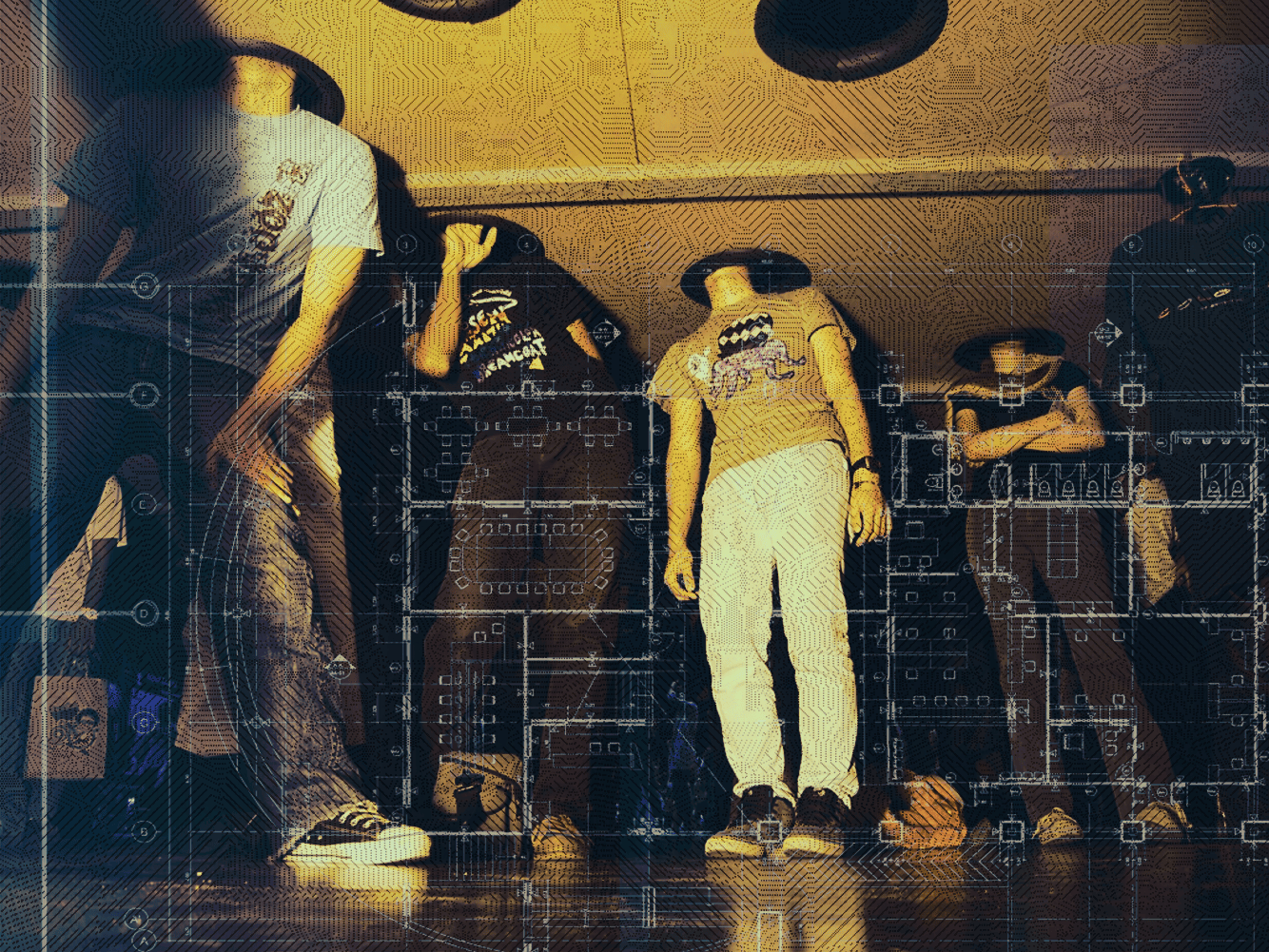
It’s difficult to answer. There are many favourites; they are like hundreds of our children. However, ‘Overhead Nightclub’, ‘720’, and ‘Small Mountain Music Festival’ form a series that questions the relationship between playing and listening.
“A series exploring the relationship between playing and listening” definitely interests us! For readers who may not be familiar with these pieces, could you share more about how they connect and what questions they’re asking?
‘Overhead Nightclub’ challenges the conventional “stage and floor” relationship. We rethought their boundaries by introducing a sloped surface that stretches over the audience’s shoulders. Artists can use this as an extended stage, walking over the audience, creating a dual-purpose space. This also limits audience movement in a way that creates social distance; a concept we became very aware of when we were facing the COVID-19 era. It’s about how design can edit the balance between control and freedom.
‘720’ started from a problem with 5.1 audio systems: great for listening in the middle, but not for dancing. I applied ideas from lighting design to sound. Ten speakers are placed equally on a sphere, with hi, mid, and low frequencies moving horizontally, vertically, and diagonally. Each runs at different beat fractions (1, 1/2, 1/4, 1/8, 1/16) to compromise the sound image and create a new acoustic experience. It’s an alternative soundsystem for dance music and the floor.
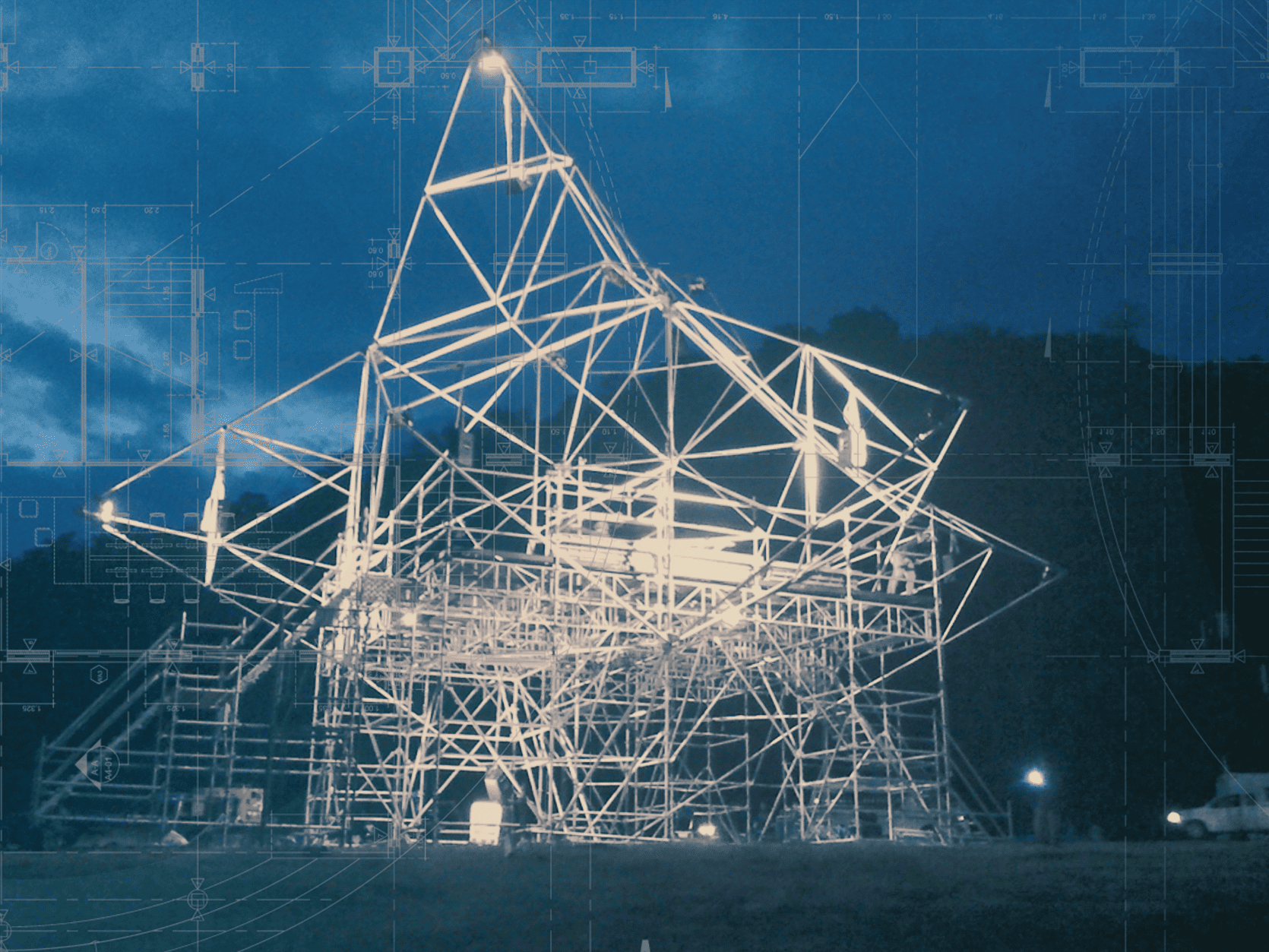
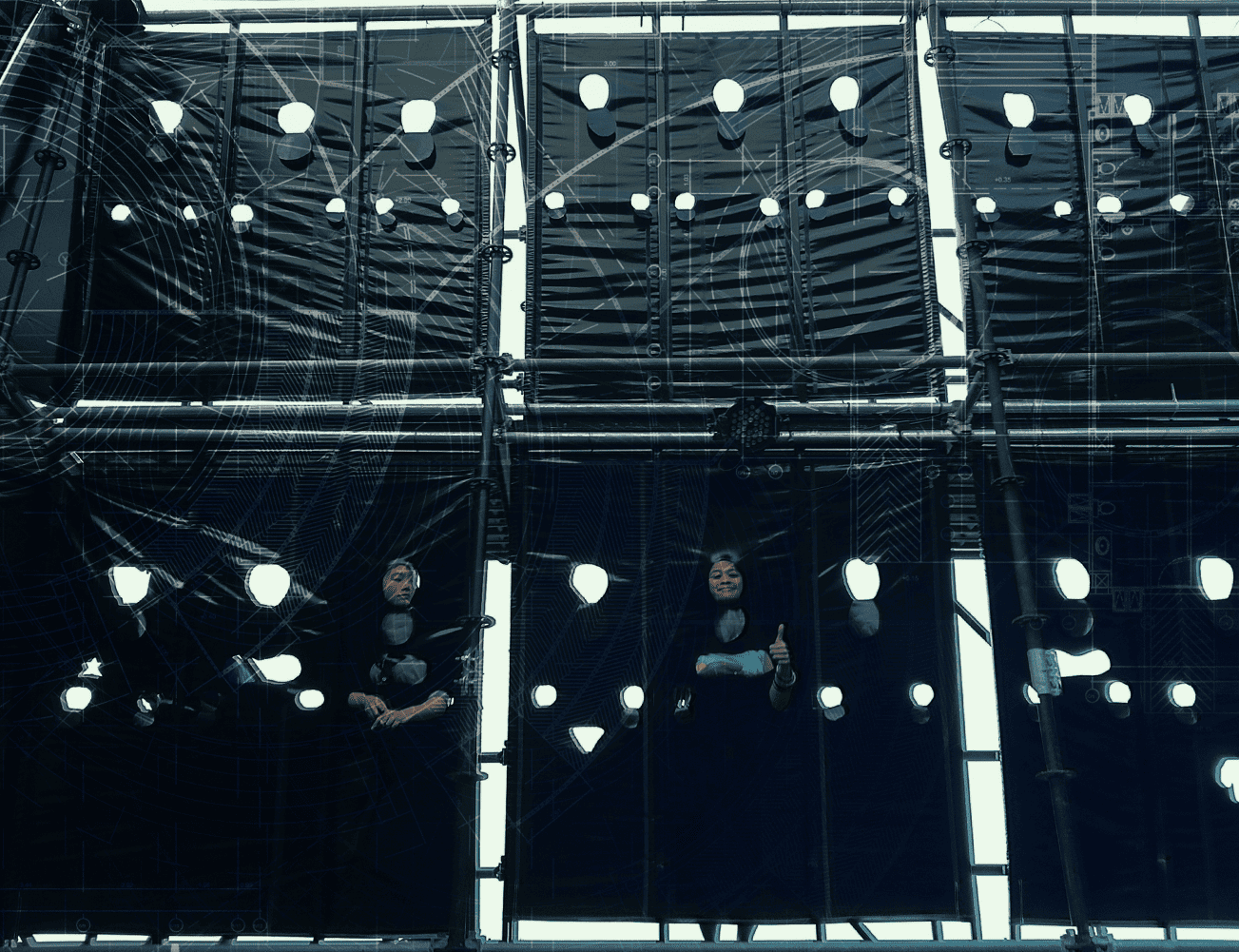
‘Small Mountain Music Festival’ came from a complaint at ‘Overhead Nightclub’: artists couldn’t see the audience’s hands, so clapping wasn’t possible. The solution was extreme: the stage became a peeping pyramid.
All three are experimental stages that rethink how artists and audiences experience music and space.
Beyond the festivals, what inspires you in everyday life?
It’s a pain to separate work and daily life. They inspire each other. When I encounter something unknown, it becomes input that makes me think and express. This cycle inspires me a lot.
What does a typical day look like for you; do you have any rituals or routines that keep you creatively sharp?
I try not to follow strict routines. I don’t wake up or sleep at fixed times. A perfectly balanced life is not always good. I create contrast; busy and free, constant and inconstant.
Read this next: All about the optics: reflections and recollections from visionary mavericks in Jakarta
About resisting routines and the idea of a “perfectly balanced life”; some might see this as being at odds with more traditional teachings in Asia (and perhaps especially in Japan). What has shaped your perspective on this?
In Japan, society often values avoiding mistakes over enjoying groovin’ moments. I’ve felt the pressure of never being “enough” to meet that standard of perfection. Travelling the world has shown me how art can create its own balance, and that a “perfectly balanced life” depends on the scale and frame you choose to assess it by.
What’s the weirdest or most memorable thing you’ve ever seen happening from your work station at festivals?
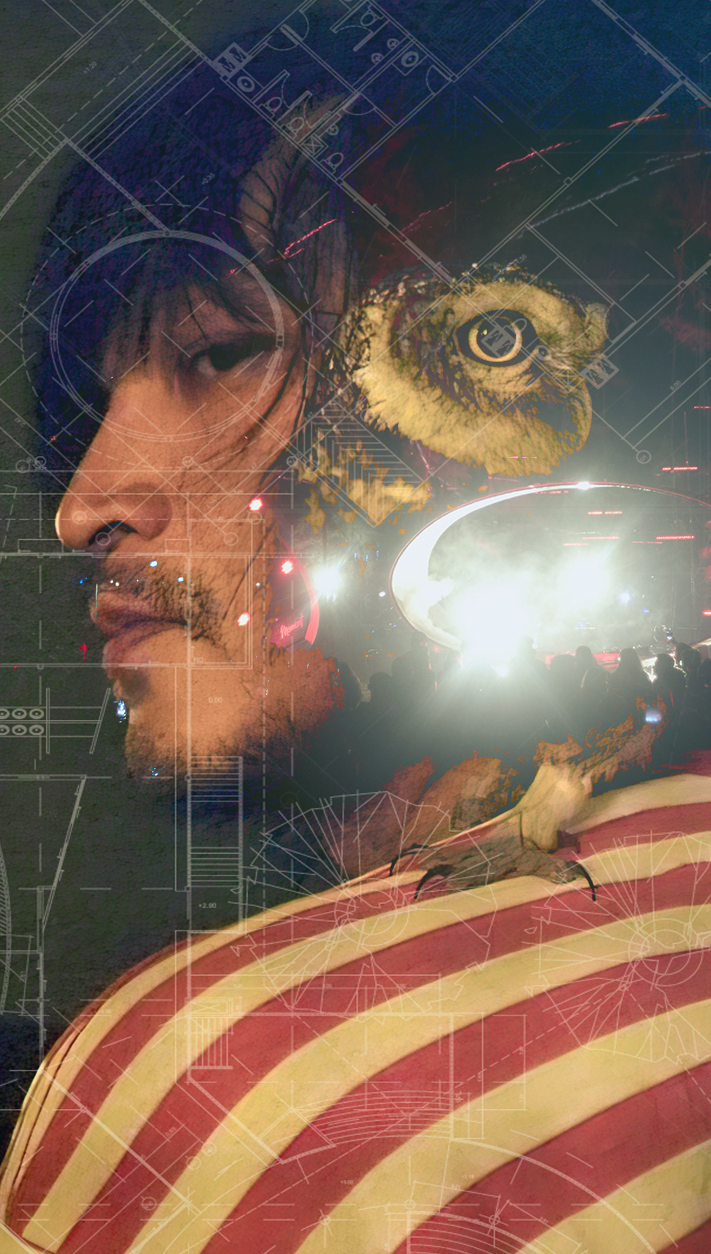
In 2003, a lighting supplier disappeared five days before a show. I had designed everything based on specific operators and fixtures. The organiser found a new supplier with many moving heads I had never used. I had never touched the lighting console before, but I had to operate it because I was the only person who knew the songs and show structure. Even though I asked a programmer for help, it felt like a road with no return.
Fortunately, I survived, and that became the starting point of my career as a lighting designer.
If you could pass down one guiding principle to the next generation of young and ambitious creatives, what would it be?
It’s a fantastic decade for everyone, young or old. Technology has changed the game a lot, and industrial boundaries are less rigid. You can cross them and exchange ideas, systems, and methods.
But at the same time, study fundamental philosophy, history, and art. And most importantly, know what you love and what you hate. You must be able to describe the reason and define it clearly.
Amira Waworuntu is Mixmag Asia’s Managing Editor, follow her on Instagram.
Cut through the noise—sign up for our weekly Scene Report or follow us on Instagram to get the latest from Asia and the Asian diaspora!
